


A super-spreading ewe infects hundreds with Q fever at a farmers' market in Germany
- PMID: 17026751
- PMCID: PMC1618839
- DOI: 10.1186/1471-2334-6-147
A super-spreading ewe infects hundreds with Q fever at a farmers' market in Germany
Abstract
Background: In May 2003 the Soest County Health Department was informed of an unusually large number of patients hospitalized with atypical pneumonia.
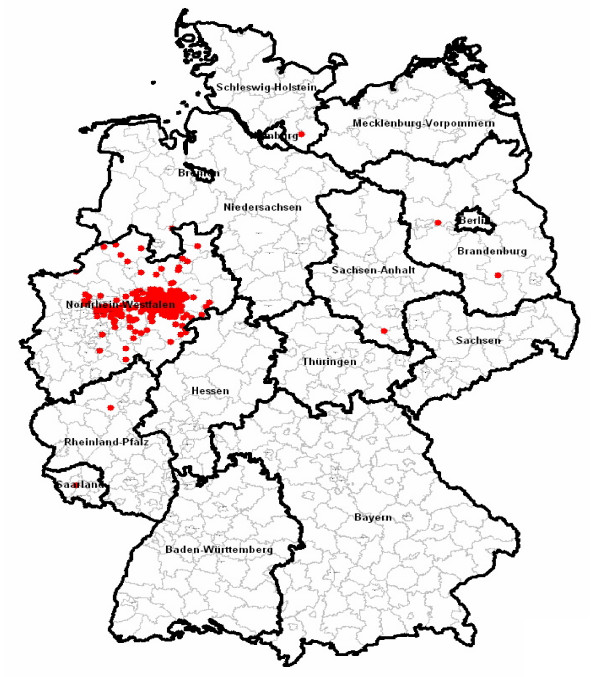
Methods: In exploratory interviews patients mentioned having visited a farmers' market where a sheep had lambed. Serologic testing confirmed the diagnosis of Q fever. We asked local health departments in Germany to identify notified Q fever patients who had visited the farmers market. To investigate risk factors for infection we conducted a case control study (cases were Q fever patients, controls were randomly selected Soest citizens) and a cohort study among vendors at the market. The sheep exhibited at the market, the herd from which it originated as well as sheep from herds held in the vicinity of Soest were tested for Coxiella burnetii (C. burnetii).
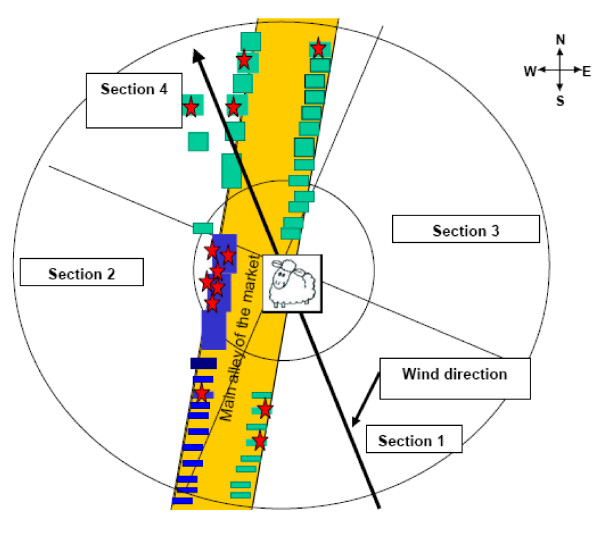
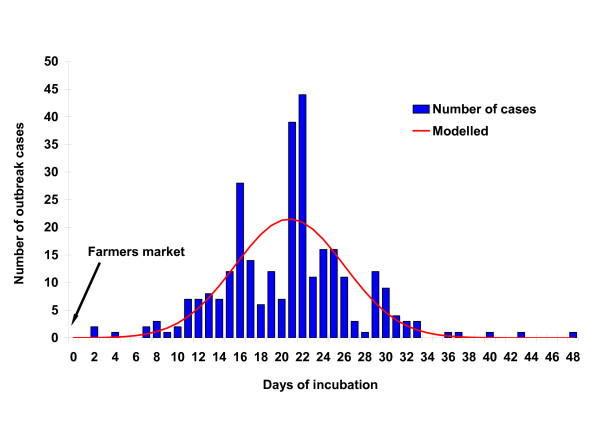
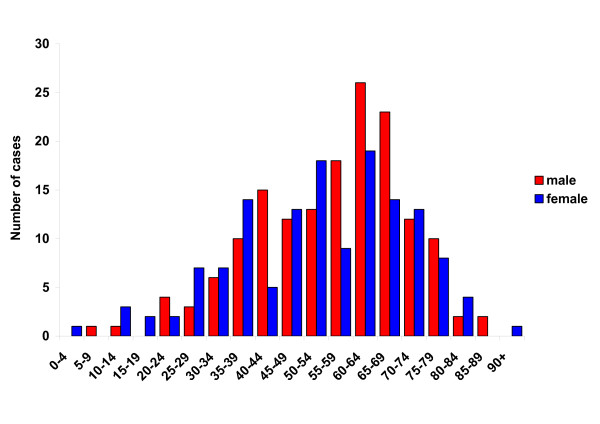
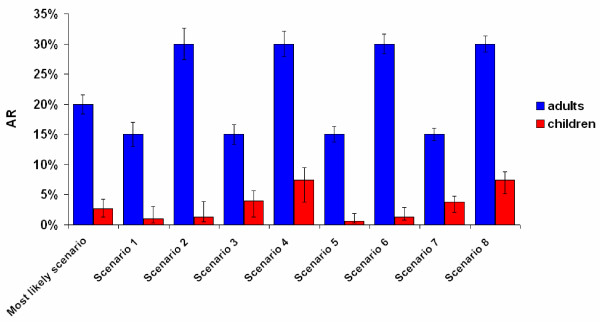
Results: A total of 299 reported Q fever cases was linked to this outbreak. The mean incubation period was 21 days, with an interquartile range of 16-24 days. The case control study identified close proximity to and stopping for at least a few seconds at the sheep's pen as significant risk factors. Vendors within approximately 6 meters of the sheep's pen were at increased risk for disease compared to those located farther away. Wind played no significant role. The clinical attack rate of adults and children was estimated as 20% and 3%, respectively, 25% of cases were hospitalized. The ewe that had lambed as well as 25% of its herd tested positive for C. burnetii antibodies.
Conclusion: Due to its size and point source nature this outbreak permitted assessment of fundamental, but seldom studied epidemiological parameters. As a consequence of this outbreak, it was recommended that pregnant sheep not be displayed in public during the 3rd trimester and to test animals in petting zoos regularly for C. burnetii.
Figures
References
-
- Raoult D, Marrie T. Q fever. Clin Infect Dis. 1995;20:489–495. quiz 496. - PubMed
-
- Sawyer LA, Fishbein DB, McDade JE. Q fever: current concepts. Rev Infect Dis. 1987;9:935–946. - PubMed
-
- Hawker JI, Ayres JG, Blair I, Evans MR, Smith DL, Smith EG, Burge PS, Carpenter MJ, Caul EO, Coupland B, et al. A large outbreak of Q fever in the West Midlands: windborne spread into a metropolitan area? Commun Dis Public Health. 1998;1:180–187. - PubMed
MeSH terms
LinkOut - more resources
Full Text Sources
Other Literature Sources
Medical
Research Materials
