


Medicinal plants used by traditional healers in Kancheepuram district of Tamil Nadu, India
- PMID: 17026769
- PMCID: PMC1615867
- DOI: 10.1186/1746-4269-2-43
Medicinal plants used by traditional healers in Kancheepuram district of Tamil Nadu, India
Abstract
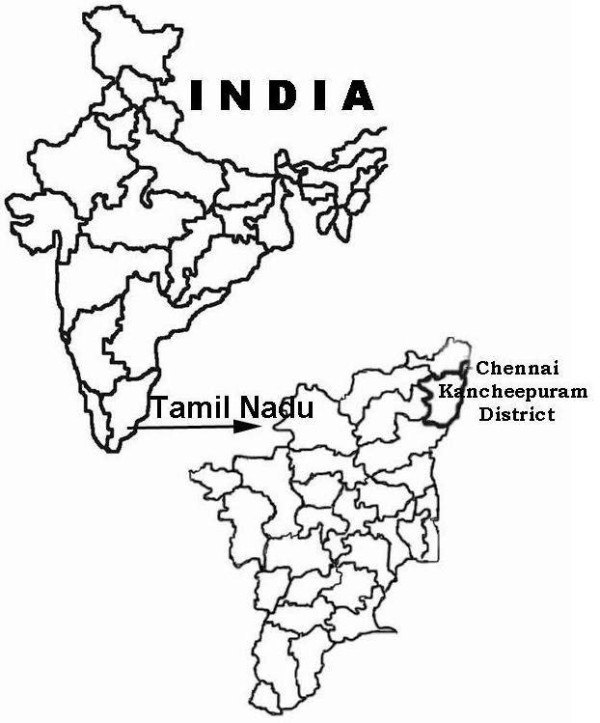
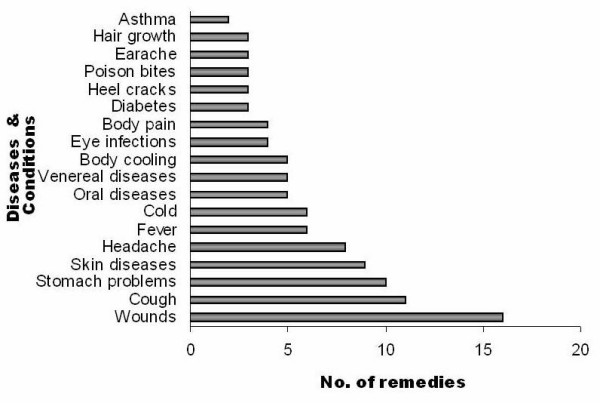
An ethnobotanical survey was undertaken to collect information from traditional healers on the use of medicinal plants in Kancheepuram district of Tamil Nadu during October 2003 to April 2004. The indigenous knowledge of local traditional healers and the native plants used for medicinal purposes were collected through questionnaire and personal interviews during field trips.The investigation revealed that, the traditional healers used 85 species of plants distributed in 76 genera belonging to 41 families to treat various diseases. The documented medicinal plants were mostly used to cure skin diseases, poison bites, stomachache and nervous disorders. In this study the most dominant family was Euphorbiaceae and leaves were most frequently used for the treatment of diseases.This study showed that many people in the studied parts of Kancheepuram district still continue to depend on medicinal plants at least for the treatment of primary healthcare. The traditional healers are dwindling in number and there is a grave danger of traditional knowledge disappearing soon since the younger generation is not interested to carry on this tradition.
Figures
References
-
- Abu-Rabia A. Urinary diseases and ethnobotany among pastoral nomads in the Middle East. Journal of Ethnobiology and Ethnomedicine. 2005;1:4 http://www.ethnobiomed.com/content/1/14 - PMC - PubMed
-
- Pei SJ. Ethnobotanical approaches of traditional medicine srudies: Some experiences from Asia. Pharmaceutical Biology. 2001;39:74–79. - PubMed
-
- Lev E. Ethno-diversity within current ethno-pharmacology as part of Israeli traditional medicine – A review. Journal of Ethnobiology and ethnomedicine. 2006;2:4 http://www.ethnobiomed.com/content/2/1/4 - PMC - PubMed
-
- Gazzaneo LR, Paiva de Lucena RF, Paulino de Albuquerque U. Knowledge and use of medicinal plants by local specialists in an region of Atlantic Forest in the state of Pernambuco (Northeastern Brazil) Journal of Ethnobiology and Ethnomedicine. 2005;1:9 http://http.//www.ethnobiomed.com/content/1/1/9 - PMC - PubMed
MeSH terms
Substances
LinkOut - more resources
Full Text Sources
Other Literature Sources
Miscellaneous
