


Fatigue states after cancer treatment occur both in association with, and independent of, mood disorder: a longitudinal study
- PMID: 17026776
- PMCID: PMC1613250
- DOI: 10.1186/1471-2407-6-240
Fatigue states after cancer treatment occur both in association with, and independent of, mood disorder: a longitudinal study
Abstract
Background: Persistent fatigue is recognised as one of the most common, ongoing symptoms reported by patients following cancer treatment and may have profound effects on the quality of life. However, recent cross-sectional studies also highlight the close relationship between cancer related fatigue (CRF) and diagnoses of depression or anxiety disorder. There is currently limited information about the relationships between these conditions over time. We sought to examine the longitudinal relationships between fatigue and mood disorder in women treated with adjuvant therapy for early stage breast cancer.
Methods: Women who had recently completed adjuvant therapy for Stage I or II breast cancer (n = 212) were sent a questionnaire with established case thresholds for clinically-significant fatigue and psychological disorder, as well as a questionnaire assessing disability. Potentially relevant variables linked to fatigue states, including age, treatment modality, menopausal status, and hematological indices were recorded. The illness outcomes were assessed over 48 months of follow-up.
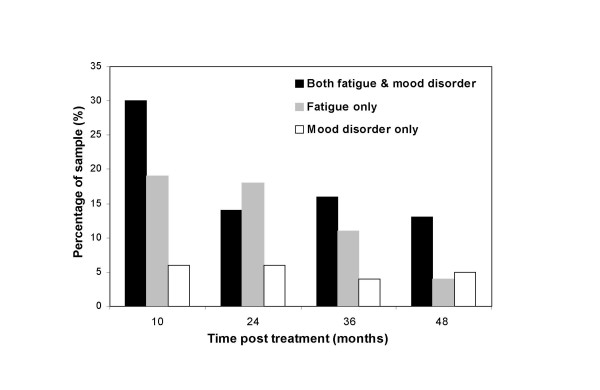
Results: The 176 women who responded to the questionnaire (84%) had a mean age of 55 (range 24-83) years and had completed adjuvant treatment on average 10 (range 4.7-16.3) months previously. Radiotherapy had been administered, either alone (50% of women) or in combination with chemotherapy (36%). Responses from 87 women (48%) indicated a significant fatigue state (termed here post-cancer fatigue; PCF), and from 59 women (33%) responses indicated significant psychological distress. Thirty-four women (19%) were cases of fatigue alone (i.e. unaccompanied by psychological disorder), whereas 52 (30%) were cases of both disorders. Multivariate analysis did not reveal any association between demographic, clinical or laboratory variables, and caseness for PCF. Self-reported functional disability was significantly associated with fatigue. Follow-up at 24, 36 and 48 months revealed high rates of ongoing PCF in conjunction with psychological distress, despite falling rates of psychological distress alone and fatigue alone.
Conclusion: Post-cancer fatigue was prevalent and sustained on follow-up. Concurrent psychological disorder was evident in the majority, but not all, cases of PCF and tended to be sustained over time. Further prospective cohort studies to define the longitudinal co-morbid relationships between fatigue, mood disorder, and ongoing disability after cancer treatment are indicated.
Figures
References
-
- National Institutes of Health . State-of-the-Science Panel on Symptom Management in Cancer: Pain, Depression and Fatigue Final Statement. October 26, 2002. , Available at http://consensus.nih.gov/ta/022/022_statement.htm.; 2002. - PubMed
-
- Irvine D, Vincent L, Graydon JE, Bubela N, Thompson L. The prevalence and correlates of fatigue in patients receiving treatment with chemotherapy and radiotherapy. A comparison with the fatigue experienced by healthy individuals. Cancer Nursing. 1994;17:367–378. - PubMed
-
- Lloyd AR, Hickie I, Peterson PK. Chronic fatigue syndrome: current concepts of pathogenesis and treatment. Current Clinical Topics in Infectious Diseases. 1999;19:135–159. - PubMed
Publication types
MeSH terms
Substances
LinkOut - more resources
Full Text Sources
Medical
