


A randomized, double-blind trial comparing the effects of amlodipine besylate/benazepril HCl vs amlodipine on endothelial function and blood pressure
- PMID: 17028482
- PMCID: PMC8109507
- DOI: 10.1111/j.1524-6175.2006.05690.x
A randomized, double-blind trial comparing the effects of amlodipine besylate/benazepril HCl vs amlodipine on endothelial function and blood pressure
Abstract
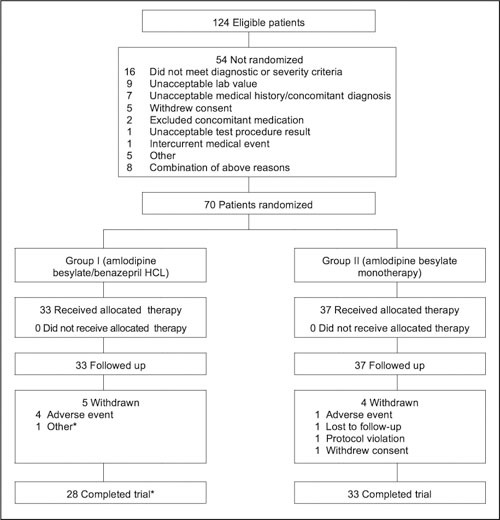
Evidence suggests that renin-angiotensin-aldosterone system inhibition ameliorates endothelial dysfunction. The authors examined the effect of amlodipine besylate/benazepril HCl combination treatment compared with amlodipine besylate monotherapy in modulating endothelial dysfunction. This multicenter, double-blind, 12-week study randomized 70 hypertensive subjects with at least one other endothelial dysfunction risk factor to amlodipine besylate/benazepril HCl (5/20 mg/d force-titrated to 5/40 mg/d) or amlodipine besylate monotherapy (5 mg/d force-titrated to 10 mg/d). Both the combination and monotherapy produced significant median increases from baseline in percentage flow-mediated vasodilation (2.0% and 1.2%, respectively) and percentage change in percent flow-mediated vasodilation (25% and 16%, respectively). These improvements were numerically larger with combination treatment, but between-group differences did not achieve statistical significance. Reductions in systolic and diastolic blood pressure were significantly greater (P=.0452/P=.0297) with combination treatment (-18.6/-12.3 mm Hg) than with monotherapy (-14.8/-9.1 mm Hg). A highly positive correlation between change in systolic blood pressure and change in percent of flow-mediated vasodilation was demonstrated only for combination treatment.
Figures
References
-
- Ross R. Atherosclerosis‐an inflammatory disease. N Engl J Med. 1999;340:115–126. - PubMed
-
- Joannides R, Haefeli WE, Linder L, et al. Nitric oxide is responsible for flow‐dependent dilatation of human peripheral conduit arteries in vivo. Circulation. 1995;91:1314–1319. - PubMed
-
- Harrison DG, Cai H, Landmesser U, et al. Interactions of angiotensin II with NAD (P)H oxidase, oxidant stress and cardiovascular disease. J Renin Angiotensin Aldosterone Syst. 2003;4:51–61. - PubMed
-
- Chen L, Haught WH, Yang B, et al. Preservation of endogenous antioxidant activity and inhibition of lipid peroxidation as common mechanisms of antiatherosclerotic effects of vitamin E, lovastatin and amlodipine. J Am Coll Cardiol. 1997;30:569–575. - PubMed
-
- Digiesi V, Fiorillo C, Cosmi L, et al. Reactive oxygen species and antioxidant status in essential arterial hypertension during therapy with dihydropyridine calcium channel antagonists. Clin Ter. 2000;151:15–18. - PubMed
Publication types
MeSH terms
Substances
LinkOut - more resources
Full Text Sources
Medical
