


Analysis of normal and osteoarthritic canine cartilage mRNA expression by quantitative polymerase chain reaction
- PMID: 17032449
- PMCID: PMC1794499
- DOI: 10.1186/ar2053
Analysis of normal and osteoarthritic canine cartilage mRNA expression by quantitative polymerase chain reaction
Abstract
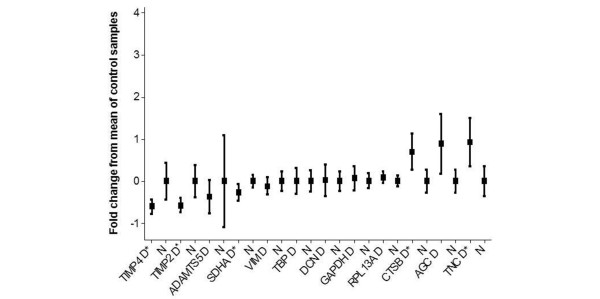
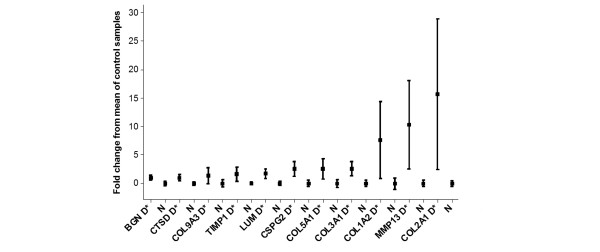
The molecular basis to mammalian osteoarthritis (OA) is unknown. We hypothesised that the expression of selected proteases, matrix molecules, and collagens believed to have a role in the pathogenesis of OA would be changed in naturally occurring canine OA cartilage when compared to normal articular cartilage. Quantitative (real-time) reverse transcriptase-polymerase chain reaction assays were designed measuring the expression of selected matrix molecules (collagens and small leucine-rich proteoglycans), key mediators of the proteolytic degradation of articular cartilage (metalloproteinases, cathepsins), and their inhibitors (tissue inhibitors of matrix metalloproteinases). All data were normalised using a geometric mean of three housekeeping genes, and the results subjected to power calculations and corrections for multiple hypothesis testing. We detected increases in the expression of BGN, COL1A2, COL2A1, COL3A1, COL5A1, CSPG2, CTSB, CTSD, LUM, MMP13, TIMP1, and TNC in naturally occurring canine OA. The expression of TIMP2 and TIMP4 was significantly reduced in canine OA cartilage. The patterns of gene expression change observed in naturally occurring canine OA were similar to those reported in naturally occurring human OA and experimental canine OA. We conclude that the expression profiles of matrix-associated molecules in end-stage mammalian OA may be comparable but that the precise aetiologies of OA affecting specific joints in different species are presently unknown.
Figures
References
-
- Lawrence RC, Helmick CG, Arnett FC, Deyo RA, Felson DT, Giannini EH, Heyse SP, Hirsch R, Hochberg MC, Hunder GG, et al. Estimates of the prevalence of arthritis and selected musculoskeletal disorders in the United States. Arthritis Rheum. 1998;41:778–799. doi: 10.1002/1529-0131(199805)41:5<778::AID-ART4>3.0.CO;2-V. - DOI - PubMed
-
- RIMADYL® (carprofen) website http://www.rimadyl.com
-
- Burton-Wurster N, Farese JP, Todhunter RJ, Lust G. Site-specific variation in femoral head cartilage composition in dogs at high and low risk for development of osteoarthritis: insights into cartilage degeneration. Osteoarthritis Cartilage. 1999;7:486–497. doi: 10.1053/joca.1999.0244. - DOI - PubMed
-
- Brandt KD. Animal models of osteoarthritis. Biorheology. 2002;39:221–235. - PubMed
Publication types
MeSH terms
Substances
LinkOut - more resources
Full Text Sources
Other Literature Sources
Medical
Research Materials
Miscellaneous
