


Domestic dogs and cats as sources of Trypanosoma cruzi infection in rural northwestern Argentina
- PMID: 17032467
- PMCID: PMC2669415
- DOI: 10.1017/S0031182006001259
Domestic dogs and cats as sources of Trypanosoma cruzi infection in rural northwestern Argentina
Abstract
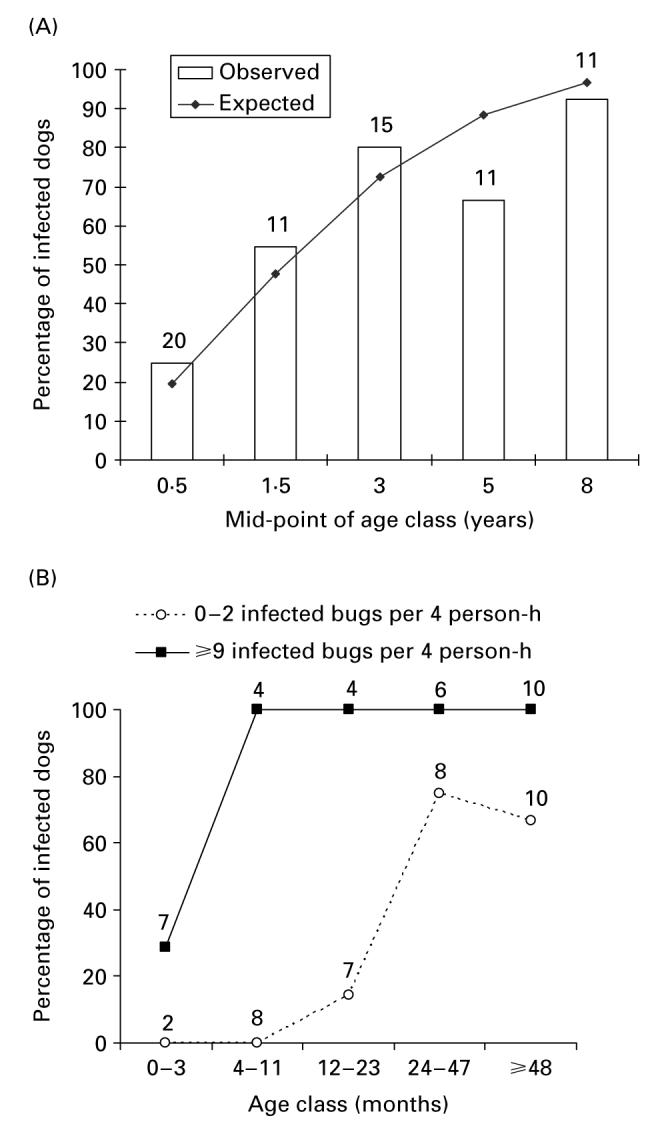
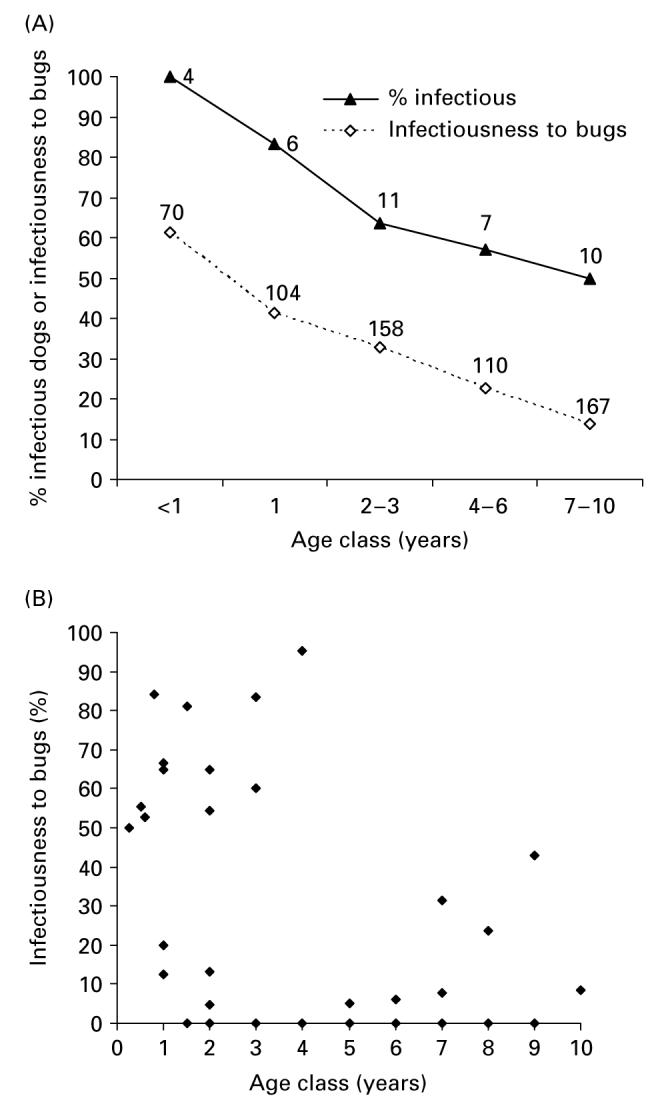
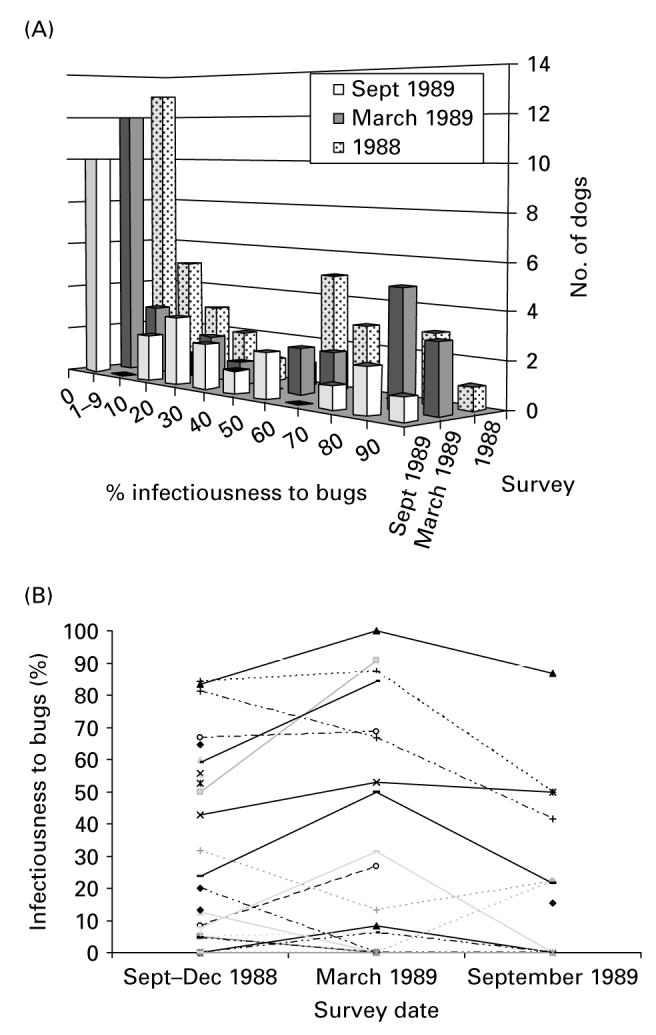
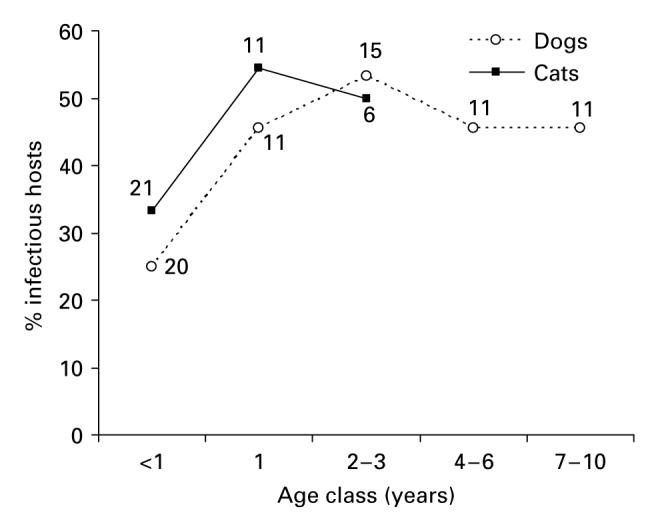
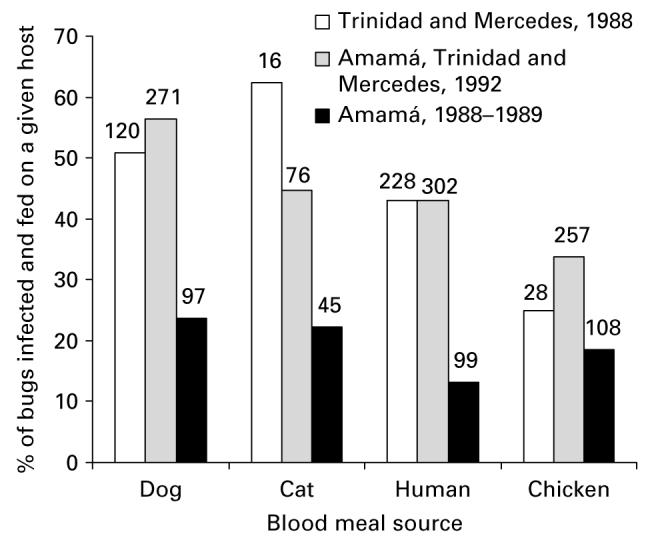
The reservoir capacity of domestic cats and dogs for Trypanosoma cruzi infection and the host-feeding patterns of domestic Triatoma infestans were assessed longitudinally in 2 infested rural villages in north-western Argentina. A total of 86 dogs and 38 cats was repeatedly examined for T. cruzi infection by serology and/or xenodiagnosis. The composite prevalence of infection in dogs (60%), but not in cats, increased significantly with age and with the domiciliary density of infected T. infestans. Dogs and cats had similarly high forces of infection, prevalence of infectious hosts (41-42%), and infectiousness to bugs at a wide range of infected bug densities. The infectiousness to bugs of seropositive dogs declined significantly with increasing dog age and was highly aggregated. Individual dog infectiousness to bugs was significantly autocorrelated over time. Domestic T. infestans fed on dogs showed higher infection prevalence (49%) than those fed on cats (39%), humans (38%) or chickens (29%) among 1085 bugs examined. The basic reproduction number of T. cruzi in dogs was at least 8.2. Both cats and dogs are epidemiologically important sources of infection for bugs and householders, dogs nearly 3 times more than cats.
Figures
References
-
- Alencar JE, Almeida YM, Santos AR, Freitas LM. Epidemiology of Chagas’ disease in the state of Ceará, Brazil. IV. The role of dogs and cats as domestic reservoirs. Revista Brasileira de Malariología e Doenças Tropicales. 19741975;26/27:5–26. - PubMed
-
- Araújo FMG, Bahia MT, Magalhães NM, Martins-Filho OA, Veloso VM, Carneiro CM, Tafuri WL, Lana M. Follow-up of experimental chronic Chagas’ disease in dogs: use of polymerase chain reaction (PCR) compared with parasitological and serological methods. Acta Tropica. 2002;81:21–31. - PubMed
-
- Barretto MP. Estudos sôbre reservatórios e vectores silvestres do “Trypanosoma cruzi”. XXXI. Observações sôbre a associação entre reservatórios e vectores, com especial referência à região nordeste do Estado de Sao Paulo. Revista Brasileña Biología. 1968;28:481–494. - PubMed
-
- Basombrío MA, Segura MA, Mora MC, Gomez L. Field trial of vaccination against American trypanosomiasis (Chagas’ disease) in dogs. American Journal of Tropical Medicine and Hygiene. 1993;49:143–151. - PubMed
Publication types
MeSH terms
Grants and funding
LinkOut - more resources
Full Text Sources
Medical
Miscellaneous
