


Agricultural pesticide use and hypospadias in eastern Arkansas
- PMID: 17035148
- PMCID: PMC1626392
- DOI: 10.1289/ehp.9146
Agricultural pesticide use and hypospadias in eastern Arkansas
Abstract
Introduction: We assessed the relationship between hypospadias and proximity to agricultural pesticide applications using a GIS-based exposure method.
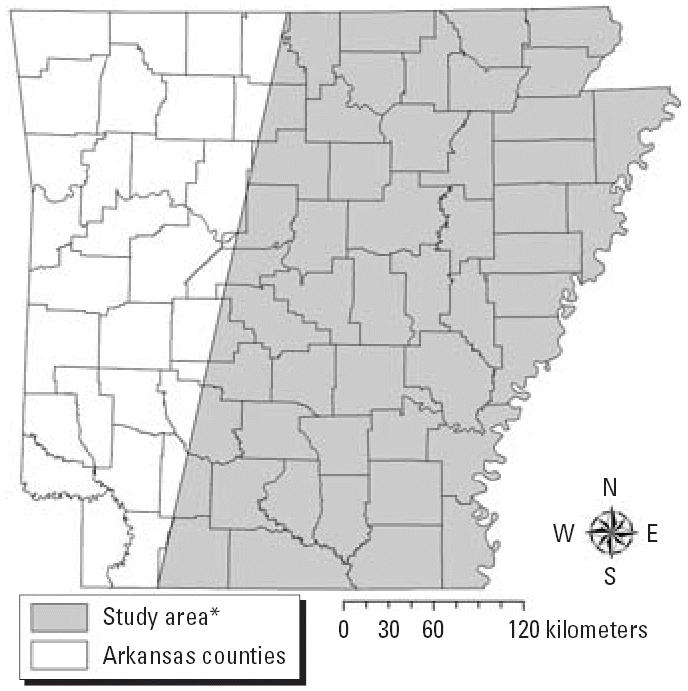
Methods: We obtained information for 354 cases of hypospadias born between 1998 and 2002 in eastern Arkansas; 727 controls were selected from birth certificates. We classified exposure on pounds of pesticides (estimated by crop type) applied or persisting within 500 m of each subject's home during gestational weeks 6 to 16. We restricted our analyses to 38 pesticides with some evidence of reproductive, developmental, estrogenic, and/or antiandrogenic effects. We estimated timing of pesticide applications using crop phenology and published records.
Results: Gestational age at birth [odds ratio (OR) = 0.91; 95% confidence interval (CI), 0.83-0.99], parity (OR = 0.79; 95% CI, 0.65-0.95), and delaying prenatal care until the third trimester (OR = 4.04; 95% CI, 1.46-11.23) were significantly associated with hypospadias. Risk of hypospadias increased by 8% for every 0.05-pound increase in estimated exposure to diclofop-methyl use (OR = 1.08; 95% CI, 1.01-1.15). Pesticide applications in aggregate (OR = 0.82; 95% CI, 0.70-0.96) and applications of alachlor (OR = 0.56; 95% CI, 0.35-0.89) and permethrin (OR = 0.37; 95% CI, 0.16-0.86) were negatively associated with hypospadias.
Conclusions: Except for diclofop-methyl, we did not find evidence that estimated exposure to pesticides known to have reproductive, developmental, or endocrine-disrupting effects increases risk of hypospadias. Further research on the potential effects of exposure to diclofop-methyl is recommended.
Figures
References
-
- Agricultural Research Service 2001. The ARS Pesticide Properties Database. U.S. Department of Agriculture. Available: http://www.ars.usda.gov/Services/docs.htm?docid=6433 [accessed 11 March 2005].
-
- Akhtar N, Kayani SA, Ahmad MM, Shahab M. Insecticide-induced changes in secretory activity of the thyroid gland in rats. J Appl Toxicol. 1996;16:397–400. - PubMed
-
- Arkansas Agricultural Statistics Service 2005. Arkansas Crop Information Releases. Available: http://www.nass.usda.gov/ar/croprel.htm [accessed 2 November 2004].
-
- Barr WB, Pecci CC. Last menstrual period versus ultrasound for pregnancy dating. Int J Gynecol Obstet. 2004;87:38–39. - PubMed
Publication types
MeSH terms
Substances
Grants and funding
LinkOut - more resources
Full Text Sources
Medical