


Severe malnutrition with and without HIV-1 infection in hospitalised children in Kampala, Uganda: differences in clinical features, haematological findings and CD4+ cell counts
- PMID: 17042940
- PMCID: PMC1635055
- DOI: 10.1186/1475-2891-5-27
Severe malnutrition with and without HIV-1 infection in hospitalised children in Kampala, Uganda: differences in clinical features, haematological findings and CD4+ cell counts
Abstract
Background: The aim of this study was to describe the clinical features, haematological findings and CD4+ and CD8+ cell counts of severely malnourished children in relation to human immunodeficiency virus (HIV) infection.
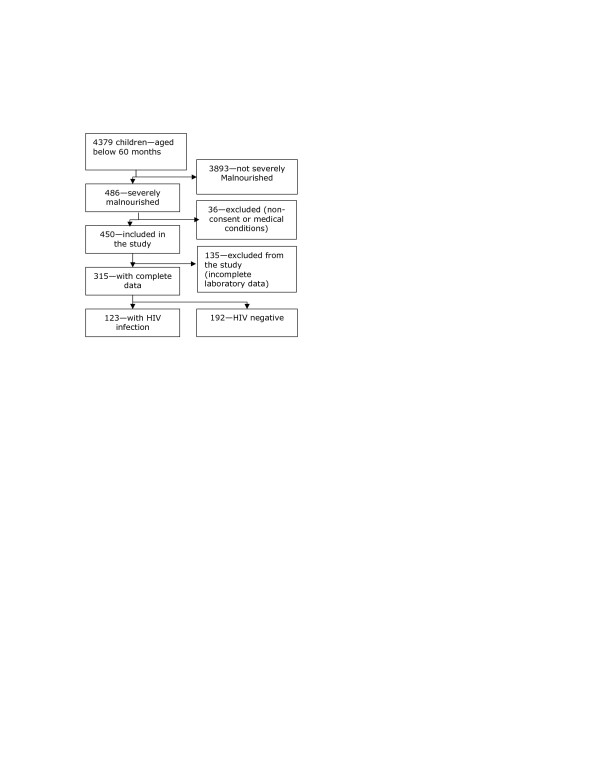
Methods: The study was conducted in the paediatric wards of Mulago hospital, which is Uganda's national referral and teaching hospital. We studied 315 severely malnourished children (presence of oedema and/or weight-for-height: z-score < -3) and have presented our findings. At admission, the CD4+ and CD8+ cells were measured by the flow cytometry and HIV serology was confirmed by Enzyme linked Immunoassay for children >18 months of age, and RNA PCR was performed for those < or =18 months. Complete blood count, including differential counts, was determined using a Beckman Coulter counter.
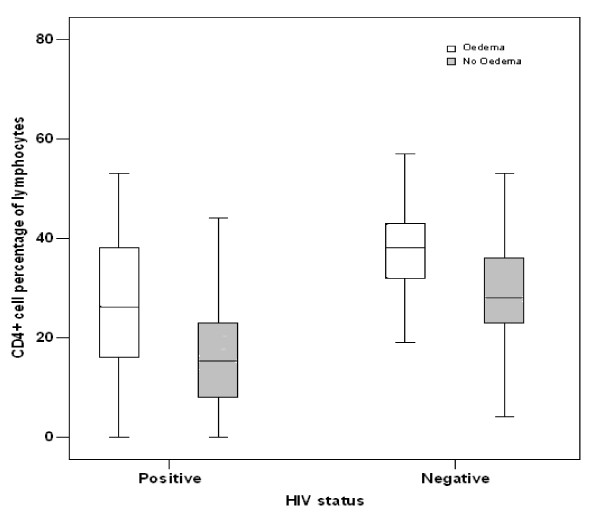
Results: Among the 315 children, 119 (38%) were female; the median age of these children was 17 months (Interquartile range 12-24 months), and no difference was observed in the HIV status with regard to gender or age. The children showed a high prevalence of infections: pneumonia (68%), diarrhoea (38%), urinary tract infection (26%) and bacteraemia (18%), with no significant difference with regard to the HIV status (HIV-positive versus HIV-negative children). However, the HIV-positive children were more likely to have persistent diarrhoea than the HIV-uninfected severely malnourished children (odds ratio (OR) 2.0, 95% confidence interval (CI) 1.2-3.6). When compared with the HIV-negative children, the HIV-positive children showed a significantly lower median white blood cell count (10700 versus 8700) and lymphocyte count (4033 versus 2687). The CD4+ cell percentages were more likely to be lower in children with non-oedematous malnutrition than in those with oedematous malnutrition even after controlling for the HIV infection. The novel observation of this study is that the CD4+ percentages in both HIV-positive and HIV-negative children without oedema were lower that those in children with oedema. These observations appear to imply that the development of oedema requires a certain degree of immunocompetence, which is an interesting clue to the pathophysiology of oedema in severe malnutrition.
Figures
References
-
- Chandra RK. Nutrition and immunology: from the clinic to cellular biology and back again. Proc Nutr Soc. 1999;58:681–683. - PubMed
-
- Scrimshaw NS., SanGiovanni JP Synergism of nutrition, infection, and immunity: an overview. Am J Clin Nutr. 1997;66:464S–477S. - PubMed
-
- Bakaki P., Kayita J, Machado MJE, Coulter JB, Tindyebwa D, Ndugwa CM, Hart CA Epidemiologic and clinical features of HIV-infected and HIV-uninfected Ugandan children younger than 18 months. J Acquir Immune Defic Syndr. 2001;28:35–42. - PubMed
Publication types
MeSH terms
Substances
LinkOut - more resources
Full Text Sources
Medical
Research Materials
