Role of Brg1 and HDAC2 in GR trans-repression of the pituitary POMC gene and misexpression in Cushing disease
- PMID: 17043312
- PMCID: PMC1619949
- DOI: 10.1101/gad.1444606
Role of Brg1 and HDAC2 in GR trans-repression of the pituitary POMC gene and misexpression in Cushing disease
Abstract
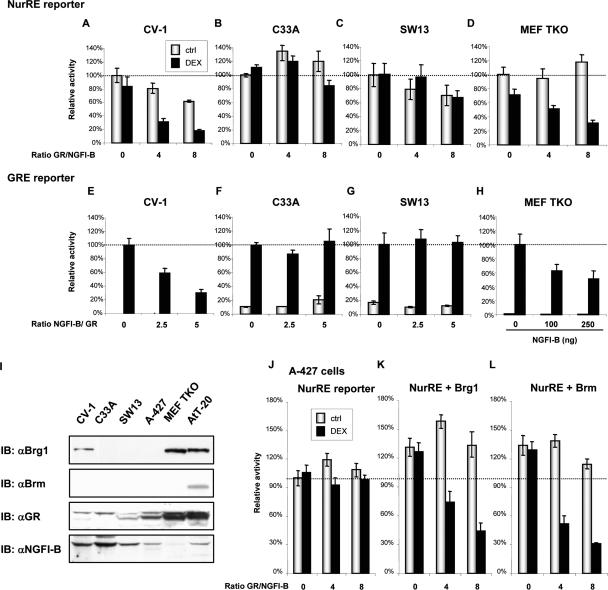
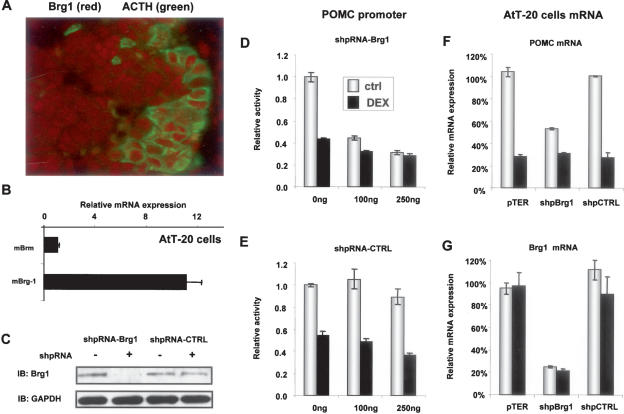
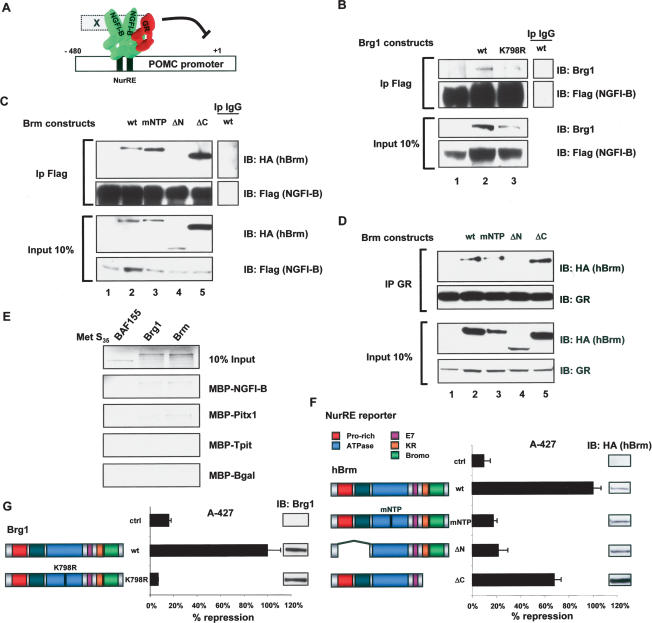
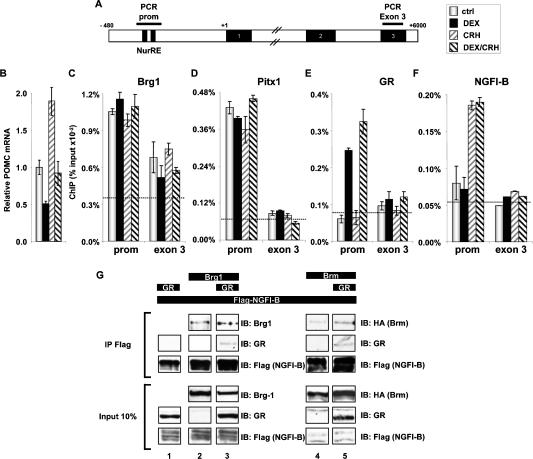
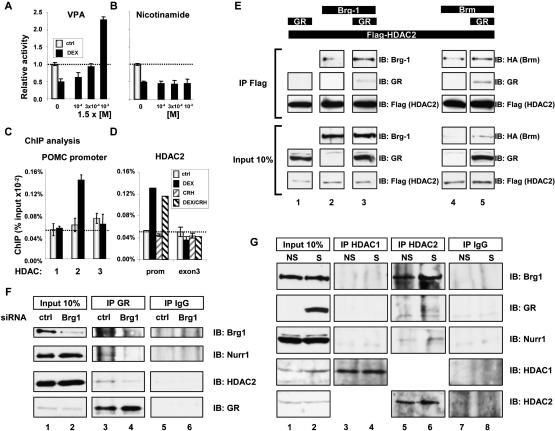
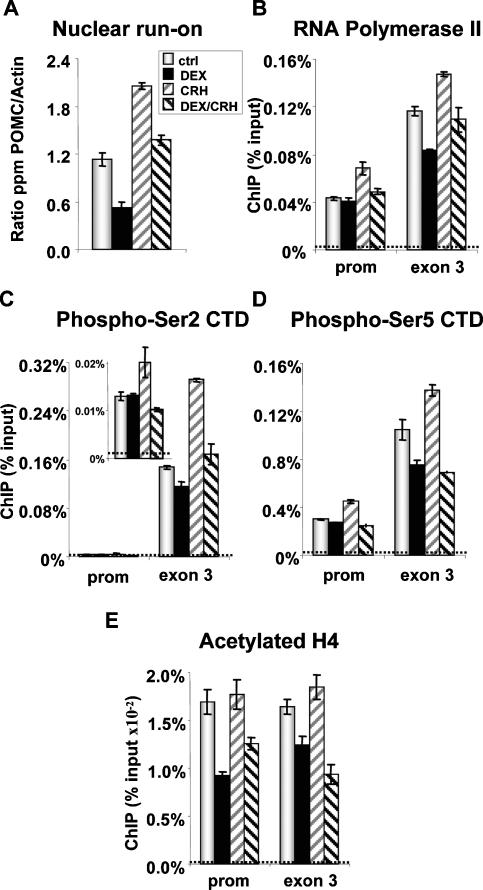
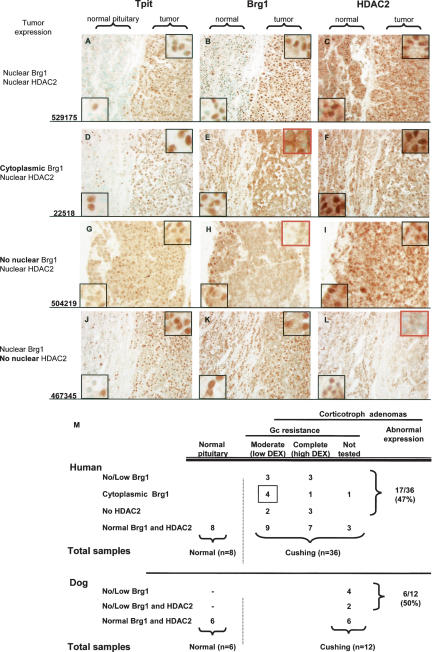
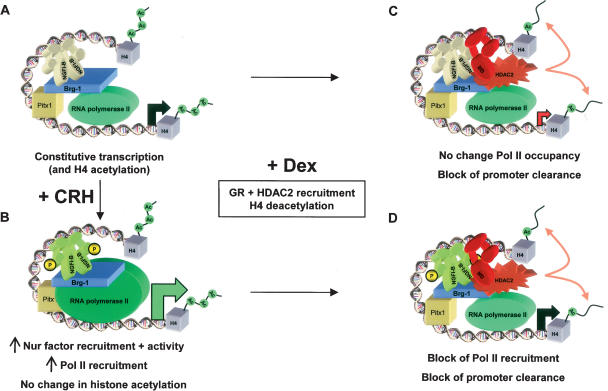
Negative feedback regulation of the proopiomelanocortin (POMC) gene by the glucocorticoid (Gc) receptor (GR) is a critical feature of the hypothalamo-pituitary-adrenal axis, and it is in part exerted by trans-repression between GR and the orphan nuclear receptors related to NGFI-B. We now show that Brg1, the ATPase subunit of the Swi/Snf complex, is essential for this trans-repression and that Brg1 is required in vivo to stabilize interactions between GR and NGFI-B as well as between GR and HDAC2. Whereas Brg1 is constitutively present at the POMC promoter, recruitment of GR and HDAC2 is ligand-dependent and results in histone H4 deacetylation of the POMC locus. In addition, GR-dependent repression inhibits promoter clearance by RNA polymerase II. Thus, corecruitment of repressor and activator at the promoter and chromatin modification jointly contribute to trans-repression initiated by direct interactions between GR and NGFI-B. Loss of Brg1 or HDAC2 should therefore produce Gc resistance, and we show that approximately 50% of Gc-resistant human and dog corticotroph adenomas, which are the hallmark of Cushing disease, are deficient in nuclear expression of either protein. In addition to providing a molecular basis for Gc resistance, these deficiencies may also contribute to the tumorigenic process.
Figures
References
-
- Arnaldi, G., Angeli, A., Atkinson, A.B., Bertagna, X., Cavagnini, F., Chrousos, G.P., Fava, G.A., Findling, J.W., Gaillard, R.C., Grossman, A.B., et al. Diagnosis and complications of Cushing's syndrome: A consensus statement. J. Clin. Endocrinol. Metab. 2003;88:5593–5602. - PubMed
-
- Batsche, E., Desroches, J., Bilodeau, S., Gauthier, Y., Drouin, J. Rb enhances p160/SRC coactivator-depen- dent activity of nuclear receptors and hormone responsiveness. J. Biol. Chem. 2005a;280:19746–19756. - PubMed
-
- Batsche, E., Moschopoulos, P., Desroches, J., Bilodeau, S., Drouin, J. Retinoblastoma and the related pocket protein p107 act as coactivators of NeuroD1 to enhance gene transcription. J. Biol. Chem. 2005b;280:16088–16095. - PubMed
MeSH terms
Substances
LinkOut - more resources
Full Text Sources
Other Literature Sources
Medical
Miscellaneous