


Genotyping faecal samples of Bengal tiger Panthera tigris tigris for population estimation: a pilot study
- PMID: 17044939
- PMCID: PMC1636336
- DOI: 10.1186/1471-2156-7-48
Genotyping faecal samples of Bengal tiger Panthera tigris tigris for population estimation: a pilot study
Abstract
Background: Bengal tiger Panthera tigris tigris the National Animal of India, is an endangered species. Estimating populations for such species is the main objective for designing conservation measures and for evaluating those that are already in place. Due to the tiger's cryptic and secretive behaviour, it is not possible to enumerate and monitor its populations through direct observations; instead indirect methods have always been used for studying tigers in the wild. DNA methods based on non-invasive sampling have not been attempted so far for tiger population studies in India. We describe here a pilot study using DNA extracted from faecal samples of tigers for the purpose of population estimation.
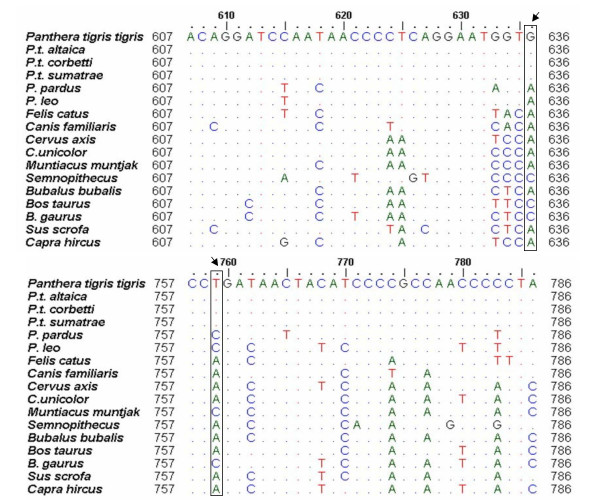
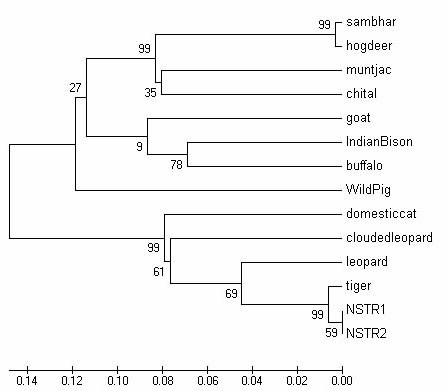
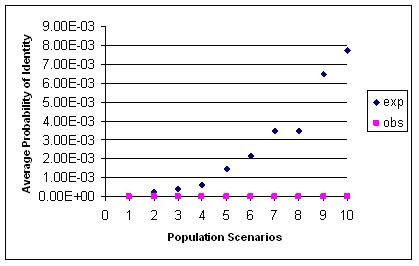
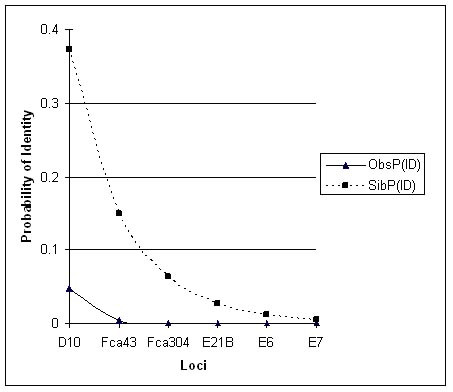
Results: In this study, PCR primers were developed based on tiger-specific variations in the mitochondrial cytochrome b for reliably identifying tiger faecal samples from those of sympatric carnivores. Microsatellite markers were developed for the identification of individual tigers with a sibling Probability of Identity of 0.005 that can distinguish even closely related individuals with 99.9% certainty. The effectiveness of using field-collected tiger faecal samples for DNA analysis was evaluated by sampling, identification and subsequently genotyping samples from two protected areas in southern India.
Conclusion: Our results demonstrate the feasibility of using tiger faecal matter as a potential source of DNA for population estimation of tigers in protected areas in India in addition to the methods currently in use.
Figures

References
-
- Sunquist M, Karanth KU, Sunquist F. Ecology, behaviour and resilience of the tiger and its conservation needs. In: Seidensticker J, Christie S, Jackson P, editor. Riding the tiger: Tiger conservation in human dominated landscapes. Cambridge, Cambridge University Press; 1999. pp. 5–18.
-
- Seidensticker J, Christie S, Jackson P. Riding the tiger: Tiger conservation in human dominated landscapes. Cambridge, Cambridge University Press; 1999.
-
- Karanth KU, Nichols JD, Seidensticker Dinerstein E, Smith JLD, McDougal C, Johnsingh AJT, Chundawat RS, Thapar V. Science deficiency in conservation practice: the monitoring of tiger populations in India. Animal Conservation. 2003;6:141–146. doi: 10.1017/S1367943003003184. - DOI
-
- Sharma S, Jhala Y, Sawarkar VB. Identification of individual tigers (Panthera tigris) from their pugmarks. Journal of Zoology. 2005;267:9–18. doi: 10.1017/S0952836905007119. - DOI
-
- Schaller GB. The deer and the tiger. Chicago, Illinois, USA, University of Chicago Press; 1967.
Publication types
MeSH terms
Substances
LinkOut - more resources
Full Text Sources
Medical
