


Nifedipine suppresses self-injurious behaviors in animals
- PMID: 17047321
- PMCID: PMC2951318
- DOI: 10.1159/000096414
Nifedipine suppresses self-injurious behaviors in animals
Abstract
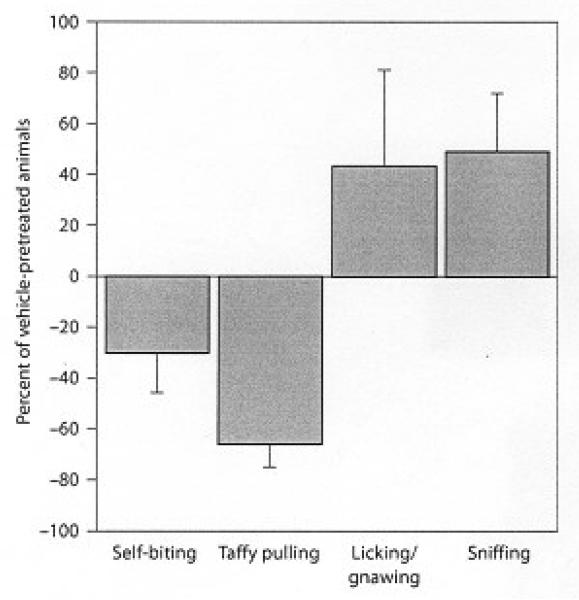
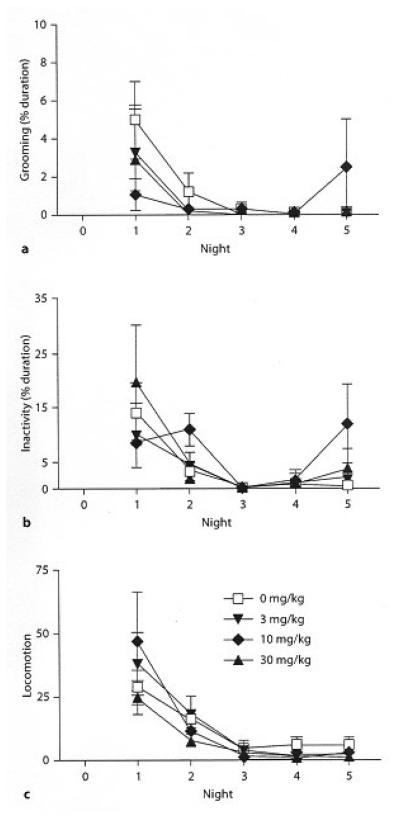
Self-injurious behavior is a common problem in many developmental disorders. The neurobiology of this behavior is not well understood, but the differing behavioral manifestations and associations with different disorders suggest that the underlying biological mechanisms are heterogeneous. The behavioral and biological heterogeneity is also evident in several animal models, where different manifestations can be provoked under different experimental conditions. Identifying commonalities among the different mechanisms is likely to be helpful in the design of treatments useful for the broadest populations of patients. The current studies reveal that nifedipine suppresses self-injurious behavior in 4 unrelated animal models: acute administration of high doses of +/-BayK 8644 or methamphetamine in mice, dopamine agonist treatment in rats with lesions of dopamine pathways during early development and repeated administration of pemoline in rats. The effect of nifedipine does not appear to be due to nonspecific mechanisms, such as sedation, since other classes of behaviors are unaffected or exaggerated. These results suggest that nifedipine may target a common biological mechanism in the expression of self-injurious behavior, and they suggest it should be considered in the treatment of self-injury in humans.
Copyright (c) 2006 S. Karger AG, Basel.
Figures



References
-
- Anderson LT, Ernst M. Self-injury in Lesch-Nyhan disease. J Autism Dev Disord. 1994;24:67–81. - PubMed
-
- Breese GR, Baumeister AA, McCown TJ, Emerick SG, Frye GD, Crotty K, Mueller RA. Behavioral differences between neonatal and adult 6-hydroxydopamine-treatcd rats to dopamine agonists: relevance to neurological symptoms in clinical syndromes with reduced brain dopamine. J Pharmacol Exp Thcr. 1984;231:343–354. - PMC - PubMed
-
- Breese GR, Knapp DJ, Criswell HE, Moy SS, Papadeas ST, Blake BL. The neonate 6-hydroxydopamine lesioned rat: a model for clinical neuroscience and neurobiological principles. Brain Res Rev. 2004;48:57–73. - PubMed
-
- Cromwell HC, Levine MS, King BS. Cortical damage enhances pemoline-induced self-injurious behavior in prepubertal rats. Pharmacol Biochem Behav. 1999;62:223–227. - PubMed
Publication types
MeSH terms
Substances
Grants and funding
LinkOut - more resources
Full Text Sources
Medical
