


Is oxygen a key factor in the lipodystrophy phenotype?
- PMID: 17049073
- PMCID: PMC1624831
- DOI: 10.1186/1476-511X-5-27
Is oxygen a key factor in the lipodystrophy phenotype?
Abstract
Background: The lipodystrophic syndrome (LD) is a disorder resulting from selective damage of adipose tissue by antiretroviral drugs included in therapy controlling human-immunodeficiency-virus-1. In the therapy cocktail the nucleoside reverse transcriptase inhibitors (NRTI) contribute to the development of this syndrome. Cellular target of NRTI was identified as the mitochondrial polymerase-gamma and their toxicity described as a mitochondrial DNA (mtDNA) depletion resulting in a mitochondrial cytopathy and involved in fat redistribution. No mechanisms offer explanation whatsoever for the lipo-atrophic and lipo-hypertrophic phenotype of LD. To understand the occurrence we proposed that the pO2 (oxygen partial pressure) could be a key factor in the development of the LD. For the first time, we report here differential effects of NRTIs on human adipose cells depending on pO2 conditions.
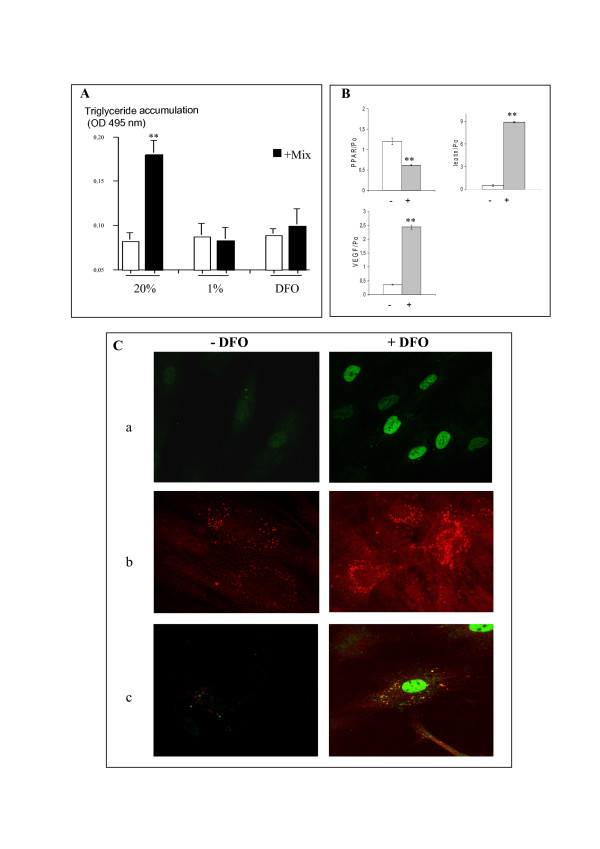
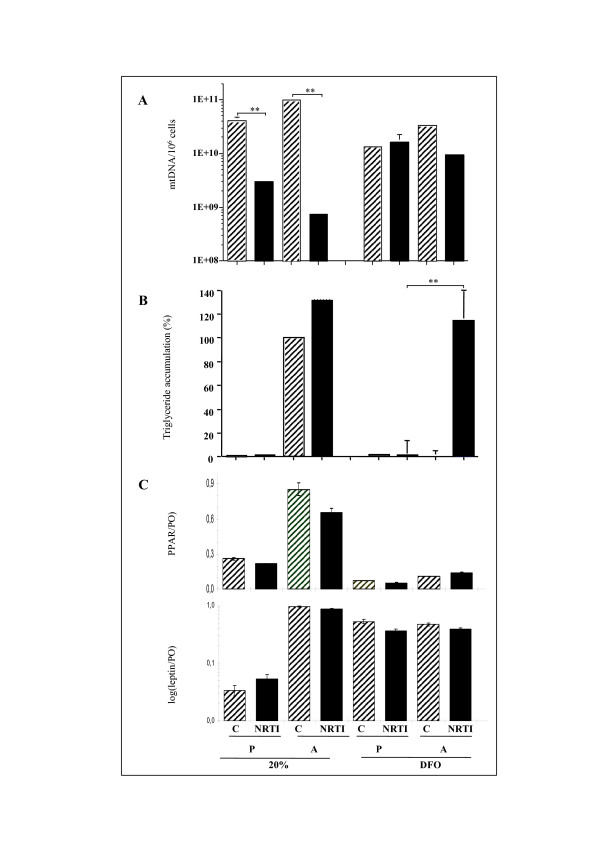
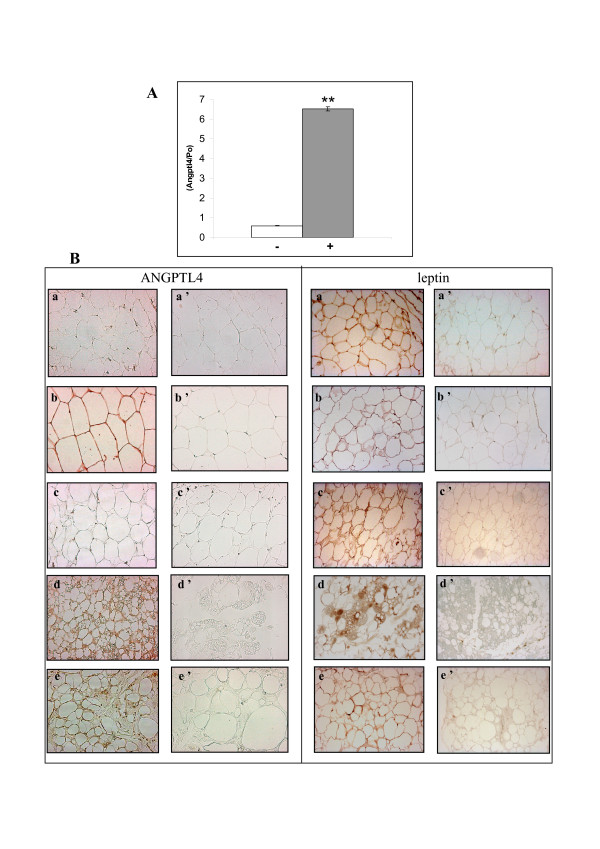
Results and discussion: We showed that the hypoxia conditions could alter adipogenesis process by modifying expression of adipocyte makers as leptin and the peroxisome proliferator-activated receptor PPARgamma and inhibiting triglyceride (TG) accumulation in adipocytes. Toxicity of NRTI followed on adipose cells in culture under normoxia versus hypoxia conditions showed, differential effects of drugs on mtDNA of these cells depending on pO2 conditions. Moreover, NRTI-treated adipocytes were refractory to the inhibition of adipogenesis under hypoxia. Finally, our hypothesis that variations of pO2 could exist between adipose tissue from anatomical origins was supported by staining of the hypoxic-induced angiopoietin ANGPTL4 depended on the location of fat.
Conclusion: Toxicity of NRTIs have been shown to be opposite on human adipose cells depending on the oxygen availability. These data suggest that the LD phenotype may be a differential consequence of NRTI effects, depending on the metabolic status of the targeted adipose tissues and provide new insights into the opposite effects of antiretroviral treatment, as observed for the lipo-atrophic and lipo-hypertrophic phenotype characteristic of LD.
Figures
References
-
- van der Valk M, Gisolf EH, Reiss P, Wit FW, Japour A, Weverling GJ, Danner SA. Increased risk of lipodystrophy when nucleoside analogue reverse transcriptase inhibitors are included with protease inhibitors in the treatment of HIV-1 infection. Aids. 2001;15:847–855. doi: 10.1097/00002030-200105040-00005. - DOI - PubMed
-
- Bastard JP, Caron M, Vidal H, Jan V, Auclair M, Vigouroux C, Luboinski J, Laville M, Maachi M, Girard PM, et al. Association between altered expression of adipogenic factor SREBP1 in lipoatrophic adipose tissue from HIV-1-infected patients and abnormal adipocyte differentiation and insulin resistance. Lancet. 2002;359:1026–1031. doi: 10.1016/S0140-6736(02)08094-7. - DOI - PubMed
-
- Lewis W. Mitochondrial dysfunction and nucleoside reverse transcriptase inhibitor therapy: experimental clarifications and persistent clinical questions. Antiviral Res. 2003;58:189–197. - PubMed
-
- Nolan D, Hammond E, Martin A, Taylor L, Herrmann S, McKinnon E, Metcalf C, Latham B, Mallal S. Mitochondrial DNA depletion and morphologic changes in adipocytes associated with nucleoside reverse transcriptase inhibitor therapy. Aids. 2003;17:1329–1338. doi: 10.1097/00002030-200306130-00007. - DOI - PubMed
-
- Nolan D, Mallal S. The role of nucleoside reverse transcriptase inhibitors in the fat redistribution syndrome. J HIV Ther. 2004;9:34–40. - PubMed
Publication types
MeSH terms
Substances
LinkOut - more resources
Full Text Sources
Research Materials
Miscellaneous
