


The different origins of stability and change in antisocial personality disorder symptoms
- PMID: 17049101
- PMCID: PMC2581495
- DOI: 10.1017/S0033291706009020
The different origins of stability and change in antisocial personality disorder symptoms
Abstract
Background: Although adult antisocial personality disorder is generally preceded by a pattern of childhood/adolescent conduct problems, only a subset of those who manifest these developmental precursors go on exhibit significant antisocial behavior in adulthood. To date, however, researchers have yet to resolve the origins of either stability or change in antisocial behavior from childhood/adolescence to adulthood.
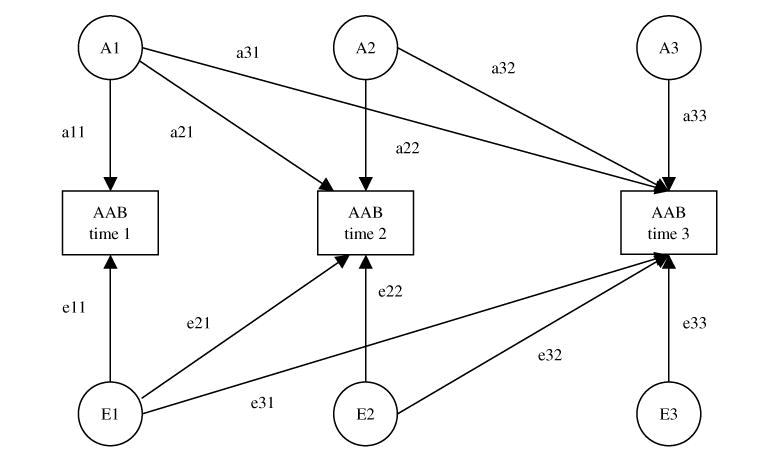
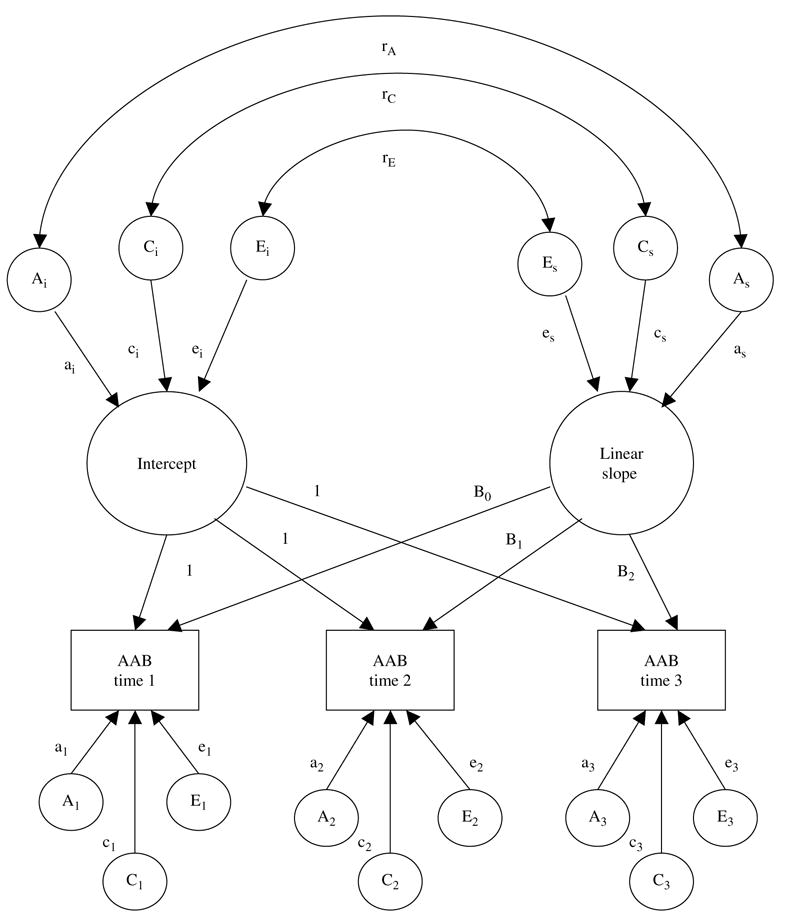
Method: The present study sought to fill this gap in the literature, making use of a sample of 626 twin pairs from the ongoing Minnesota Twin Family Study (MTFS). Participants were assessed three times between late adolescence and early adulthood. We made use of biometric Cholesky decomposition and latent growth curve modeling techniques, which allow researchers to disambiguate processes of stability and change and evaluate their respective etiologies (i.e. genetic or environmental).
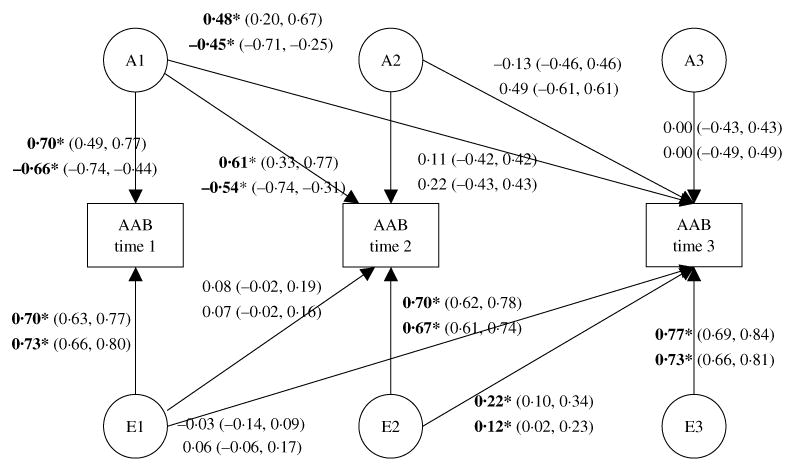
Results: Our results revealed that genetic forces were largely responsible for the stability of adult symptoms of antisocial behavior (AAB) from late adolescence through mid-adulthood, while non-shared environmental influences were primarily responsible for change. Importantly, however, although some of the latter represented systematic and long-lasting influence, much of this non-shared environmental variance appeared transient and idiosyncratic.
Conclusions: Such findings highlight the enduring impact of genetic influences on AAB, and offer insights into the nature of non-shared environmental influences on development.
Conflict of interest statement
DECLARATION OF INTEREST
None.
Figures
References
-
- Akaike H. Factor analysis and AIC. Psychometrika. 1987;52:317–332.
-
- Asbury K, Dunn JF, Pike A, Plomin R. Nonshared environmental influences on individual differences in early behavioral development: a monozygotic twin differences study. Child Development. 2003;74:933–943. - PubMed
-
- Bartels M, van den Oord EJCG, Hudziak JJ, Rietvald MJH, van Beijsterveldt CEM, Boomsma DI. Genetic and environmental mechanisms underlying stability and change in problem behaviors at ages 3, 7, 10, and 12. Developmental Psychology. 2004;40:852–867. - PubMed
-
- Cronk NJ, Slutske W, Madden PAF, Bucholz KK, Reich W, Heath AC. Emotional and behavioral problems among female twins: an evaluation of the equal environments assumption. Journal of the American Academy of Child and Adolescent Psychiatry. 2002;41:829–837. - PubMed
Publication types
MeSH terms
Grants and funding
LinkOut - more resources
Full Text Sources
Miscellaneous
