


Myeloid cell trafficking and tumor angiogenesis
- PMID: 17049723
- PMCID: PMC3167210
- DOI: 10.1016/j.canlet.2006.09.002
Myeloid cell trafficking and tumor angiogenesis
Abstract
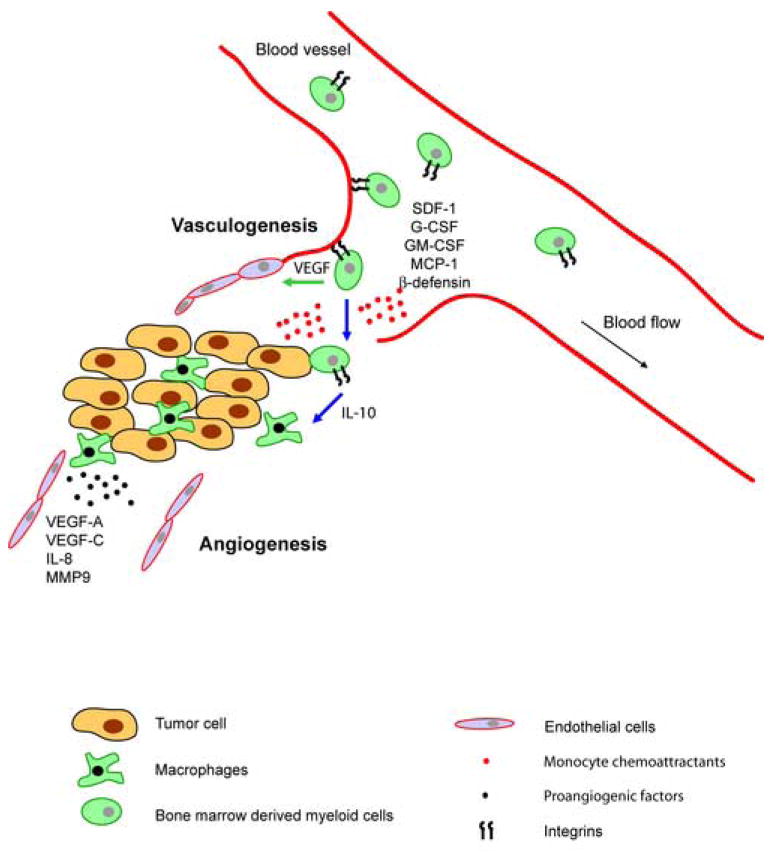
Tumor growth and metastasis depend on neovascularization, the growth of new blood vessels. Recent findings have revealed that tumor neovascularization is regulated in part by monocytes, which are myeloid lineage cells from the bone marrow. Tumors exhibit significant monocyte infiltrates, which are actively recruited to the tumor microenvironment. Upon tumor infiltration, monocytes can participate in tumor neovascularization. Monocytes can either differentiate into macrophages, which express proangiogenic growth factors, or into endothelial-like cells, which may directly participate in neovascularization. Preliminary studies in animals suggest that modulation of bone marrow-derived cell trafficking into tumors will provide a useful new approach in cancer therapy.
Figures
References
-
- Carmeliet P. Angiogenesis in life, disease and medicine. Nature. 2005;428:932–936. - PubMed
-
- Coultas L, Chawengsaksophak K, Rossant J. Endothelial cells and VEGF in vascular development. Nature. 2005;438:927–945. - PubMed
-
- Lyden D, Hattori K, Dias S, Costa C, Blaikie P, Butros L, et al. Impaired recruitment of bone-marrow-derived endothelial and hematopoietic precursor cells blocks tumor angiogenesis and growth. Nat Med. 2001;11:1194–1201. - PubMed
-
- Asahara T, Murohara T, Sullivan A, Silver M, van der Zee R, Li T, et al. Isolation of putative progenitor endothelial cells for angiogenesis. Science. 1997;5302:964–967. - PubMed
Publication types
MeSH terms
Substances
Grants and funding
LinkOut - more resources
Full Text Sources
Other Literature Sources
