


Clinical usefulness of serum telomerase reverse transcriptase (hTERT) mRNA and epidermal growth factor receptor (EGFR) mRNA as a novel tumor marker for lung cancer
- PMID: 17052260
- PMCID: PMC11160089
- DOI: 10.1111/j.1349-7006.2006.00342.x
Clinical usefulness of serum telomerase reverse transcriptase (hTERT) mRNA and epidermal growth factor receptor (EGFR) mRNA as a novel tumor marker for lung cancer
Abstract
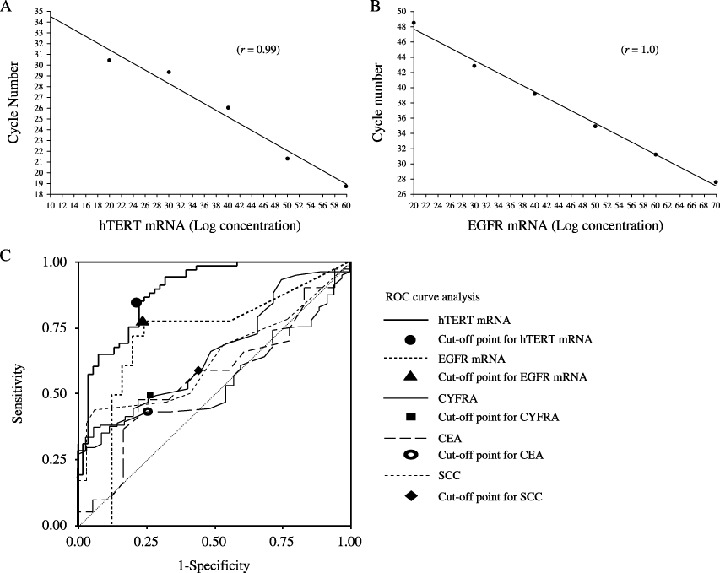
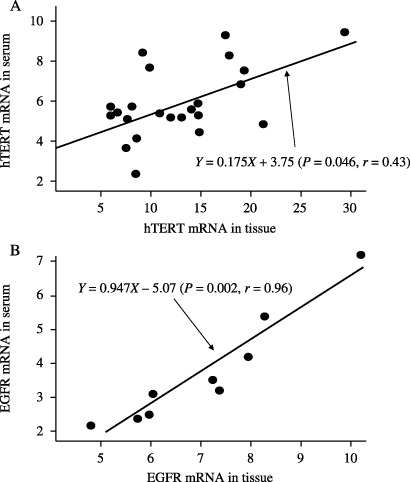
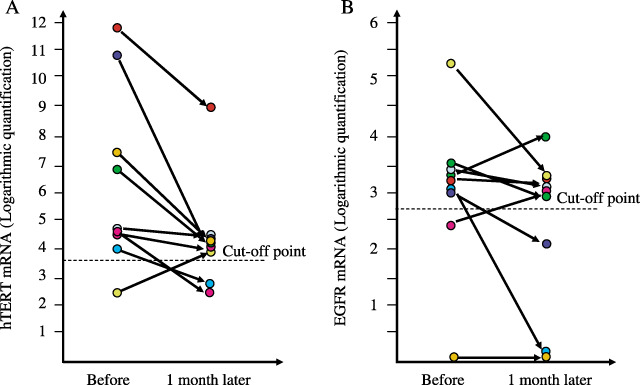
Using a newly developed assay of telomerase reverse transcriptase (hTERT) mRNA in serum by real-time RT-PCR, we previously reported this assay to be superior to other tumor markers for hepatoma. In this study, we aimed to clarify its clinical significance as a biomarker for lung cancer. In 112 patients with lung tumor and 80 individuals without cancer, we measured serum hTERT mRNA and epidermal growth factor receptor (EGFR) mRNA levels, using a quantitative one-step real-time RT-PCR assay. We examined its sensitivity and specificity in lung cancer diagnosis, its clinical significance in comparison with other tumor markers, and its correlation with the clinical parameters using multivariate analyses and correlation relative tests. The copy number of serum hTERT mRNA was independently correlated with tumor size, tumor number, presence of metastasis and recurrence, and smoking (all P < 0.05). EGFR mRNA correlated with tumor number and clinical stage (both P < 0.05). The sensitivity and specificity in lung cancer diagnosis were 89.0% and 72.7% for hTERT mRNA, and 71.3% and 80.0% for EGFR mRNA, respectively. hTERT mRNA was superior to other tumor markers in lung cancer diagnosis. For both mRNAs, serum levels were significantly correlated with levels in lung cancer tissues (both P < 0.05). The copy number of hTERT mRNA significantly decreased after the surgical treatment. The data suggest that hTERT mRNA, especially when combined with EGFR mRNA, is a novel and excellent biomarker for pulmonary malignancies to diagnose and assess the clinical stage.
Figures
References
-
- Greenlee RT, Hill‐Harmon MB, Murray T et al. Cancer statistics. CA Cancer J Clin 2005; 51: 15–36. - PubMed
-
- Giaccone G. Clinical impact of novel treatment strategies. Oncogene 2002; 21: 6970–81. - PubMed
-
- Johnson BE, Grayson J, Makuch RW et al. Ten‐year survival of patients with small‐cell lung cancer treated with combination chemotherapy with or without irradiation. J Clin Oncol 1990; 8: 396–401. - PubMed
-
- Schneider J, Philipp M, Velcovsky HG et al. Pro‐gastrin‐releasing peptide (ProGRP), neuron specific enolase (NSE), carcinoembryonic antigen (CEA), and cytokeratin 19‐fragments (CYFRA 21‐1) in patients with lung cancer in comparison to other lung diseases. Anticancer Res 2003; 23: 885–93. - PubMed
-
- Tagliaferri P, Tassone P, Blotta S et al. Antitumor therapeutic strategies based on the targeting of epidermal growth factor‐induced survival pathways. Curr Drug Targets 2005; 6: 289–300. - PubMed
Publication types
MeSH terms
Substances
LinkOut - more resources
Full Text Sources
Medical
Research Materials
Miscellaneous
