


Connexin-mediated cardiac impulse propagation: connexin 30.2 slows atrioventricular conduction in mouse heart
- PMID: 17055382
- PMCID: PMC3615414
- DOI: 10.1016/j.tcm.2006.05.002
Connexin-mediated cardiac impulse propagation: connexin 30.2 slows atrioventricular conduction in mouse heart
Abstract
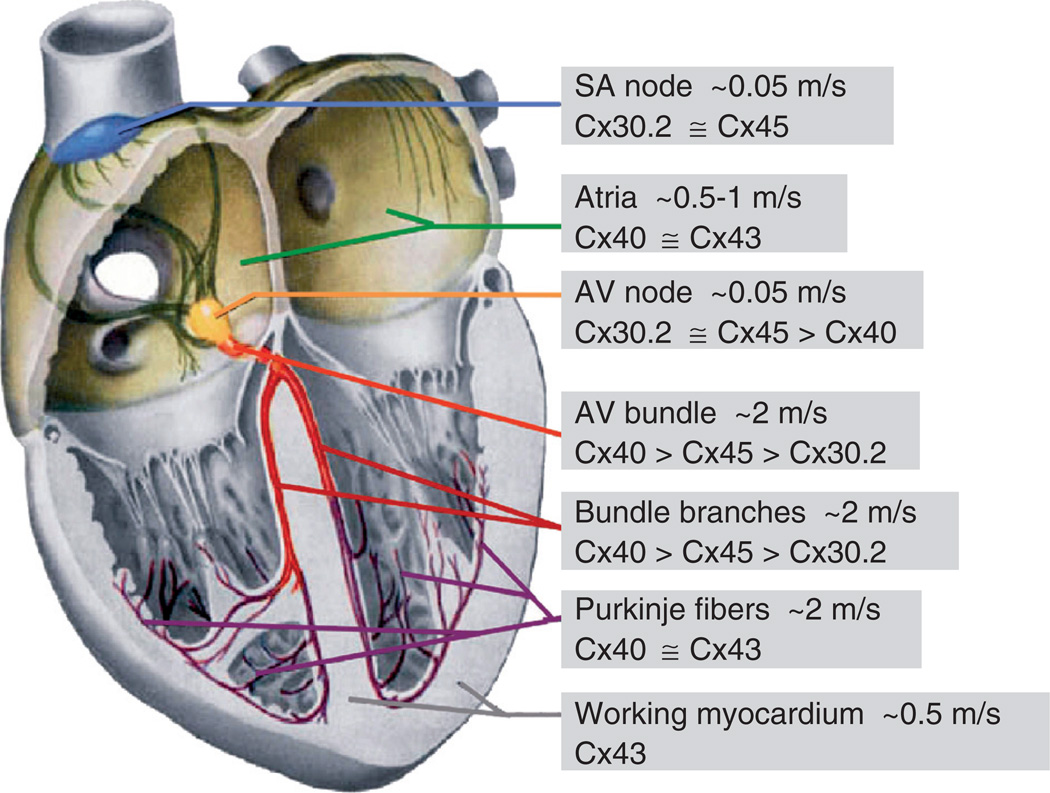
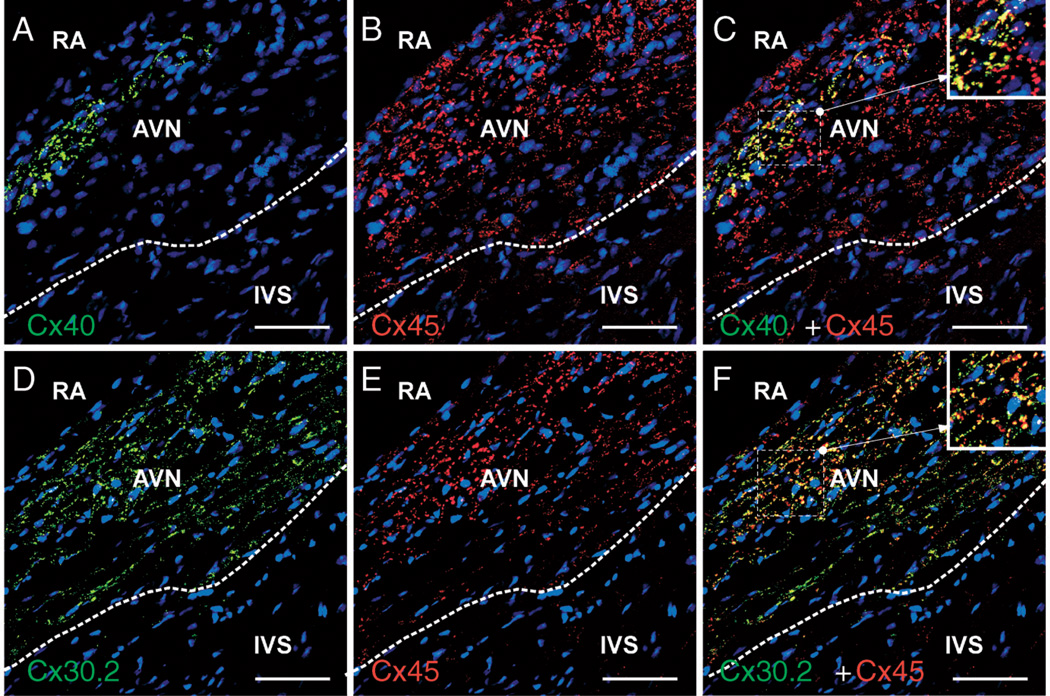
In mouse heart, four connexins (Cxs), Cx30.2, Cx40, Cx43, and Cx45, form gap junction (GJ) channels for electric and metabolic cell-to-cell signaling. Extent and pattern of Cx isoform expression together with cytoarchitecture and excitability of cells determine the velocity of excitation spread in different regions of the heart. In the SA node, cell-cell coupling is mediated by Cx30.2 and Cx45, which form low-conductance (approximately 9 and 32 pS, respectively) GJ channels. In contrast, the working cardiomyocytes of atria and ventricles express mainly Cx40 and Cx43, which form GJ channels of high conductance (approximately 180 and 115 pS, respectively) that facilitate the fast conduction necessary for efficient mechanical contraction. In the AV node, cell-cell coupling is mediated by abundantly expressed Cx30.2 and Cx45 and Cx40, which is expressed to a lesser extent. Cx30.2 and Cx45 may determine higher intercellular resistance and slower conduction in the SA- and AV-nodal regions than in the ventricular conduction system or the atrial and ventricular working myocardium. Cx30.2 and its putative human ortholog, Cx31.9, under physiologic conditions form unapposed hemichannels in nonjunctional plasma membrane; these hemichannels have a conductance of approximately 20 pS and are permeable to cationic dyes up to approximately 400 Da in molecular mass. Genetic ablation of Cxs confirmed that Cx40 and Cx43 are important in determining the high conduction velocities in atria and ventricles, whereas the deletion of the Cx30.2 complementary DNA led to accelerated conduction in the AV node and reduced the Wenckebach period. We suggest that these effects are caused by (1) a dominant-negative effect of Cx30.2 on junctional conductance via formation of low-conductance homotypic and heterotypic GJ channels, and (2) open Cx30.2 hemichannels in non-junctional membranes, which shorten the space constant and depolarize the excitable membrane.
Figures
References
Publication types
MeSH terms
Substances
Grants and funding
LinkOut - more resources
Full Text Sources
Miscellaneous
