


Formulation of functionalized PLGA-PEG nanoparticles for in vivo targeted drug delivery
- PMID: 17055572
- PMCID: PMC2925222
- DOI: 10.1016/j.biomaterials.2006.09.047
Formulation of functionalized PLGA-PEG nanoparticles for in vivo targeted drug delivery
Abstract
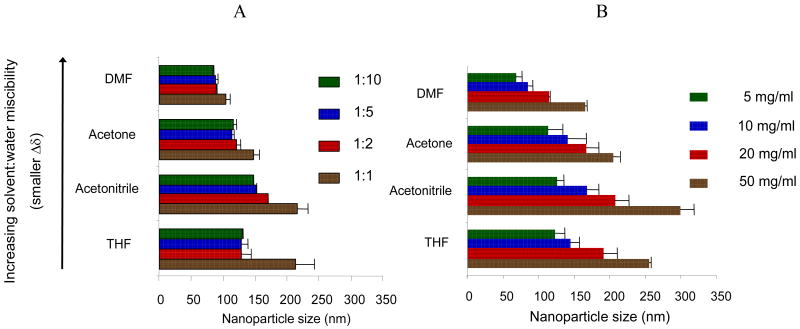
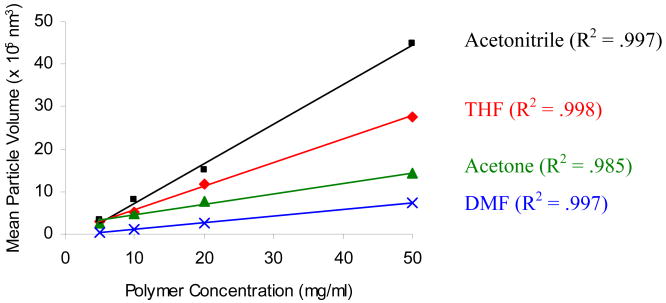
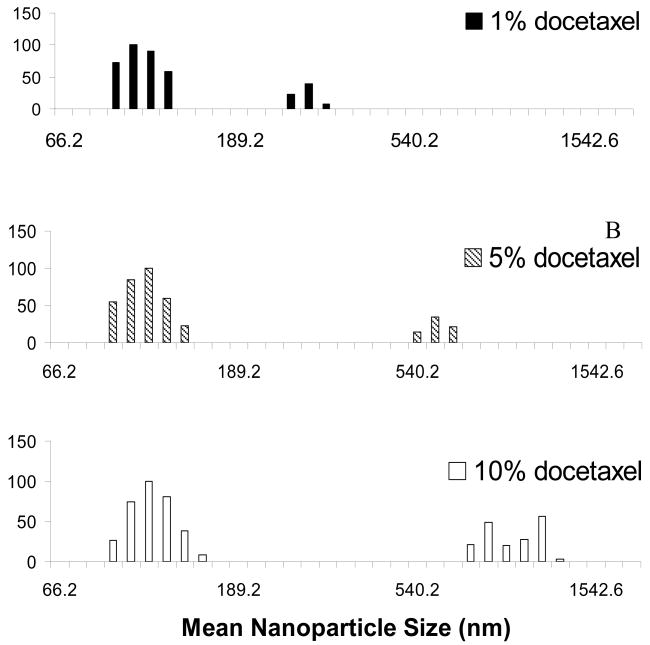
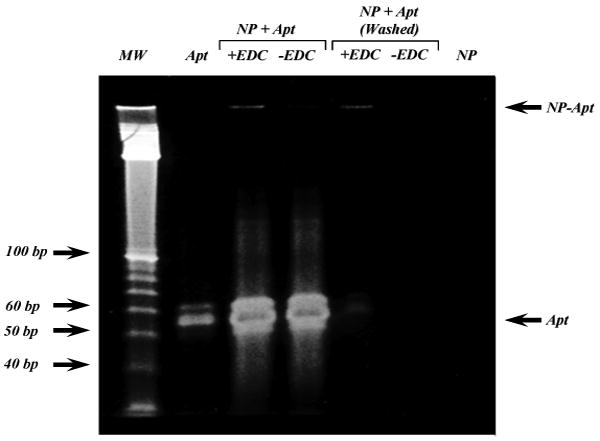
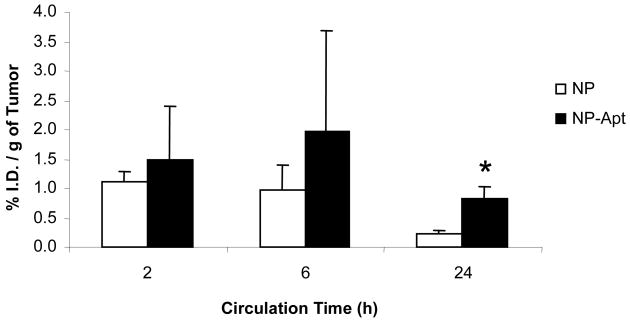
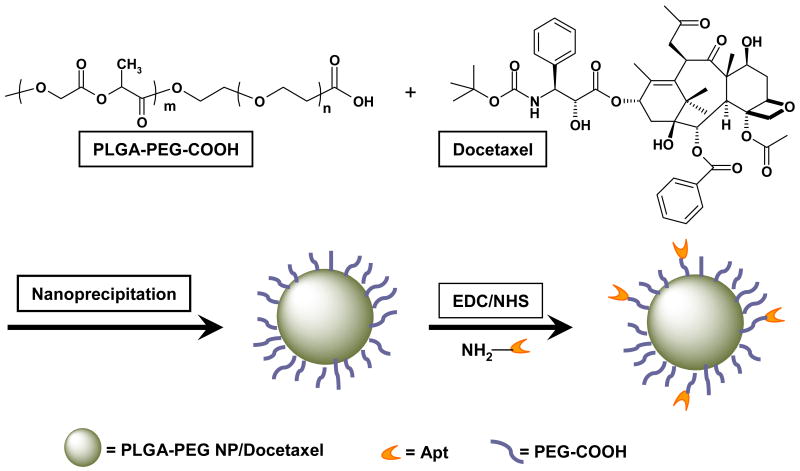
Nanoparticle (NP) size has been shown to significantly affect the biodistribution of targeted and non-targeted NPs in an organ specific manner. Herein we have developed NPs from carboxy-terminated poly(d,L-lactide-co-glycolide)-block-poly(ethylene glycol) (PLGA-b-PEG-COOH) polymer and studied the effects of altering the following formulation parameters on the size of NPs: (1) polymer concentration, (2) drug loading, (3) water miscibility of solvent, and (4) the ratio of water to solvent. We found that NP mean volumetric size correlates linearly with polymer concentration for NPs between 70 and 250 nm in diameter (linear coefficient=0.99 for NPs formulated with solvents studied). NPs with desirable size, drug loading, and polydispersity were conjugated to the A10 RNA aptamer (Apt) that binds to the prostate specific membrane antigen (PSMA), and NP and NP-Apt biodistribution was evaluated in a LNCaP (PSMA+) xenograft mouse model of prostate cancer. The surface functionalization of NPs with the A10 PSMA Apt significantly enhanced delivery of NPs to tumors vs. equivalent NPs lacking the A10 PSMA Apt (a 3.77-fold increase at 24h; NP-Apt 0.83%+/-0.21% vs. NP 0.22%+/-0.07% of injected dose per gram of tissue; mean+/-SD, n=4, p=0.002). The ability to control NP size together with targeted delivery may result in favorable biodistribution and development of clinically relevant targeted therapies.
Figures
References
-
- Allen TM, Cullis PR. Drug Delivery Systems: Entering the Mainstream. Science. 2004;303(5665):1818–22. - PubMed
-
- LaVan DA, McGuire T, Langer R. Small-scale systems for in vivo drug delivery. Nat Biotechnol. 2003;21(10):1184–91. - PubMed
-
- Brigger I, Dubernet C, Couvreur P. Nanoparticles in cancer therapy and diagnosis. Adv Drug Deliv Rev. 2002;54(5):631–51. - PubMed
-
- Brannon-Peppas L, Blanchette JO. Nanoparticle and targeted systems for cancer therapy. Adv Drug Deliv Rev. 2004;56(11):1649–59. - PubMed
-
- Fahmy TM, Fong PM, Goyal A, Saltzman WM. Targeted for drug delivery. Materials Today. 2005;8(8) 1:18–26.
Publication types
MeSH terms
Substances
Grants and funding
LinkOut - more resources
Full Text Sources
Other Literature Sources
Miscellaneous
