


Good genes sexual selection in nature
- PMID: 17060640
- PMCID: PMC1637584
- DOI: 10.1073/pnas.0608184103
Good genes sexual selection in nature
Abstract
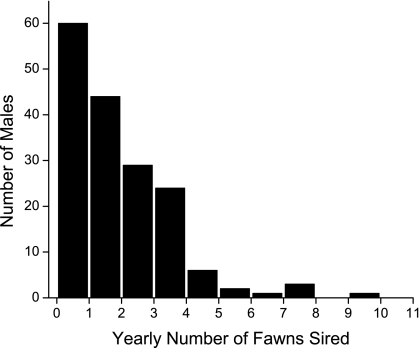
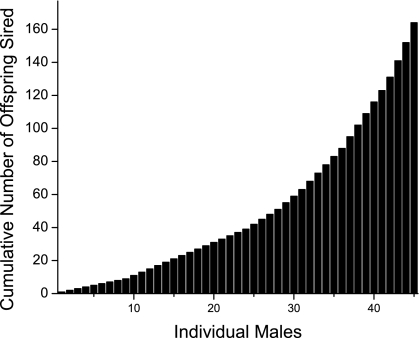
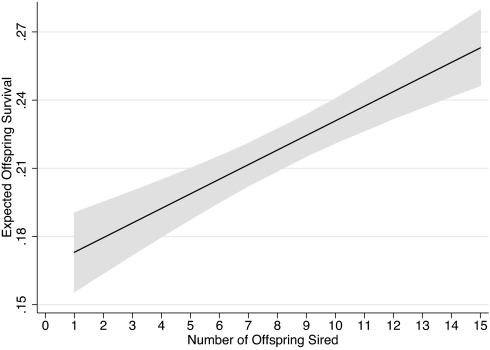
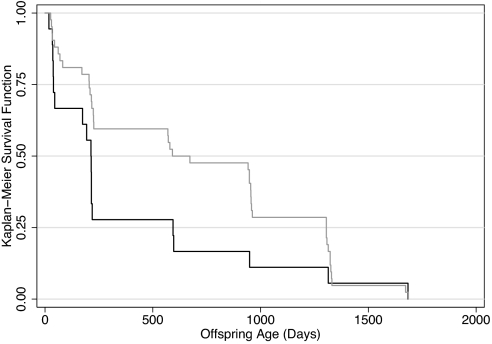
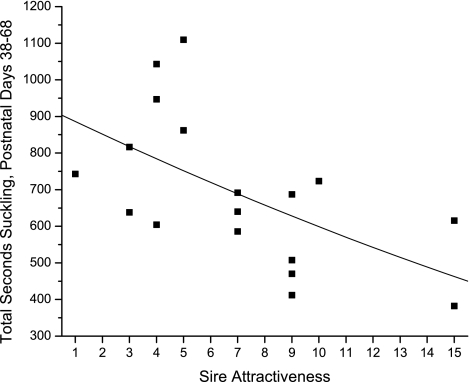
Whether the mate sampling and choice performed by females in nature influences offspring performance is a controversial issue in theory and an open empirical question. Pronghorn (Antilocapra americana) females engage in an obvious and energetically expensive mate sampling process to identify vigorous males. Although individual females sample independently, their choices converge on a small proportion of males that sire most young. Offspring of attractive males were more likely to survive to weaning and to age classes as late as 5 years, resulting in a selection differential, calculated by expected differences in lifetime number of offspring weaned, of 0.32 against random mating. Enhanced survival to weaning appeared to be accomplished by faster growth rates. Females compensated for matings with a less attractive mate by elevating rates of milk delivery to their young. Because pronghorn males do not have costly ornaments, we conclude that female choice for good genes can exist in the absence of ornaments. Furthermore, female choice may be important and unrecognized as a force that can lower population genetic load.
Conflict of interest statement
The authors declare no conflict of interest.
Figures
References
Publication types
MeSH terms
LinkOut - more resources
Full Text Sources
Other Literature Sources
