Increases in alcohol and marijuana use during the transition out of high school into emerging adulthood: The effects of leaving home, going to college, and high school protective factors
- PMID: 17060997
- PMCID: PMC2314672
- DOI: 10.15288/jsa.2006.67.810
Increases in alcohol and marijuana use during the transition out of high school into emerging adulthood: The effects of leaving home, going to college, and high school protective factors
Abstract
Objective: This study examined the effects of leaving home and going to college on changes in the frequency of alcohol use, heavy episodic drinking, and marijuana use shortly after leaving high school. We also examined how protective factors in late adolescence predict post-high school substance use and moderate the effects of leaving home and going to college.
Method: Data came from subjects (N = 319; 53% male) interviewed at the end of 12th grade and again approximately 6 months later, as part of the Raising Healthy Children project.
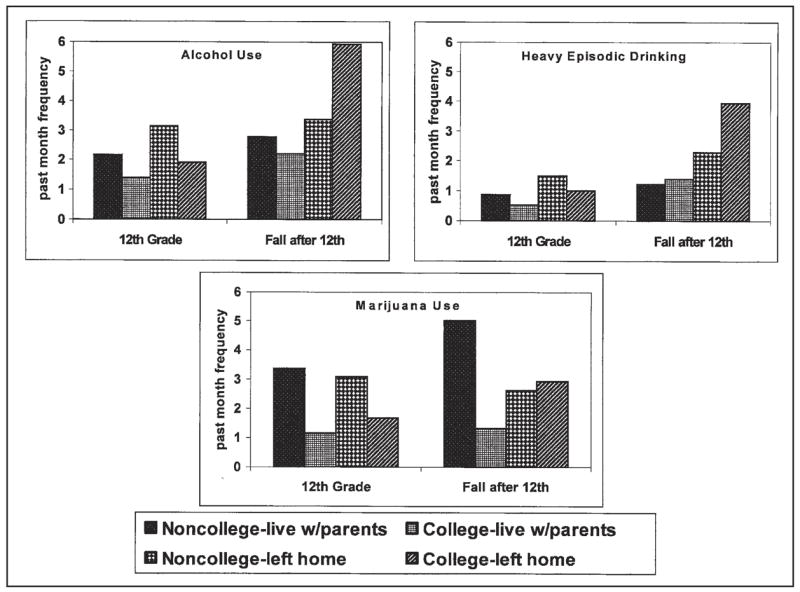
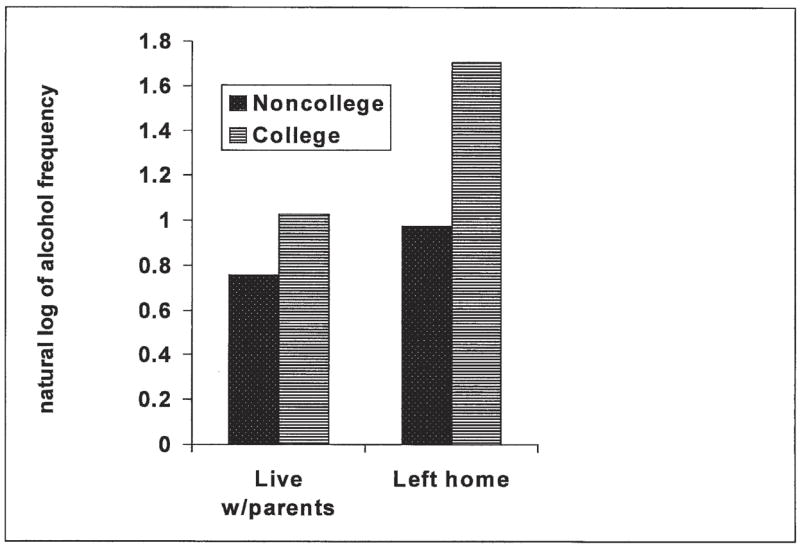
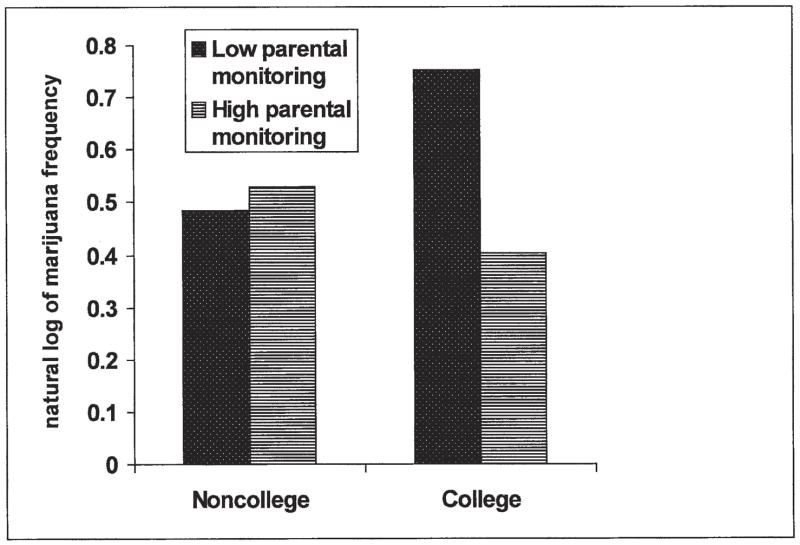
Results: Leaving home and going to college were significantly related to increases in the frequency of alcohol use and heavy episodic drinking from high school to emerging adulthood but not to changes in marijuana use. Having fewer friends who used each substance protected against increases in the frequency of alcohol use, heavy episodic drinking, and marijuana use. Higher religiosity protected against increases in alcohol-and marijuana-use frequency. Higher parental monitoring protected against increases in heavy episodic drinking and moderated the effect of going to college on marijuana use. Lower sensation seeking lessened the effect of going to college on increases in alcohol use and heavy episodic drinking.
Conclusions: To prevent increases in substance use in emerging adulthood, interventions should concentrate on strengthening prosocial involvement and parental monitoring during high school. In addition, youths with high sensation seeking might be targeted for added intervention.
Figures

References
-
- Aiken LS, West SG. Multiple Regression: Testing and Interpreting Interactions. Thousand Oaks, CA: Sage; 1991.
-
- Arnett JJ. Emerging adulthood: A theory of development from the late teens through the twenties. Amer Psychol. 2000;55:469–480. - PubMed
-
- Arnett JJ. The developmental context of substance use in emerging adulthood. J Drug Issues. 2005;35:235–254.
-
- Bachman JG, Wadsworth KN, O’Malley PM, Johnston LD, Schulenberg JE. Smoking, Drinking and Drug Use in Young Adulthood: The Impacts of New Freedoms and New Responsibilities. Mahwah, NJ: Lawrence Erlbaum; 1997.
-
- Baer JS, Kivlahan DR, Marlatt GA. High-risk drinking across the transition from high school to college. Alcsm Clin Exp Res. 1995;19:54–61. - PubMed
Publication types
MeSH terms
Grants and funding
LinkOut - more resources
Full Text Sources
Medical