


Genomic sequence and analysis of a vaccinia virus isolate from a patient with a smallpox vaccine-related complication
- PMID: 17062162
- PMCID: PMC1635044
- DOI: 10.1186/1743-422X-3-88
Genomic sequence and analysis of a vaccinia virus isolate from a patient with a smallpox vaccine-related complication
Abstract
Background: Vaccinia virus (VACV)-DUKE was isolated from a lesion on a 54 year old female who presented to a doctor at the Duke University Medical Center. She was diagnosed with progressive vaccinia and treated with vaccinia immune globulin. The availability of the VACV-DUKE genome sequence permits a first time genomic comparison of a VACV isolate associated with a smallpox vaccine complication with the sequence of culture-derived clonal isolates of the Dryvax vaccine.
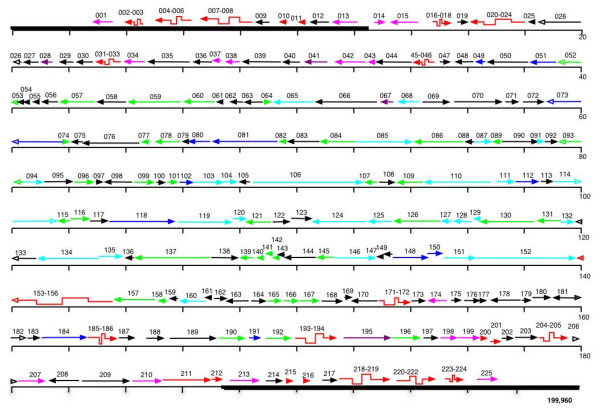
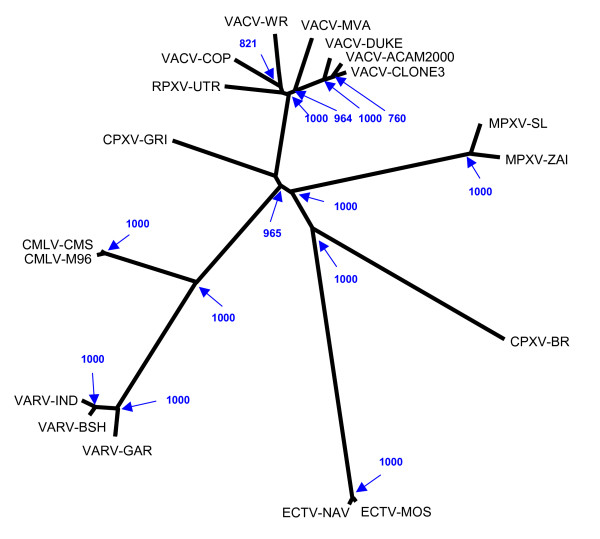
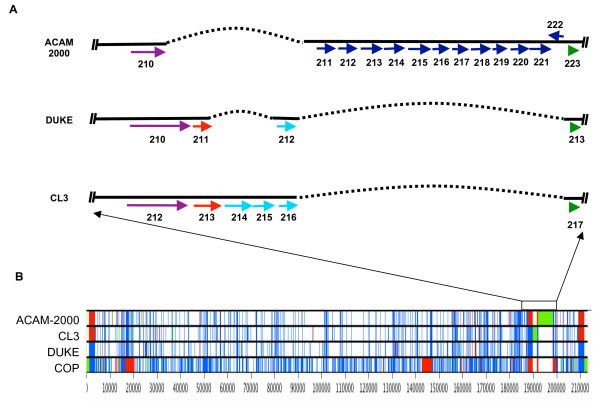
Results: This study showed that VACV-DUKE is most similar to VACV-ACAM2000 and CLONE3, two VACV clones isolated from the Dryvax vaccine stock confirming VACV-DUKE as an isolate from Dryvax. However, VACV-DUKE is unique because it is, to date, the only Dryvax clone isolated from a patient experiencing a vaccine-associated complication. The 199,960 bp VACV-DUKE genome encodes 225 open reading frames, including 178 intact genes and 47 gene fragments. Between VACV-DUKE and the other Dryvax isolates, the major genomic differences are in fragmentation of the ankyrin-like, and kelch-like genes, presence of a full-length Interferon-alpha/beta receptor gene, and the absence of a duplication of 12 ORFs in the inverted terminal repeat. Excluding this region, the DNA sequence of VACV-DUKE differs from the other two Dryvax isolates by less than 0.4%. DNA sequencing also indicated that there was little heterogeneity in the sample, supporting the hypothesis that virus from an individual lesion is clonal in origin despite the fact that the vaccine is a mixed population.
Conclusion: Virus in lesions that result from progressive vaccinia following vaccination with Dryvax are likely clonal in origin. The genomic sequence of VACV-DUKE is overall very similar to that of Dryvax cell culture-derived clonal isolates. Furthermore, with the sequences of multiple clones from Dryvax we can begin to appreciate the diversity of the viral population in the smallpox vaccine.
Figures
References
-
- Fenner F., Henderson, D.A., Arita, I., Jezek, Z., Ladnyi, I.D. Smallpox and its Eradication. Geneva , World Health Organization; 1988.
-
- Chen N, Li G, Liszewski MK, Atkinson JP, Jahrling PB, Feng Z, Schriewer J, Buck C, Wang C, Lefkowitz EJ, Esposito JJ, Harms T, Damon IK, Roper RL, Upton C, Buller RM. Virulence differences between monkeypox virus isolates from West Africa and the Congo basin. Virology. 2005;340:46–63. doi: 10.1016/j.virol.2005.05.030. - DOI - PMC - PubMed
-
- Learned LA, Reynolds MG, Wassa DW, Li Y, Olson VA, Karem K, Stempora LL, Braden ZH, Kline R, Likos A, Libama F, Moudzeo H, Bolanda JD, Tarangonia P, Boumandoki P, Formenty P, Harvey JM, Damon IK. Extended Interhuman Transmission Of Monkeypox In A Hospital Community In The Republic Of The Congo, 2003. Am J Trop Med Hyg. 2005;73:428–434. - PubMed
-
- Centers for Disease Control and Prevention (CDC) Multistate outbreak of monkeypox--Illinois, Indiana, and Wisconsin, 2003. MMWR Morb Mortal Wkly Rep. 2003;52:537–540. - PubMed
Publication types
MeSH terms
Substances
Associated data
- Actions
- Actions
- Actions
- Actions
- Actions
- Actions
- Actions
- Actions
- Actions
- Actions
- Actions
- Actions
- Actions
- Actions
- Actions
- Actions
Grants and funding
LinkOut - more resources
Full Text Sources
Other Literature Sources
Medical
