


Brain regions mediating flexible rule use during development
- PMID: 17065463
- PMCID: PMC6674662
- DOI: 10.1523/JNEUROSCI.2165-06.2006
Brain regions mediating flexible rule use during development
Abstract
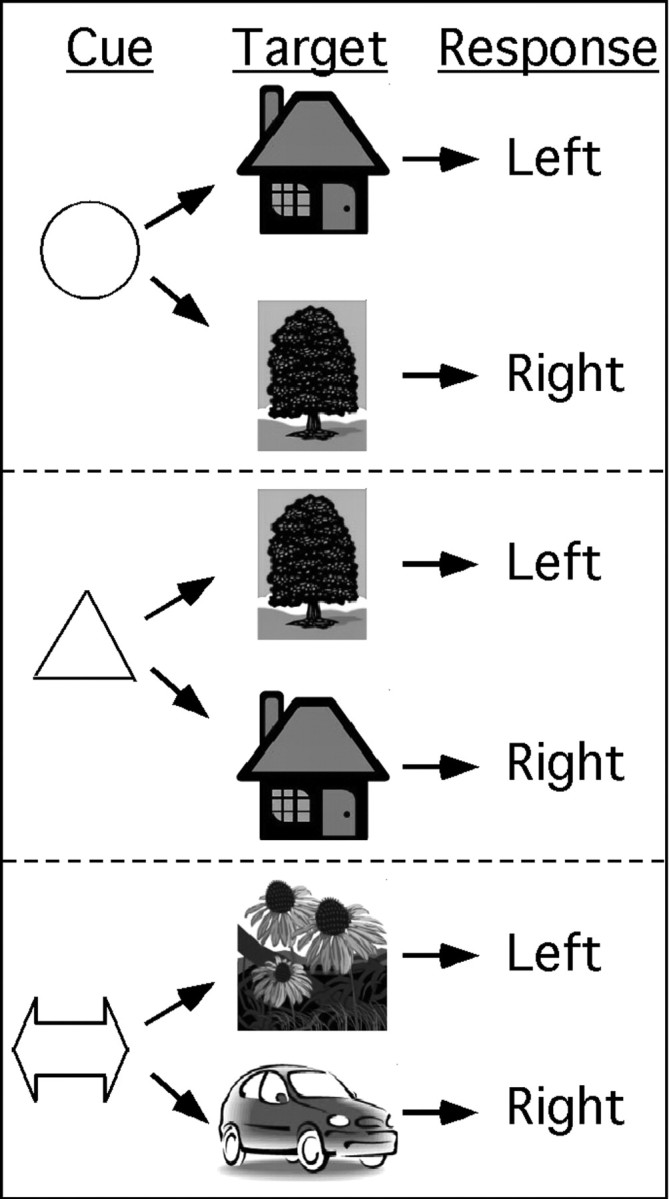
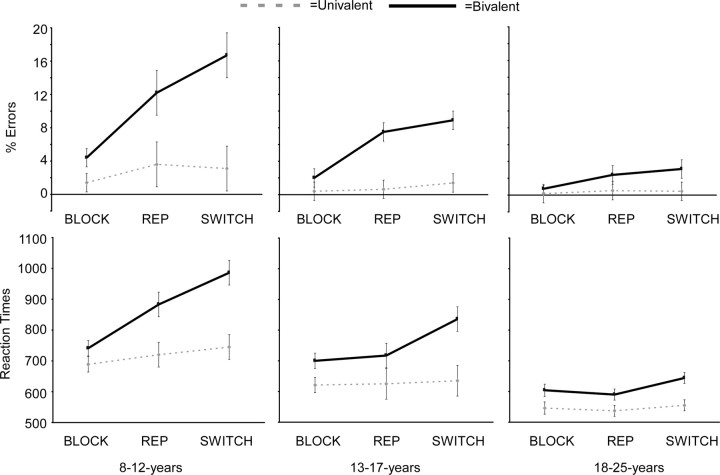
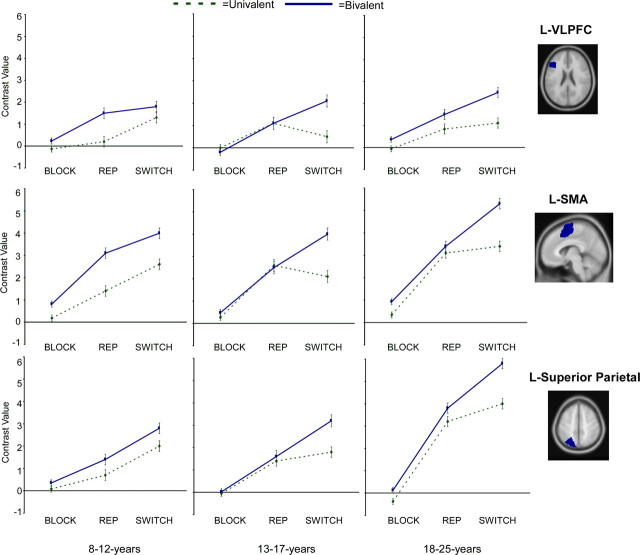
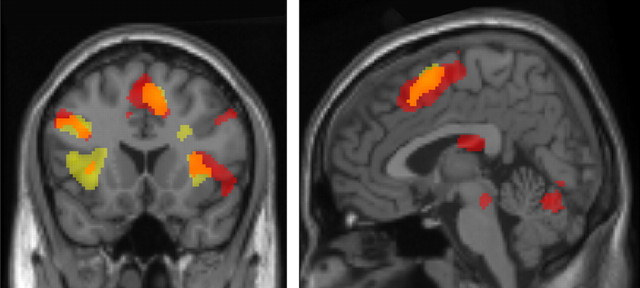
During development, children improve at retrieving and using rules to guide their behavior and at flexibly switching between these rules. In this study, we used functional magnetic resonance imaging to examine the changes in brain function associated with developmental changes in flexible rule use. Three age groups (8-12, 13-17, and 18-25 years) performed a task in which they were cued to respond to target stimuli on the basis of simple task rules. Bivalent target stimuli were associated with different responses, depending on the rule, whereas univalent target stimuli were associated with fixed responses. The comparison of bivalent and univalent trials enabled the identification of regions modulated by demands on rule representation. The comparison of rule-switch and rule-repetition trials enabled the identification of regions involved in rule switching. We have used this task previously in adults and have shown that ventrolateral prefrontal cortex (VLPFC) and the (pre)-supplementary motor area (pre-SMA/SMA) have dissociable roles in task-switching, such that VLPFC is associated most closely with rule representation, and pre-SMA/SMA is associated with suppression of the previous task set (Crone et al., 2006a). Based on behavioral data in children (Crone et al., 2004), we had predicted that regions associated with task-set suppression would show mature patterns of activation earlier in development than regions associated with rule representation. Indeed, we found an adult-like pattern of activation in pre-SMA/SMA by adolescence, whereas the pattern of VLPFC activation differed among children, adolescents, and adults. These findings suggest that two components of task-switching--rule retrieval and task-set suppression--follow distinct neurodevelopmental trajectories.
Figures
References
-
- Achenbach TM. Burlington, VT: University of Vermont; 1991. Manual for the child behavior checklist/4–18 and 1991 profile.
-
- Brass M, von Cramon DY. The role of the frontal cortex in task preparation. Cereb Cortex. 2002;12:908–914. - PubMed
-
- Brass M, Ruge H, Meiran N, Rubin O, Koch I, Zysset S, Prinz W, von Cramon DY. When the same response has different meanings: recoding the response meaning in the lateral prefrontal cortex. NeuroImage. 2003;20:1026–1031. - PubMed
Publication types
MeSH terms
LinkOut - more resources
Full Text Sources
