


Pharmacokinetic considerations and efficacy of levofloxacin in an inhalational anthrax (postexposure) rhesus monkey model
- PMID: 17065619
- PMCID: PMC1635218
- DOI: 10.1128/AAC.00090-06
Pharmacokinetic considerations and efficacy of levofloxacin in an inhalational anthrax (postexposure) rhesus monkey model
Abstract
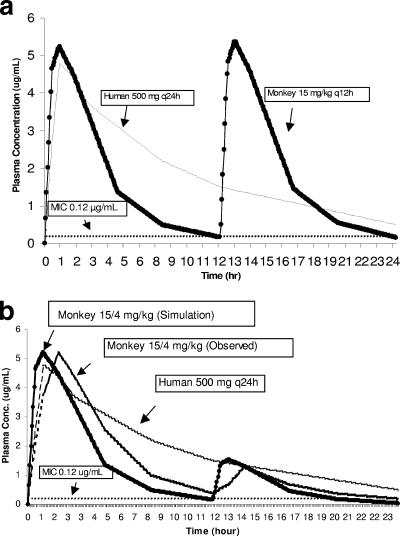
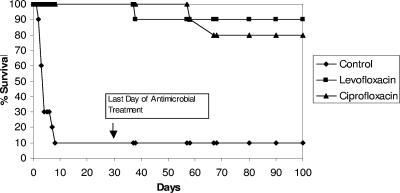
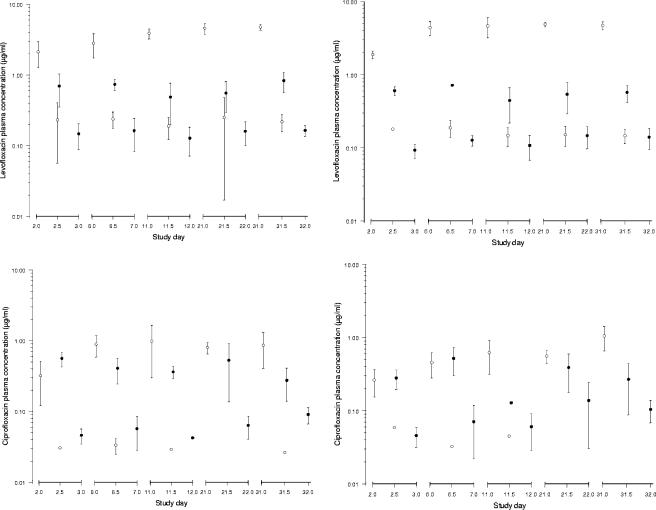
Because the treatment of inhalational anthrax cannot be studied in human clinical trials, it is necessary to conduct efficacy studies using a rhesus monkey model. However, the half-life of levofloxacin was approximately three times shorter in rhesus monkeys than in humans. Computer simulations to match plasma concentration profile, area under the concentration-time curve (AUC), and time above MIC for a human oral dose of 500 mg levofloxacin once a day identified a dosing regimen in rhesus monkeys that would most closely match human exposure: 15 mg/kg followed by 4 mg/kg administered 12 h later. Approximately 24 h following inhalational exposure to approximately 49 times the 50% lethal doses of Bacillus anthracis (Ames strain), monkeys were treated daily with vehicle, levofloxacin, or ciprofloxacin for 30 days. Ciprofloxacin was administered at 16 mg/kg twice a day. Following the 30-day treatment, monkeys were observed for 70 days. Nine of 10 control monkeys died within 9 days of exposure. No clinical signs were observed in fluoroquinolone-treated monkeys during the 30 treatment days. One monkey died 8 days after levofloxacin treatment, and two monkeys from the ciprofloxacin group died 27 and 36 days posttreatment, respectively. These deaths were probably related to the germination of residual spores. B. anthracis was positively cultured from several tissues from the three fluoroquinolone-treated monkeys that died. MICs of levofloxacin and ciprofloxacin from these cultures were comparable to those from the inoculating strain. These data demonstrate that a humanized dosing regimen of levofloxacin was effective in preventing morbidity and mortality from inhalational anthrax in rhesus monkeys and did not select for resistance.
Figures
References
-
- Aminimanizani, A., P. Beringer, and R. Jellife. 2001. Comparative pharmacokinetics and pharmacodynamics of the newer fluoroquinolone antibacterials. Clin. Pharmacokinet. 40(3):169-187. - PubMed
-
- Center for Drug Evaluation and Research. 2002. Draft guidance for industry, inhalational anthrax (post-exposure)—developing antimicrobial drugs. Center for Drug Evaluation and Research, U.S. Food and Drug Administration, Washington, D.C.
-
- Chien, S., M. C. Rogge, L. G. Gisclon, C. Curtin, F. Wong, J. Nataranjan, R. R. Williams, C. L. Fowler, W. K. Cheung, and A. T. Chow. 1997. Pharmacokinetic profile of levofloxacin following once-daily 500-milligram oral or intravenous doses. Antimicrob. Agents Chemother. 41:2256-2260. - PMC - PubMed
-
- Clinical and Laboratory Standards Institute. 2005. Performance standards for antimicrobial testing. Ninth M100-S15. Clinical and Laboratory Standards Institute, Wayne, Pa.
Publication types
MeSH terms
Substances
LinkOut - more resources
Full Text Sources
Medical
