


The metabolic syndrome: A high-risk state for cancer?
- PMID: 17071576
- PMCID: PMC1780220
- DOI: 10.2353/ajpath.2006.051090
The metabolic syndrome: A high-risk state for cancer?
Abstract
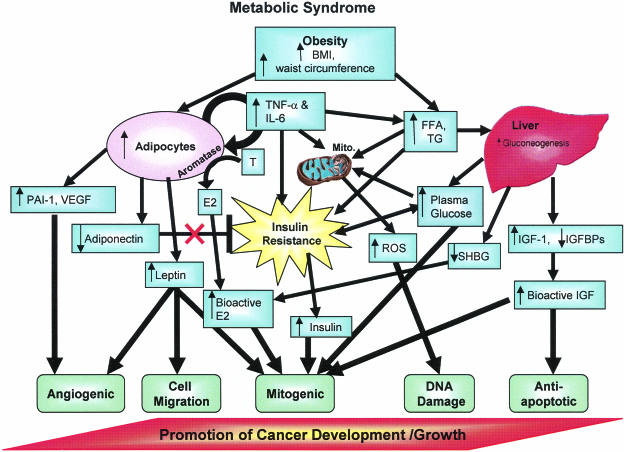
The metabolic syndrome is composed of cardiovascular risk factors including increased body mass index/waist circumference, blood pressure, plasma glucose, and triglycerides, as well as decreased high-density lipoprotein cholesterol. The essence of the metabolic syndrome lies in the clustering of these risk factors, which are associated with cardiovascular disease. Interestingly, most of the components of the metabolic syndrome have individually been linked in some way to the development of cancer. However, epidemiological studies linking the metabolic syndrome to cancer are scarce. Nevertheless, two such studies indicate that the clustering of metabolic syndrome components significantly increases the risk of colon cancer mortality compared with the individual components. The purpose of this review is to further explore the potential relationship between the metabolic syndrome and cancer risk. Specifically, we examine the hypothesis that individual components of the metabolic syndrome contribute to the development of several processes, including insulin resistance, aromatase activity, adipokine production, angiogenesis, glucose utilization, and oxidative stress/DNA damage, which can work together to increase cancer risk beyond that of the individual components alone. We propose that the metabolic syndrome be considered as a high-risk state for certain types of cancer and that this relationship should be systematically explored across cancer types.
Figures
References
-
- Mish FC, editor. Springfield: Merriam-Webster Inc.; Webster’s 9th New Collegiate Dictionary. 1989
-
- Beck-Nielsen H, Hother-Nielsen O. LeRoith D, Taylor SI, Olefsky JM, editors. Philadelphia: Lippincott Williams & Wilkins,; Obesity in type 2 diabetes mellitus. Diabetes Mellitus. 2004:pp 857–868.
-
- Reaven GM. Banting Lecture 1988. Role of insulin resistance in human disease. Diabetes. 1988;37:1595–1607. - PubMed
-
- Moller DE, Kaufman KD. Metabolic syndrome: a clinical and molecular perspective. Annu Rev Med. 2005;56:45–62. - PubMed
-
- Kahn R, Buse J, Ferrannini E, Stern M. The metabolic syndrome: time for a critical appraisal: joint statement from the American Diabetes Association and the European Association for the Study of Diabetes. Diabetes Care. 2005;28:2289–2304. - PubMed
Publication types
MeSH terms
Grants and funding
LinkOut - more resources
Full Text Sources
Other Literature Sources
Medical
