


tie-dyed1 Regulates carbohydrate accumulation in maize leaves
- PMID: 17071639
- PMCID: PMC1676051
- DOI: 10.1104/pp.106.090381
tie-dyed1 Regulates carbohydrate accumulation in maize leaves
Abstract
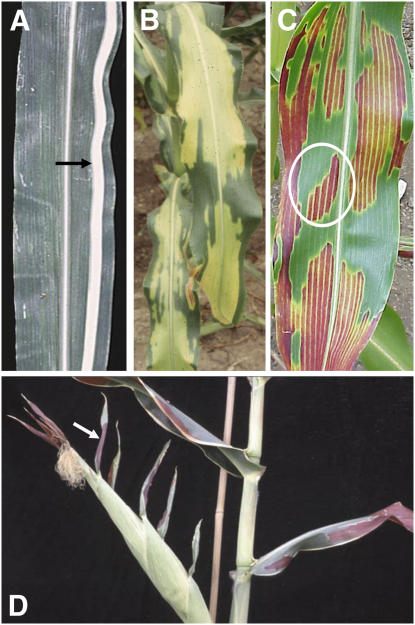
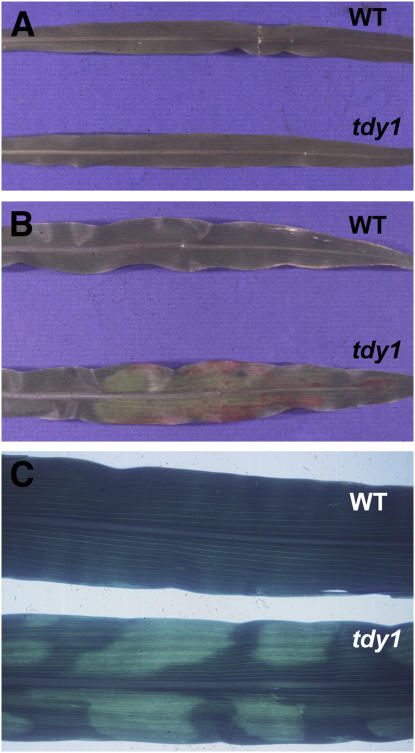
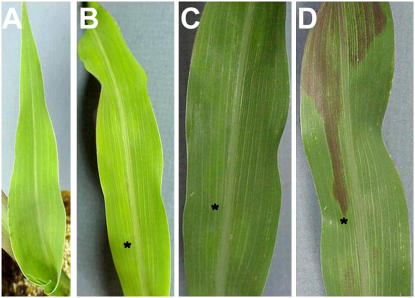
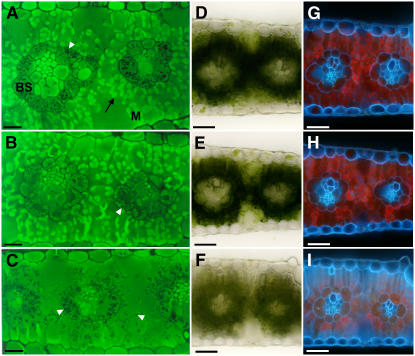
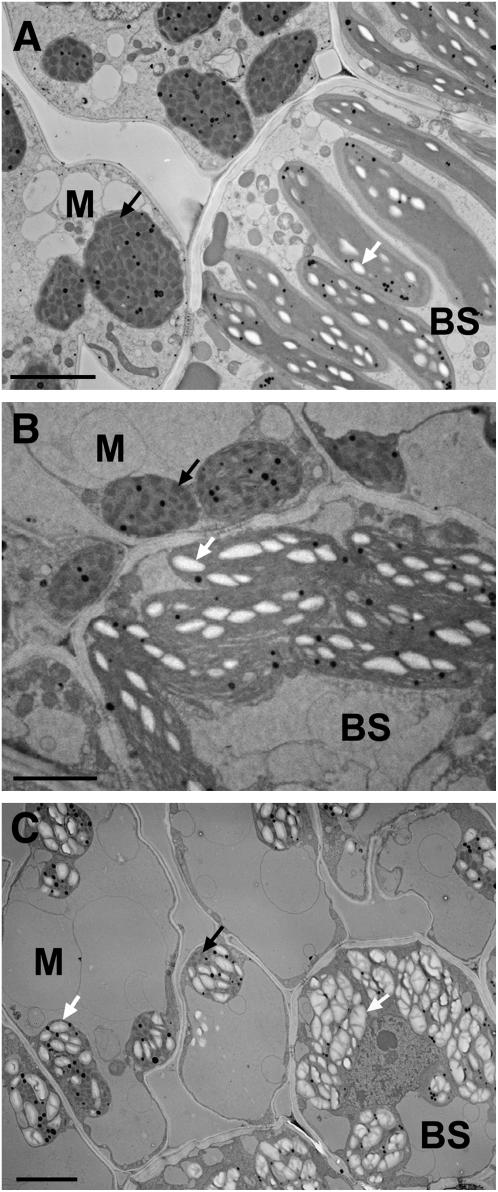
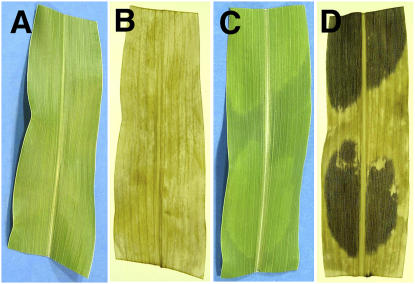
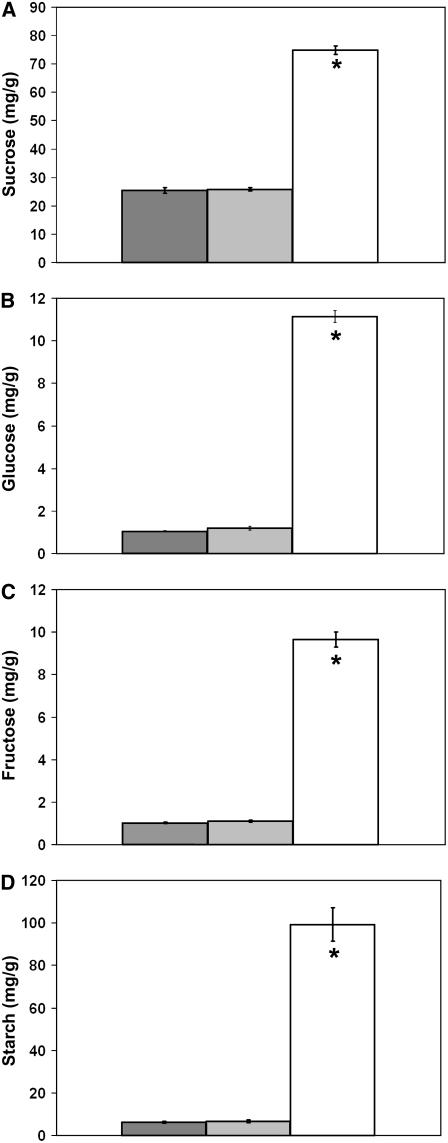
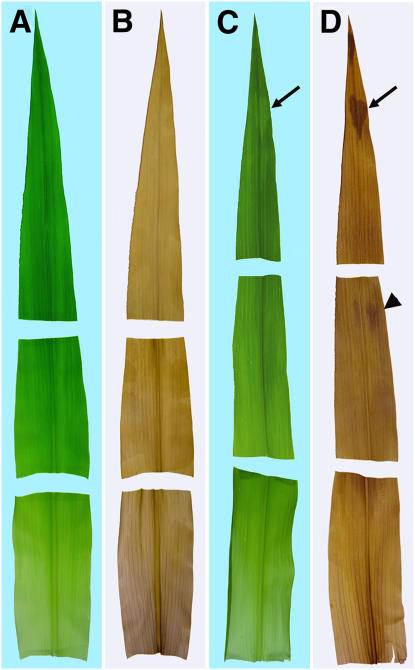
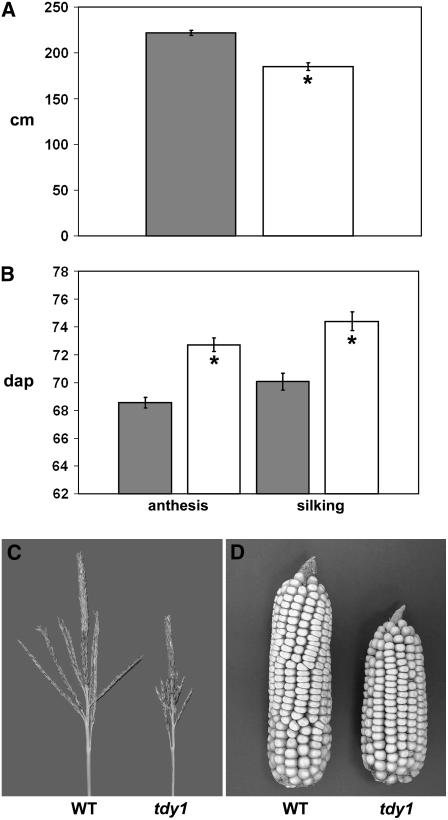
Acquisition of cell identity requires communication among neighboring cells. To dissect the genetic pathways regulating cell signaling in later leaf development, a screen was performed to identify mutants with chloroplast pigmentation sectors that violate cell lineage boundaries in maize (Zea mays) leaves. We have characterized a recessive mutant, tie-dyed1 (tdy1), which develops stable, nonclonal variegated yellow and green leaf sectors. Sector formation requires high light, occurs during a limited developmental time, and is restricted to leaf blade tissue. Yellow tdy1 sectors accumulate excessive soluble sugars and starch, whereas green sectors appear unaffected. Significantly, starch accumulation precedes chlorosis in cells that will become a yellow sector. Retention of carbohydrates in tdy1 leaves is associated with a delay in reproductive maturity, decreased stature, and reduced yield. To explain the tdy1 sectoring pattern, we propose a threshold model that incorporates the light requirement and the hyperaccumulation of photoassimilates. A possible function consistent with this model is that TDY1 acts as a sugar sensor to regulate an inducible sugar export pathway as leaves develop under high light conditions.
Figures
References
-
- Beckett JB (1994) Locating recessive genes to chromosome arm with B-A translocations. In M Freeling, V Walbot, eds, The Maize Handbook. Springer-Verlag, New York, pp 315–327
-
- Chalker-Scott L (1999) Environmental significance of anthocyanins in plant stress responses. Photochem Photobiol 70: 1–9
Publication types
MeSH terms
Substances
LinkOut - more resources
Full Text Sources
Miscellaneous
