


Identification of differentially expressed genes in HPV-positive and HPV-negative oropharyngeal squamous cell carcinomas
- PMID: 17079134
- PMCID: PMC1847595
- DOI: 10.1016/j.ejca.2006.09.001
Identification of differentially expressed genes in HPV-positive and HPV-negative oropharyngeal squamous cell carcinomas
Abstract
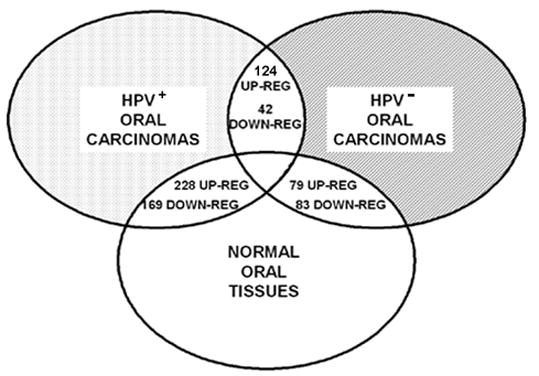
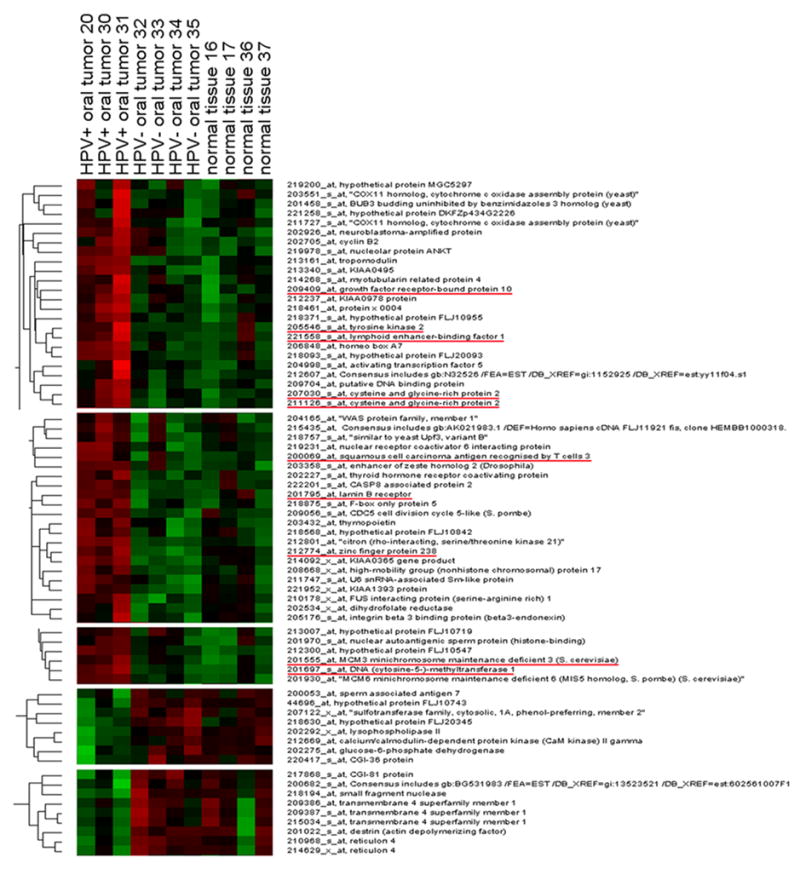
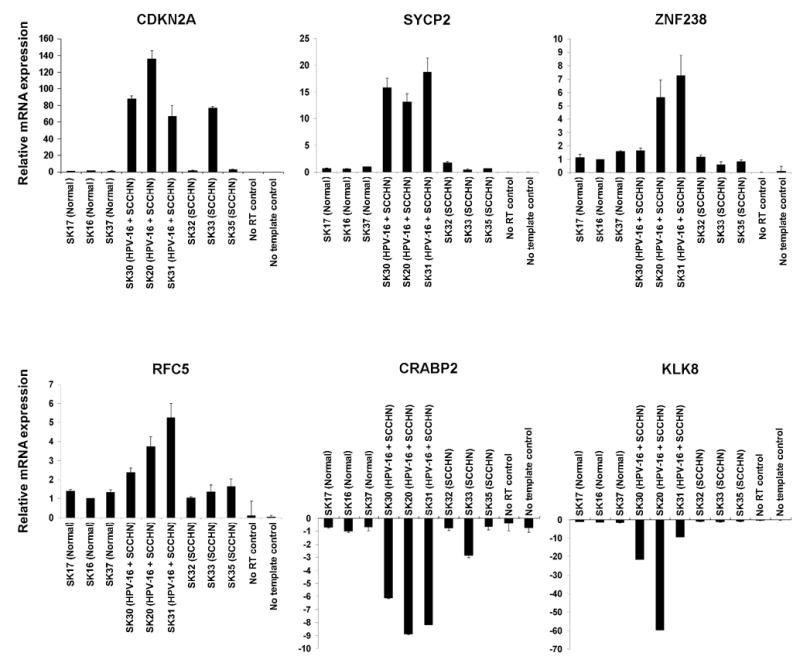
Human papillomaviruses (HPVs) have been implicated in the pathogenesis of a subset of squamous cell carcinoma of the head and neck (SCCHN). The goal of this study was to compare the cellular gene expression profiles of HPV-positive and HPV-negative oropharyngeal carcinomas with those of the normal oral epithelium. Using Affymetrix Human U133A GeneChip, our results showed that 397 genes were differentially expressed in HPV-positive SCCHN compared to the normal oral epithelium. The upregulated genes included those involved in cell cycle regulation (CDKN2A), cell differentiation (SFRP4) and DNA repair (RAD51AP1), while the downregulated genes included those involved in proteolysis (PRSS3). We also found 162 differentially expressed genes in HPV-negative SCCHN compared to the normal oral mucosa. The upregulated genes included those involved in cell proliferation (AKR1C3) and transcription regulation (SNAPC1), while downregulated genes included those involved in apoptosis (CLU) and RNA processing (RBM3). Our studies also identified a subgroup of 59 differentially expressed genes in HPV-positive SCCHN as compared to both HPV-negative SCCHN and normal oral tissues. Such upregulated genes included those involved in nuclear structure and meiosis (SYCP2), DNA repair (RFC5), and transcription regulation (ZNF238). Genes involved in proteolysis (KLK8) and signal transduction (CRABP2) were found to be downregulated in HPV-positive SCCHN. The results of GeneChip experiments were validated by quantitative real-time RT-PCR analysis of a few representative genes. Our results reveal specific gene expression patterns in HPV-positive and HPV-negative oropharyngeal squamous carcinomas that may serve as potential biomarkers for the development of SCCHN.
Conflict of interest statement
Conflict of interest
None.
Figures

References
-
- Greenlee RT, Hill-Harmon MB, Murray T, Thun M. Cancer statistics. CA Cancer J Clin. 2001;51:15–36. - PubMed
-
- Vikram B, Strong EW, Shah JP, Spiro R. Second malignant neoplasms in patients successfully treated with multimodality treatment for advanced head and neck cancer. Head Neck Surg. 1984;6:734–7. - PubMed
-
- Ferris RL, Thekdi AA. Diagnostic assessment of squamous cell carcinoma of the larynx. Otolaryngol Clin North Am. 2002;5:953–69. - PubMed
-
- Walboomers JM, Jacobs MV, Manos MM, et al. Human papillomavirus is a necessary cause of invasive cervical cancer worldwide. J Pathol. 1999;189:12–9. - PubMed
Publication types
MeSH terms
Grants and funding
LinkOut - more resources
Full Text Sources
Other Literature Sources
Medical
Research Materials
Miscellaneous
