


doi: 10.1093/nar/gkl774.
Epub 2006 Nov 1.
MACiE (Mechanism, Annotation and Classification in Enzymes): novel tools for searching catalytic mechanisms
Affiliations
- PMID: 17082206
- PMCID: PMC1634735
- DOI: 10.1093/nar/gkl774
Item in Clipboard
MACiE (Mechanism, Annotation and Classification in Enzymes): novel tools for searching catalytic mechanisms
Nucleic Acids Res.
2007 Jan.
Abstract
MACiE (Mechanism, Annotation and Classification in Enzymes) is a database of enzyme reaction mechanisms, and is publicly available as a web-based data resource. This paper presents the first release of a web-based search tool to explore enzyme reaction mechanisms in MACiE. We also present Version 2 of MACiE, which doubles the dataset available (from Version 1). MACiE can be accessed from http://www.ebi.ac.uk/thornton-srv/databases/MACiE/
Figures
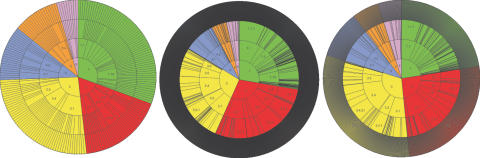
EC wheels showing the EC coverage of MACiE Version 2 (left), the complete EC space (centre) and the coverage of EC space in the PDB by unique EC serial numbers (right).
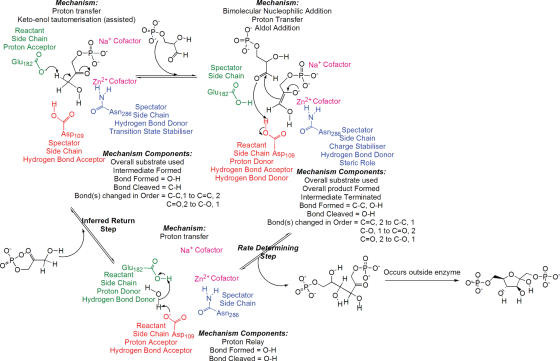
An example of the annotation found in a MACiE entry. Reaction shown corresponds to fructose-bisphosphate aldolase (entry 52).
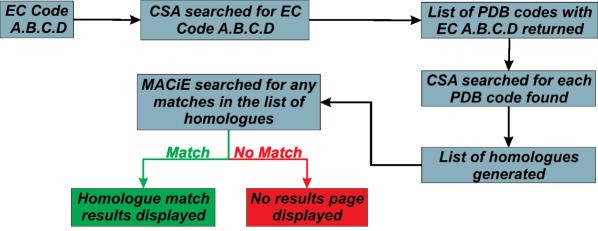
EC code search heuristics.
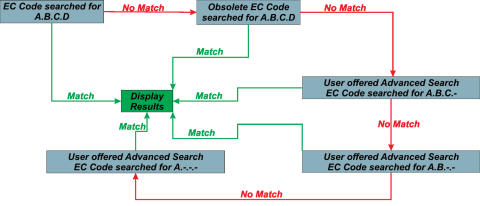
Advanced EC search heuristics.
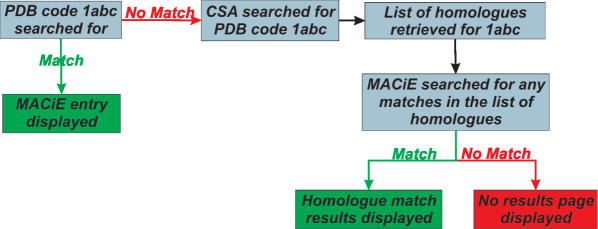
PDB search heuristics.
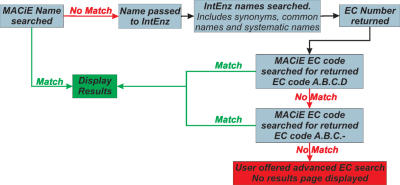
Enzyme name search heuristics.
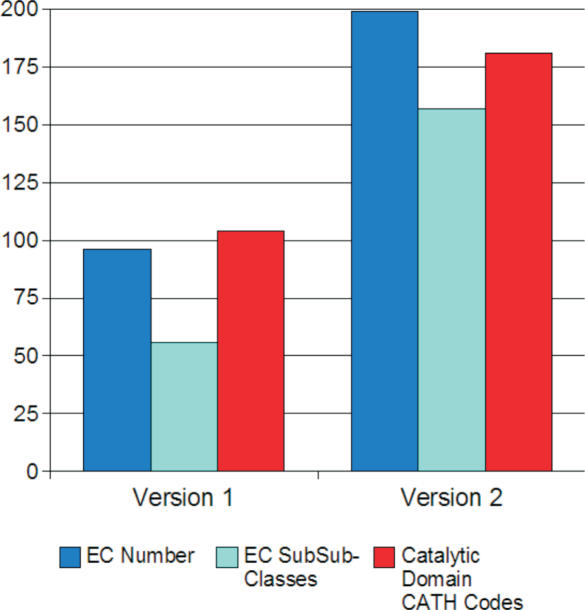
Growth of MACiE. This shows the growth in the number of EC codes (blue), EC sub-sub classes (cyan) and catalytic domain CATH codes (red) in MACiE.
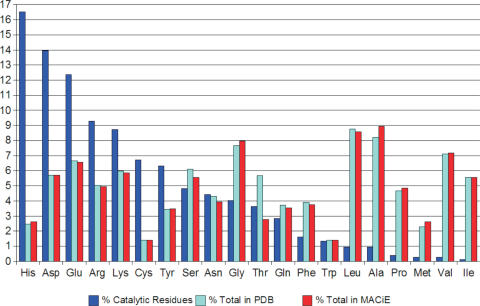
Frequency distribution of amino acid residues. This shows the frequency of catalytic amino acid residues in MACiE (blue), versus the frequency of residues in MACiE (cyan), versus the frequency of residues in the wwPDB (red). The frequency of catalytic amino acid residues in MACiE is calculated by taking the number of residues (of a given type) annotated in MACiE divided by the total number of annotated residues in MACiE, multiplied by 100.
References
-
- IUBMB. Recommendations of the Nomenclature Committee of the International Union of Biochemistry and Molecular Biology on the nomenclature and classification of enzyme-catalysed reactions. 2005.
