


Molecular analysis of the subgingival microbiota in health and disease
- PMID: 17085691
- PMCID: PMC1796972
- DOI: 10.1128/AEM.01419-06
Molecular analysis of the subgingival microbiota in health and disease
Abstract
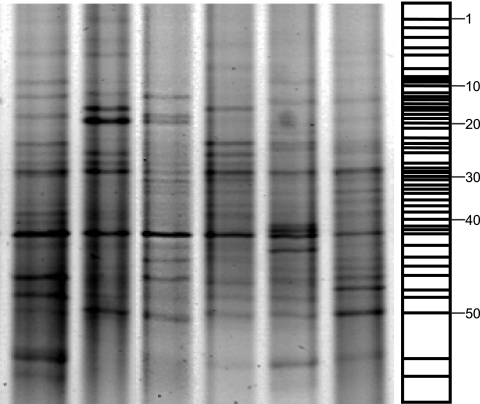
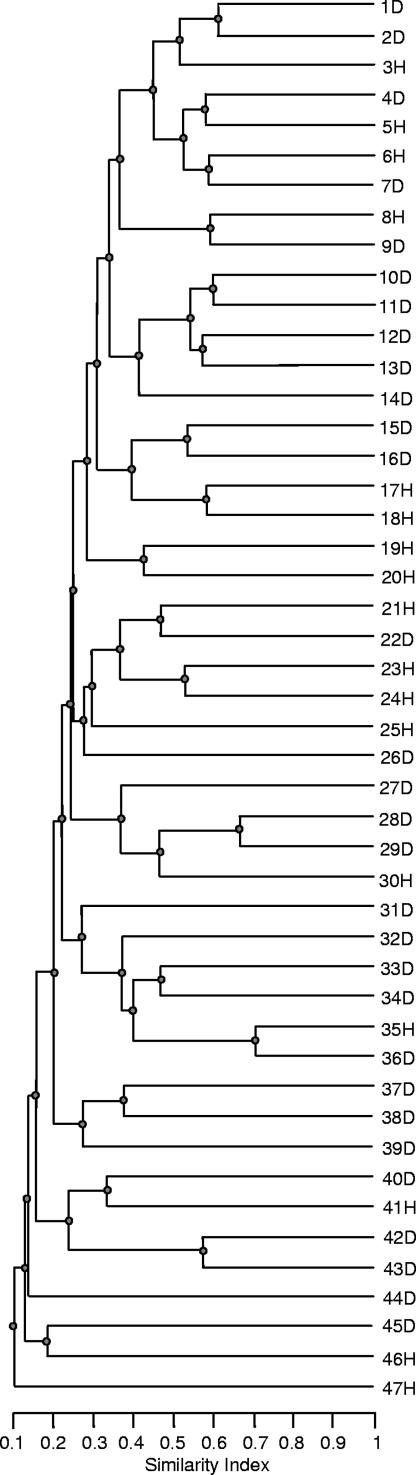
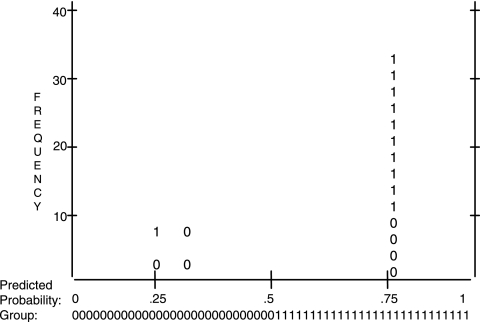
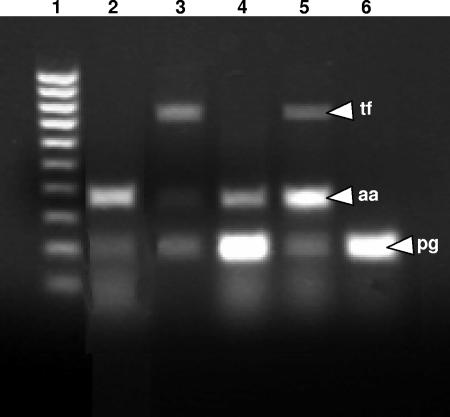
This investigation provides molecular analyses of the periodontal microbiota in health and disease. Subgingival samples from 47 volunteers with healthy gingivae or clinically diagnosed chronic periodontitis were characterized by PCR-denaturing gradient gel electrophoresis (DGGE) with primers specific for the V2-V3 region of the eubacterial 16S rRNA gene. A hierarchical dendrogram was constructed from band patterns. All unique PCR amplicons (DGGE bands) were sequenced for identity. Samples were also analyzed for the presence of Actinobacillus actinomycetemcomitans, Porphyromonas gingivalis, and Tannerella forsythensis by multiplex PCR. Associations of patient age, gender, and smoking status together with the presence of each unique band and putative periodontal pathogens with disease were assessed by logistic regression. Periodontal pockets were colonized by complex eubacterial communities (10 to 40 distinct DGGE bands) with substantial individual variation in the community profile. Species diversity in health and disease was determined by the Shannon-Weaver index of diversity and compared by the Mann-Whitney U test. Sequence analyses of DGGE amplicons indicated the occurrence of many nontypical oral species and eubacteria previously associated with this environment. With the exception of T. forsythensis, the putative pathogens were not detected by DGGE. Multiplex PCR, however, detected T. forsythensis, A. actinomycetemcomitans, and P. gingivalis in 9% 16%, and 29% of the patients with disease, respectively. The presence of A. actinomycetemcomitans was significantly associated with disease (P < 0.01). Statistical analyses indicated that the presence of Treponema socranskii and Pseudomonas sp. was a significant predictor of disease (P < 0.05) and that there was no significant difference (P > 0.05) in terms of eubacterial species diversity between health and disease.
Figures
References
-
- Ali, R. W., A. C. Johannessen, G. Dahlen, S. S. Socransky, and N. Skaug. 1997. Comparison of the subgingival microbiota of periodontally healthy and diseased adults in northern Cameroon. J. Clin. Periodontol. 24:830-835. - PubMed
-
- Barbosa, F. C., M. P. Mayer, E. Saba-Chujfi, and S. Cai. 2001. Subgingival occurrence and antimicrobial susceptibility of enteric rods and pseudomonads from Brazilian periodontitis patients. Oral Microbiol. Immunol. 16:306-310. - PubMed
-
- Barbour, S. E., K. Nakashima, J. B. Zhang, S. Tangada, C. L. Hahn, H. A. Schenkein, and J. G. Tew. 1997. Tobacco and smoking: environmental factors that modify the host response (immune system) and have an impact on periodontal health. Crit. Rev. Oral Biol. Med. 8:437-460. - PubMed
-
- Boon, N., W. De-Windt, W. Verstraete, and E. M. Top. 2002. Evaluation of nested PCR-DGGE (denaturing gradient gel electrophoresis) with group-specific 16S rRNA primers for the analysis of bacterial communities from different wastewater treatment plants. FEMS Microbiol. Ecol. 39:101-112. - PubMed
MeSH terms
LinkOut - more resources
Full Text Sources
Other Literature Sources
Molecular Biology Databases
