Database of traditional Chinese medicine and its application to studies of mechanism and to prescription validation
- PMID: 17088869
- PMCID: PMC2014641
- DOI: 10.1038/sj.bjp.0706945
Database of traditional Chinese medicine and its application to studies of mechanism and to prescription validation
Erratum in
-
Correction.Br J Pharmacol. 2020 Dec;177(23):5434. doi: 10.1111/bph.15297. Br J Pharmacol. 2020. PMID: 33219718 Free PMC article. No abstract available.
Abstract
Background and purpose: Traditional Chinese Medicine (TCM) is widely practised and is viewed as an attractive alternative to conventional medicine. Quantitative information about TCM prescriptions, constituent herbs and herbal ingredients is necessary for studying and exploring TCM.
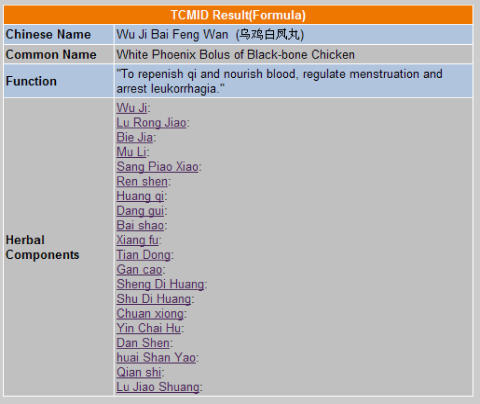
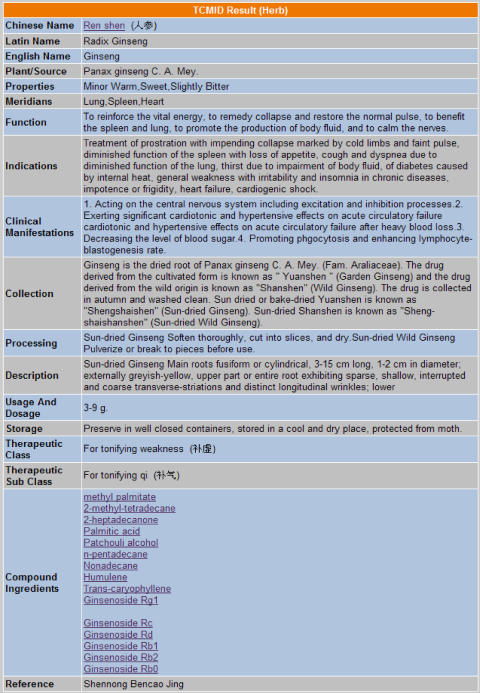
Experimental approach: We manually collected information on TCM in books and other printed sources in Medline. The Traditional Chinese Medicine Information Database TCM-ID, at http://tcm.cz3.nus.edu.sg/group/tcm-id/tcmid.asp, was introduced for providing comprehensive information about all aspects of TCM including prescriptions, constituent herbs, herbal ingredients, molecular structure and functional properties of active ingredients, therapeutic and side effects, clinical indication and application and related matters.
Results: TCM-ID currently contains information for 1,588 prescriptions, 1,313 herbs, 5,669 herbal ingredients, and the 3D structure of 3,725 herbal ingredients. The value of the data in TCM-ID was illustrated by using some of the data for an in-silico study of molecular mechanism of the therapeutic effects of herbal ingredients and for developing a computer program to validate TCM multi-herb preparations.
Conclusions and implications: The development of systems biology has led to a new design principle for therapeutic intervention strategy, the concept of 'magic shrapnel' (rather than the 'magic bullet'), involving many drugs against multiple targets, administered in a single treatment. TCM offers an extensive source of examples of this concept in which several active ingredients in one prescription are aimed at numerous targets and work together to provide therapeutic benefit. The database and its mining applications described here represent early efforts toward exploring TCM for new theories in drug discovery.
Figures
References
-
- Attele AS, Wu JA, Yuan CS. Ginseng pharmacology: multiple constituents and multiple actions. Biochem Pharmacol. 1999;58:1685–1693. - PubMed
-
- Barnes S, Boersma B, Patel R, Kirk M, Darley-Usmar VM, Kim H, et al. Isoflavonoids and chronic disease: mechanisms of action. Biofactors. 2000;12:209–215. - PubMed
-
- Barnes S, Peterson TG. Biochemical targets of the isoflavone genistein in tumor cell lines. Proc Soc Exp Biol Med. 1995;208:103–108. - PubMed
-
- Bensoussan A, Myers SP, Drew AK, Whyte IM, Dawson AH. Development of a Chinese herbal medicine toxicology database. J Toxicol Clin Toxicol. 2002;40:159–167. - PubMed
Publication types
MeSH terms
Substances
LinkOut - more resources
Full Text Sources
Other Literature Sources