


Improvements in glucose tolerance and insulin action induced by increasing energy expenditure or decreasing energy intake: a randomized controlled trial
- PMID: 17093155
- PMCID: PMC1941677
- DOI: 10.1093/ajcn/84.5.1033
Improvements in glucose tolerance and insulin action induced by increasing energy expenditure or decreasing energy intake: a randomized controlled trial
Abstract
Background: Weight loss, through calorie restriction or increases in energy expenditure via exercise, improves glucose tolerance and insulin action. However, exercise-induced energy expenditure may further improve glucoregulation through mechanisms independent of weight loss.
Objective: The objective was to assess the hypothesis that weight loss through exercise-induced energy expenditure improves glucoregulation and circulating factors involved in insulin action to a greater extent than does similar weight loss through calorie restriction.
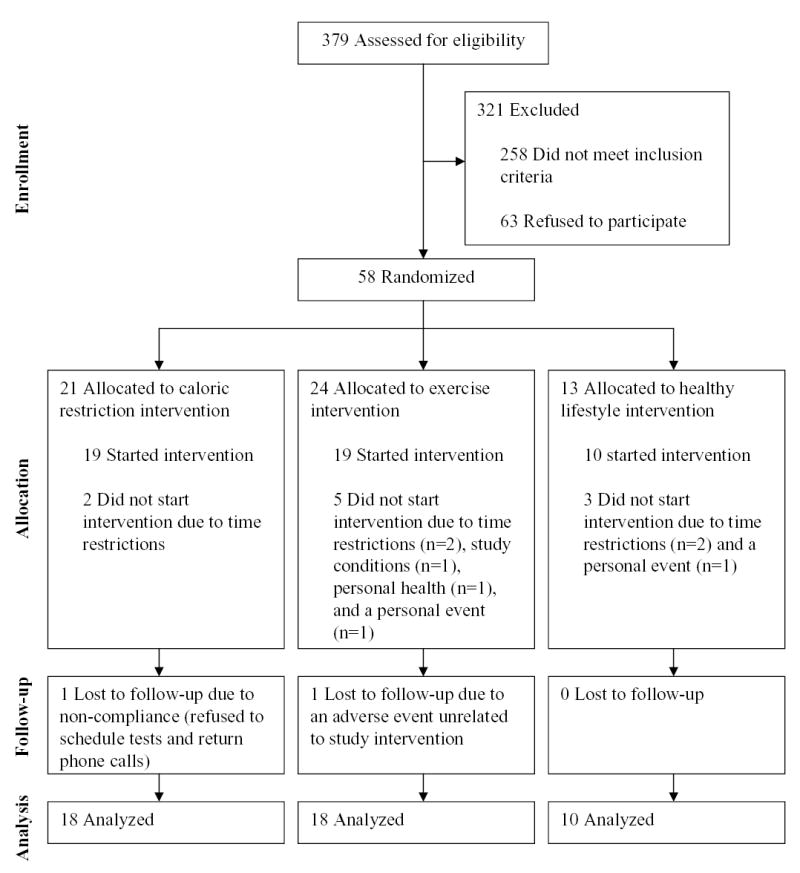
Design: Sedentary men and women aged 50-60 y with a body mass index (kg/m(2)) of 23.5-29.9 were randomly assigned to 1 of 2 weight-loss interventions [12 mo of exercise training (EX group; n = 18) or calorie restriction (CR group; n = 18)] or to a healthy lifestyle (HL) control group (n = 10). The insulin sensitivity index and areas under the curve for glucose and insulin were assessed with an oral-glucose-tolerance test. Adiponectin and tumor necrosis factor alpha concentrations were measured in fasting serum. Fat mass was measured by dual-energy X-ray absorptiometry.
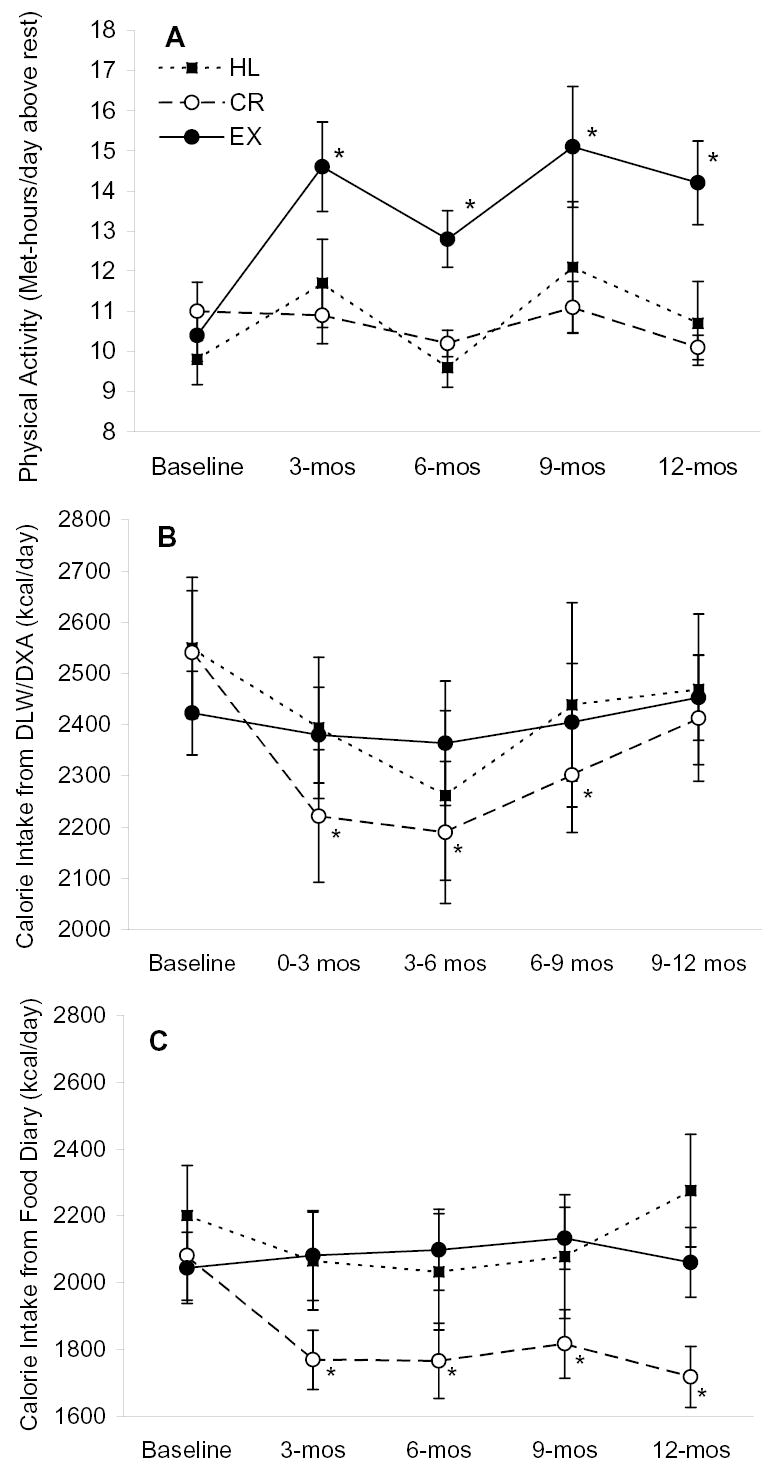
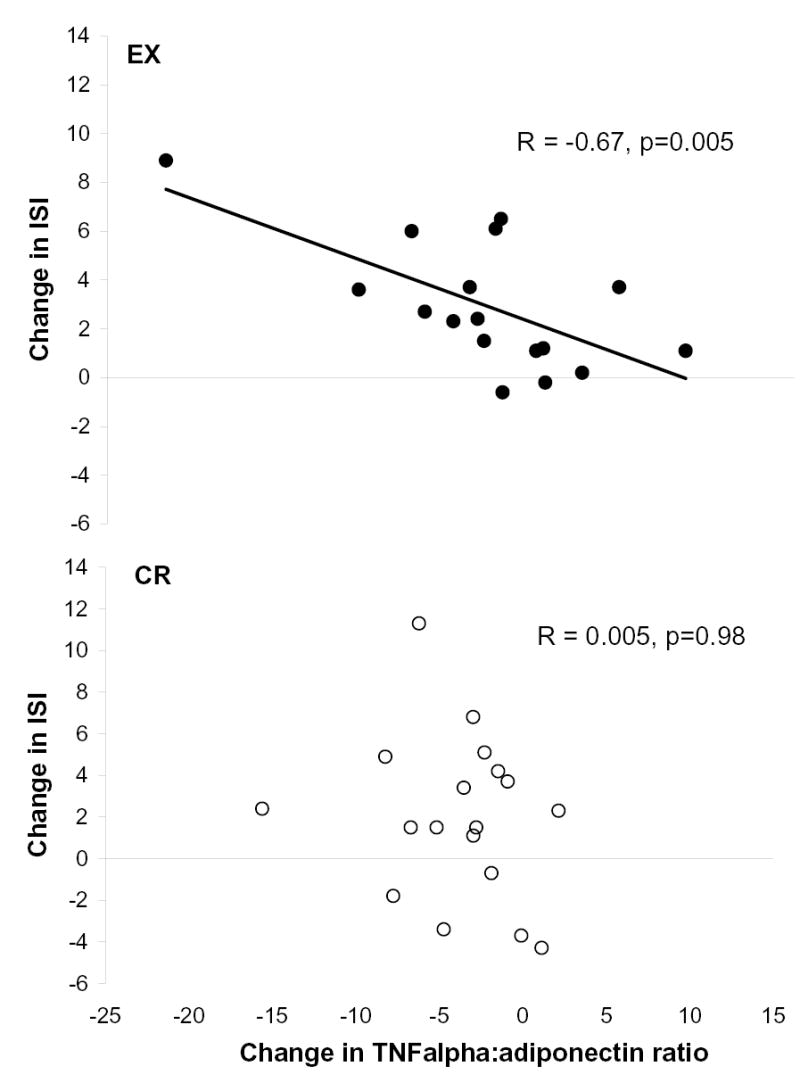
Results: Yearlong energy deficits were not significantly different between the EX and CR groups, as evidenced by body weight and fat mass changes. The insulin sensitivity index increased and the glucose and insulin areas under the curve decreased in the EX and CR groups, remained unchanged in the HL group, and did not differ significantly between the EX and CR groups. Marginally significant increases in adiponectin and decreases in the ratio of tumor necrosis factor alpha to adiponectin occurred in the EX and CR groups but not in the HL group.
Conclusions: Weight loss induced by exercise training or calorie restriction improves glucose tolerance and insulin action in nonobese, healthy, middle-aged men and women. However, it does not appear that exercise training-induced weight loss results in greater improvements than those that result from calorie restriction alone.
Figures
References
-
- Gan SK, Kriketos AD, Ellis BA, Thompson CH, Kraegen EW, Chisholm DJ. Changes in aerobic capacity and visceral fat but not myocyte lipid levels predict increased insulin action after exercise in overweight and obese men. Diabetes Care. 2003;26:1706–13. - PubMed
-
- Mykkanen L, Laakso M, Pyorala K. Association of obesity and distribution of obesity with glucose tolerance and cardiovascular risk factors in the elderly. Int.J.Obes. Relat Metab Disord. 1992;16:695–704. - PubMed
-
- Abbasi F, Brown BW, Jr, Lamendola C, McLaughlin T, Reaven GM. Relationship between obesity, insulin resistance, and coronary heart disease risk. J.Am.Coll. Cardiol. 2002;40:937–43. - PubMed
-
- Holloszy JO. Exercise-induced increase in muscle insulin sensitivity. J. ApplPhysiol. 2005;99:338–43. - PubMed
-
- Katzel LI, Bleecker ER, Colman EG, Rogus EM, Sorkin JD, Goldberg AP. Effects of weight loss vs aerobic exercise training on risk factors for coronary disease in healthy, obese, middle-aged and older men. A randomized controlled trial JAMA. 1995;274:1915–21. - PubMed
