p38 MAPK regulates expression of immune response genes and contributes to longevity in C. elegans
- PMID: 17096597
- PMCID: PMC1635533
- DOI: 10.1371/journal.pgen.0020183
p38 MAPK regulates expression of immune response genes and contributes to longevity in C. elegans
Abstract
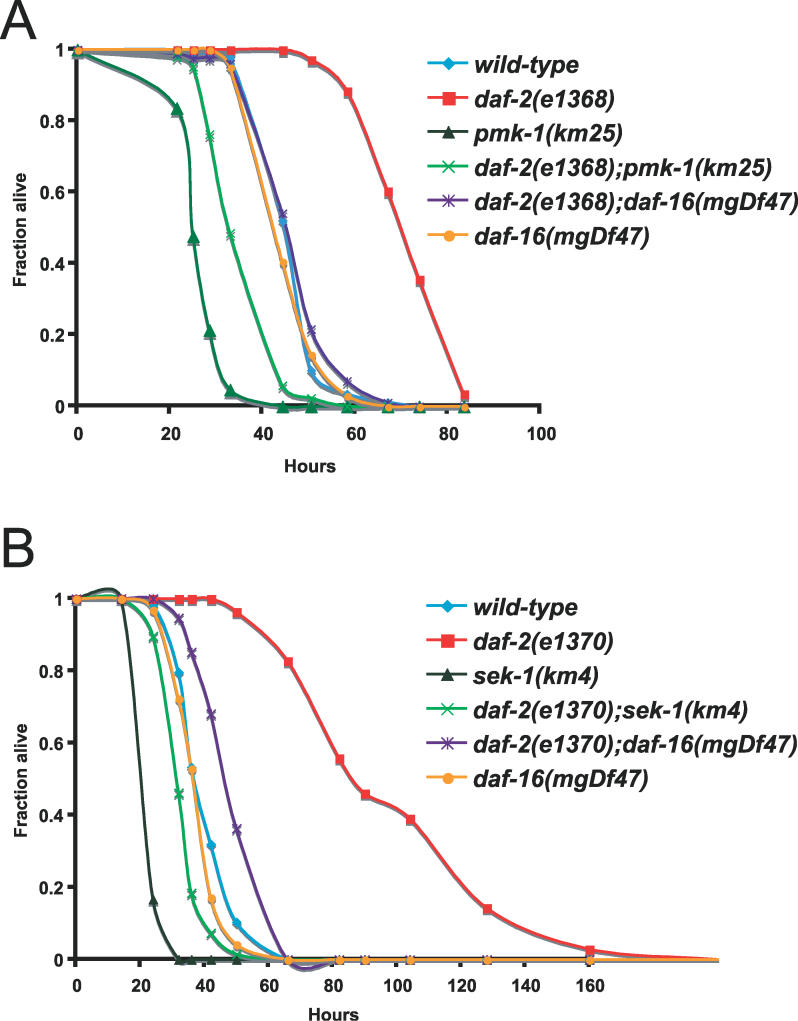
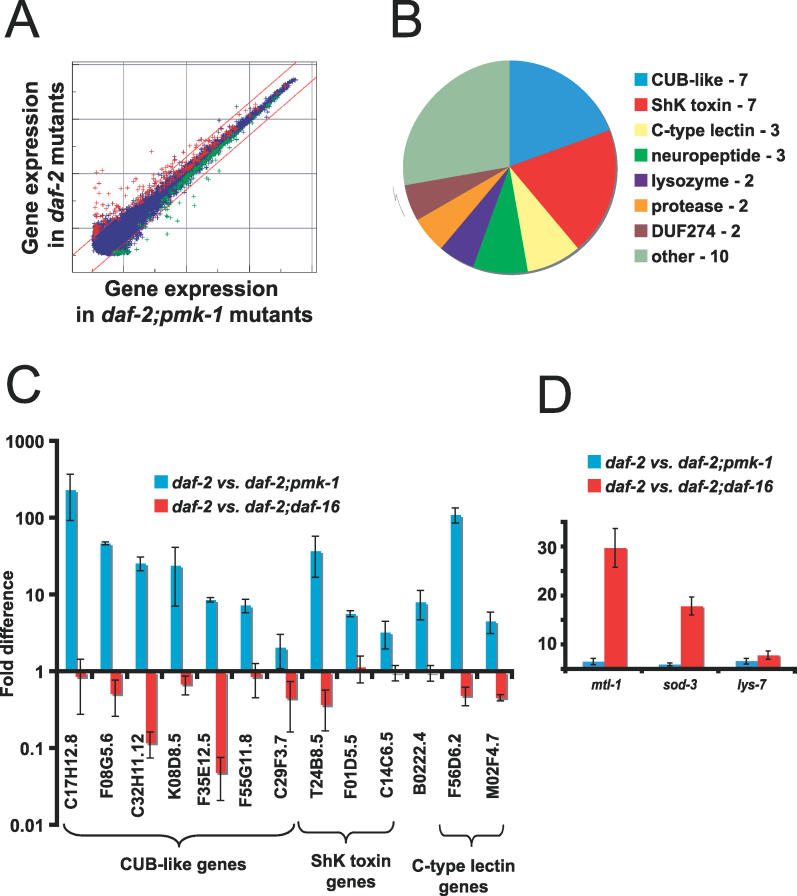
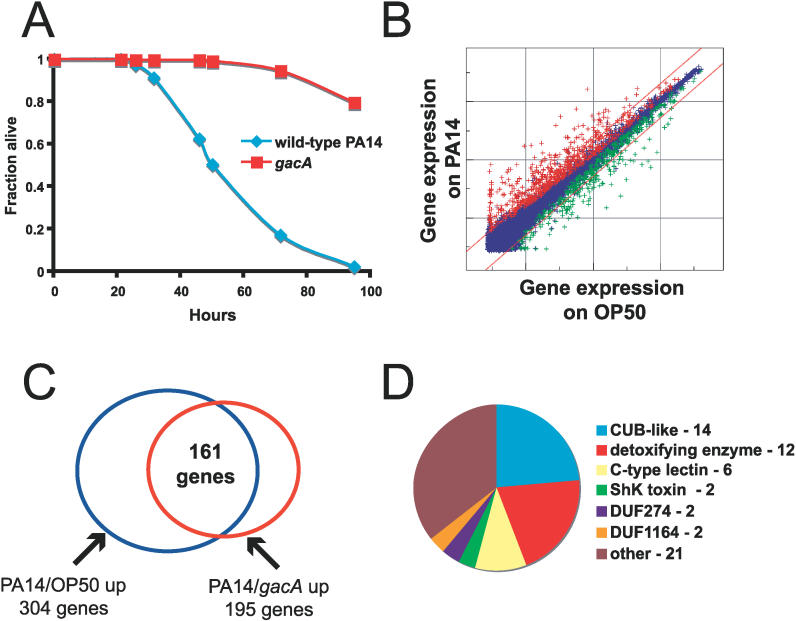
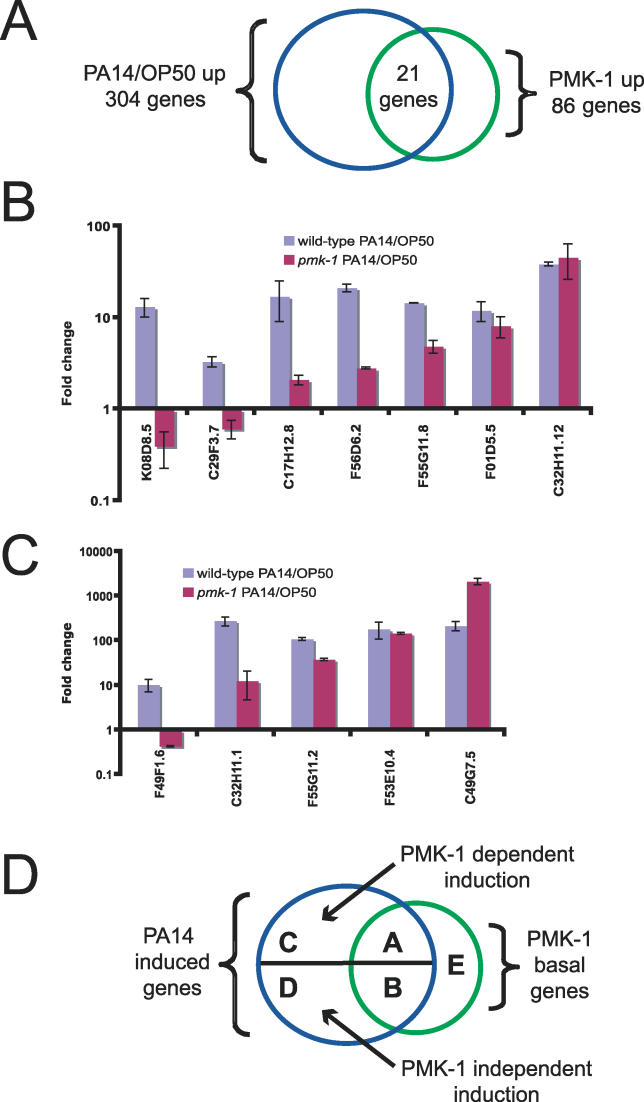
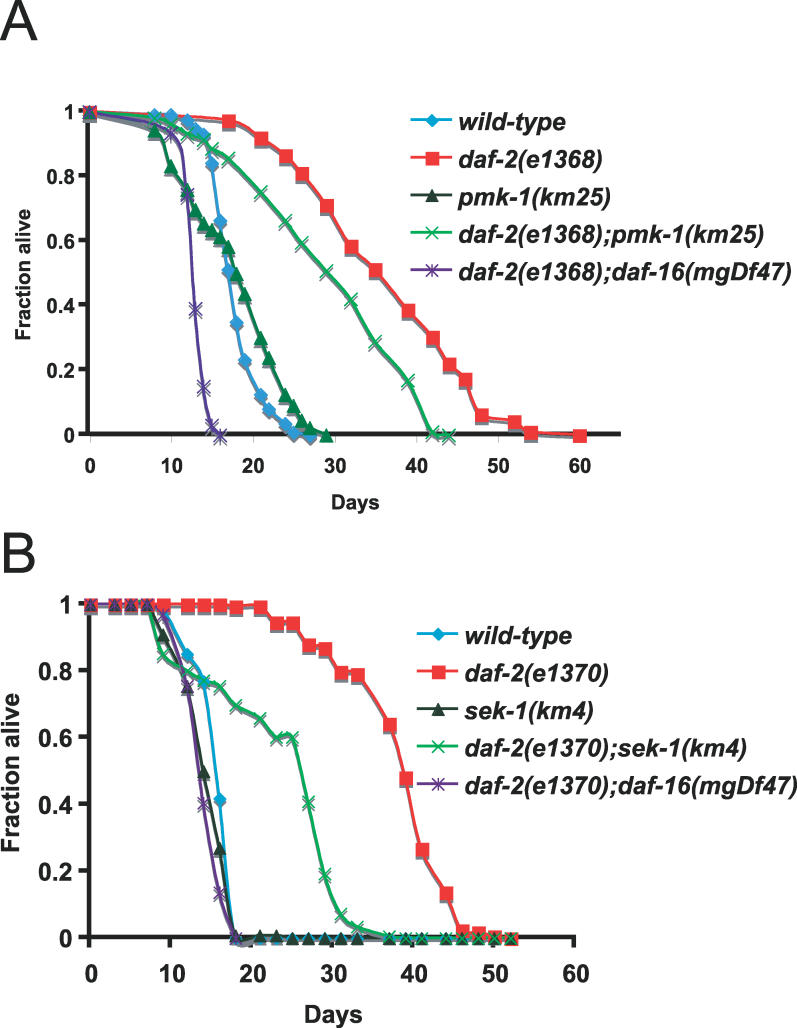
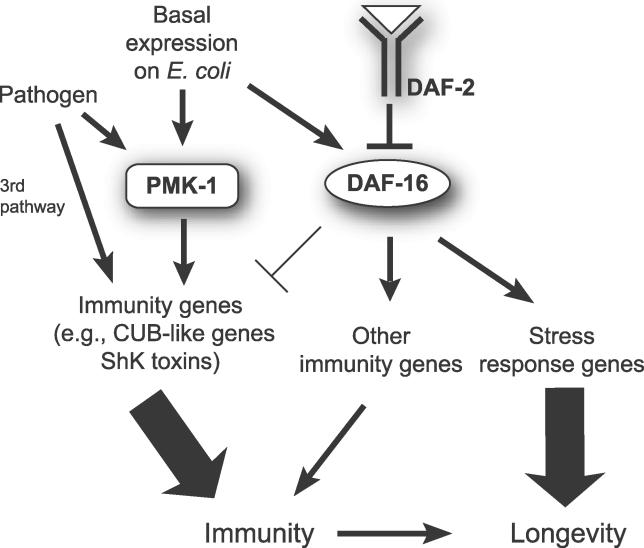
The PMK-1 p38 mitogen-activated protein kinase pathway and the DAF-2-DAF-16 insulin signaling pathway control Caenorhabditis elegans intestinal innate immunity. pmk-1 loss-of-function mutants have enhanced sensitivity to pathogens, while daf-2 loss-of-function mutants have enhanced resistance to pathogens that requires upregulation of the DAF-16 transcription factor. We used genetic analysis to show that the pathogen resistance of daf-2 mutants also requires PMK-1. However, genome-wide microarray analysis indicated that there was essentially no overlap between genes positively regulated by PMK-1 and DAF-16, suggesting that they form parallel pathways to promote immunity. We found that PMK-1 controls expression of candidate secreted antimicrobials, including C-type lectins, ShK toxins, and CUB-like genes. Microarray analysis demonstrated that 25% of PMK-1 positively regulated genes are induced by Pseudomonas aeruginosa infection. Using quantitative PCR, we showed that PMK-1 regulates both basal and infection-induced expression of pathogen response genes, while DAF-16 does not. Finally, we used genetic analysis to show that PMK-1 contributes to the enhanced longevity of daf-2 mutants. We propose that the PMK-1 pathway is a specific, indispensable immunity pathway that mediates expression of secreted immune response genes, while the DAF-2-DAF-16 pathway appears to regulate immunity as part of a more general stress response. The contribution of the PMK-1 pathway to the enhanced lifespan of daf-2 mutants suggests that innate immunity is an important determinant of longevity.
Conflict of interest statement
Competing interests. The authors have declared that no competing interests exist.
Figures
References
-
- Akira S, Uematsu S, Takeuchi O. Pathogen recognition and innate immunity. Cell. 2006;124:783–801. - PubMed
-
- Kim DH, Ausubel FM. Evolutionary perspectives on innate immunity from the study of Caenorhabditis elegans . Curr Opin Immunol. 2005;17:4–10. - PubMed
-
- Hoffmann JA, Kafatos FC, Janeway CA, Ezekowitz RA. Phylogenetic perspectives in innate immunity. Science. 1999;284:1313–1318. - PubMed
-
- Gravato-Nobre MJ, Hodgkin J. Caenorhabditis elegans as a model for innate immunity to pathogens. Cell Microbiol. 2005;7:741–751. - PubMed
-
- Kim DH, Feinbaum R, Alloing G, Emerson FE, Garsin DA, et al. A conserved p38 MAP kinase pathway in Caenorhabditis elegans innate immunity. Science. 2002;297:623–626. - PubMed
Publication types
MeSH terms
Substances
Associated data
- Actions
- Actions
Grants and funding
LinkOut - more resources
Full Text Sources
Other Literature Sources
Molecular Biology Databases
Miscellaneous