


Phosphodiesterase-5 inhibition augments endogenous antitumor immunity by reducing myeloid-derived suppressor cell function
- PMID: 17101732
- PMCID: PMC2118163
- DOI: 10.1084/jem.20061104
Phosphodiesterase-5 inhibition augments endogenous antitumor immunity by reducing myeloid-derived suppressor cell function
Abstract
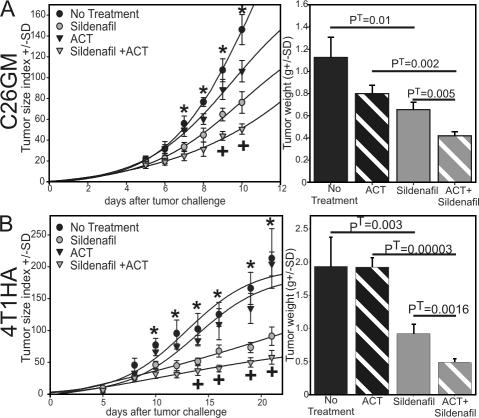
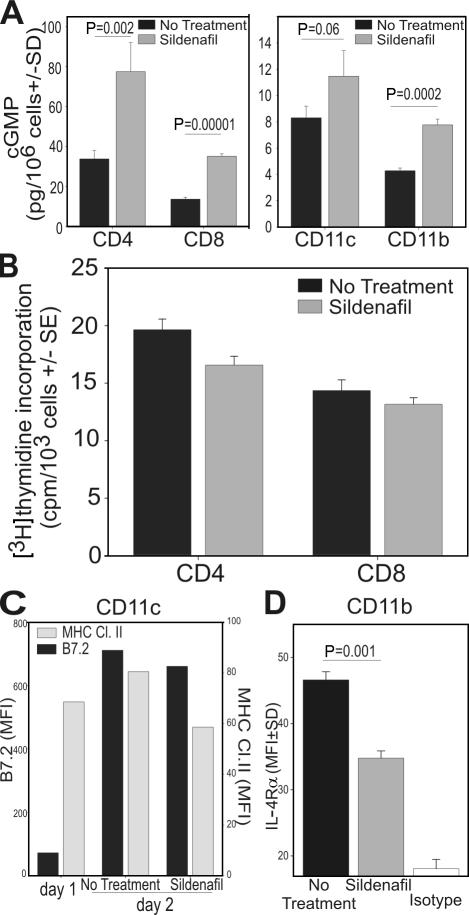
Phosphodiesterase-5 (PDE5) inhibitors (sildenafil, tadalafil, and vardenafil) are agents currently in clinical use for nonmalignant conditions. We report the use of PDE5 inhibitors as modulators of the antitumor immune response. In several mouse tumor models, PDE5 inhibition reverses tumor-induced immunosuppressive mechanisms and enables a measurable antitumor immune response to be generated that substantially delays tumor progression. In particular, sildenafil, down-regulates arginase 1 and nitric oxide synthase-2 expression, thereby reducing the suppressive machinery of CD11b+/Gr-1+ myeloid-derived suppressor cells (MDSCs) recruited by growing tumors. By removing these tumor escape mechanisms, sildenafil enhances intratumoral T cell infiltration and activation, reduces tumor outgrowth, and improves the antitumor efficacy of adoptive T cell therapy. Sildenafil also restores in vitro T cell proliferation of peripheral blood mononuclear cells from multiple myeloma and head and neck cancer patients. In light of the recent data that enzymes mediating MDSC-dependent immunosuppression in mice are active also in humans, these findings demonstrate a potentially novel use of PDE5 inhibitors as adjuncts to tumor-specific immune therapy.
Figures





References
-
- Shankaran, V., H. Ikeda, A.T. Bruce, J.M. White, P.E. Swanson, L.J. Old, and R.D. Schreiber. 2001. IFNgamma and lymphocytes prevent primary tumour development and shape tumour immunogenicity. Nature. 410:1107–1111. - PubMed
-
- Zou, W. 2005. Immunosuppressive networks in the tumour environment and their therapeutic relevance. Nat. Rev. Cancer. 5:263–274. - PubMed
-
- Serafini, P., I. Borrello, and V. Bronte. 2005. Myeloid suppressor cells in cancer: recruitment, phenotype, properties, and mechanisms of immune suppression. Semin. Cancer Biol. 16:53–65. - PubMed
-
- Kusmartsev, S., and D.I. Gabrilovich. 2005. STAT1 signaling regulates tumor-associated macrophage-mediated T cell deletion. J. Immunol. 174:4880–4891. - PubMed
Publication types
MeSH terms
Substances
Grants and funding
LinkOut - more resources
Full Text Sources
Other Literature Sources
Molecular Biology Databases
Research Materials
