


Polymeric coatings that inactivate both influenza virus and pathogenic bacteria
- PMID: 17101983
- PMCID: PMC1693804
- DOI: 10.1073/pnas.0608803103
Polymeric coatings that inactivate both influenza virus and pathogenic bacteria
Abstract
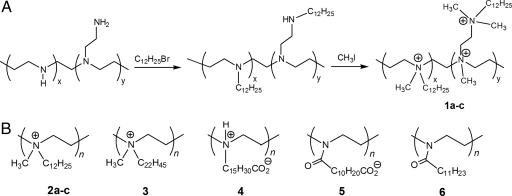
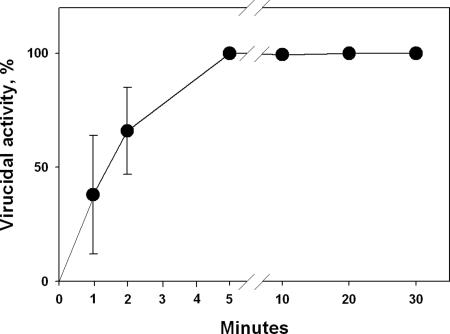
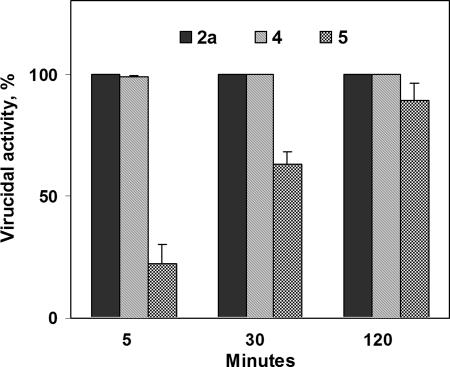
Painting a glass slide with branched or linear N,N-dodecyl methyl-polyethylenimines (PEIs) and certain other hydrophobic PEI derivatives enables it to kill influenza virus with essentially a 100% efficiency (at least a 4-log reduction in the viral titer) within minutes, as well as the airborne human pathogenic bacteria Escherichia coli and Staphylococcus aureus. For most of the coating polyions, this virucidal action is shown to be on contact, i.e., solely by the polymeric chains anchored to the slide surface; for others, a contribution of the polyion leaching from the painted surface cannot be ruled out. A relationship between the structure of the derivatized PEI and the resultant virucidal activity of the painted surface has been elucidated.
Conflict of interest statement
The authors declare no conflict of interest.
Figures
References
-
- Wood JM, Robertson JS. Nat Rev Microbiol. 2004;2:842–847. - PubMed
-
- Wright PF, Webster RG. Fields Virology. 4th Ed. Lippincott, Philadelphia, PA: Knipe DM, Howley PM; 2001. pp. 1533–1579.
-
- Lewis K, Klibanov AM. Trends Biotechnol. 2005;23:343–348. - PubMed
-
- Park D, Wang J, Klibanov AM. Biotechnol Progr. 2006;22:584–589. - PubMed
-
- Choppin PW, Compans RW. The Influenza Viruses and Influenza. Academic, New York: Kilbourne ED; 1975. pp. 15–51.
Publication types
MeSH terms
Substances
Grants and funding
LinkOut - more resources
Full Text Sources
Other Literature Sources
