


The effects of acute oral antioxidants on diving-induced alterations in human cardiovascular function
- PMID: 17110413
- PMCID: PMC2151345
- DOI: 10.1113/jphysiol.2006.122218
The effects of acute oral antioxidants on diving-induced alterations in human cardiovascular function
Abstract
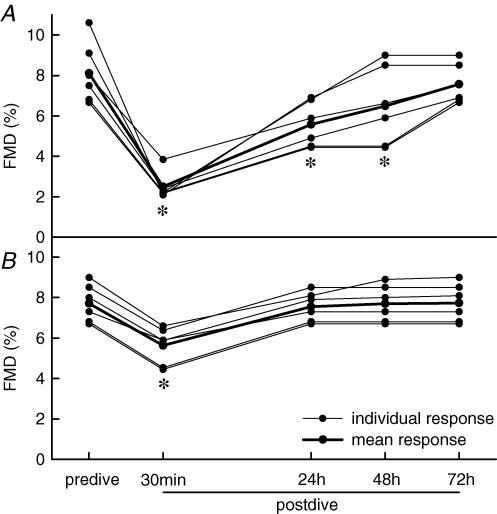
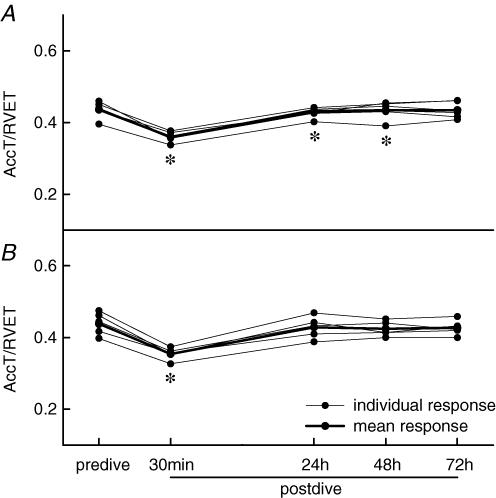
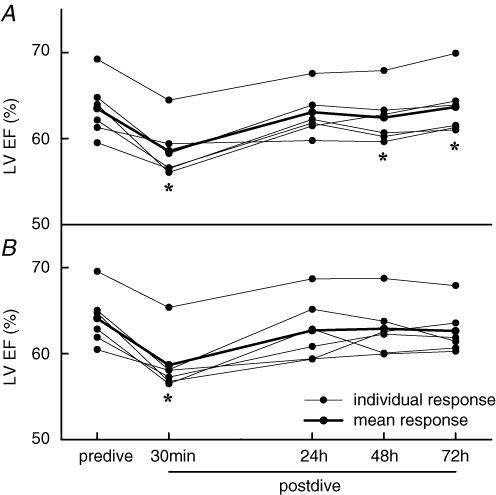
Diving-induced acute alterations in cardiovascular function such as arterial endothelial dysfunction, increased pulmonary artery pressure (PAP) and reduced heart function have been recently reported. We tested the effects of acute antioxidants on arterial endothelial function, PAP and heart function before and after a field dive. Vitamins C (2 g) and E (400 IU) were given to subjects 2 h before a second dive (protocol 1) and in a placebo-controlled crossover study design (protocol 2). Seven experienced divers performed open sea dives to 30 msw with standard decompression in a non-randomized protocol, and six of them participated in a randomized trial. Before and after the dives ventricular volumes and function and pulmonary and brachial artery function were assessed by ultrasound. The control dive resulted in a significant reduction in flow-mediated dilatation (FMD) and heart function with increased mean PAP. Twenty-four hours after the control dive FMD was still reduced 37% below baseline (8.1 versus 5.1%, P = 0.005), while right ventricle ejection fraction (RV-EF), left ventricle EF and endocardial fractional shortening were reduced much less (approximately 2-3%). At the same time RV end-systolic volume was increased by 9% and mean PAP by 5%. Acute antioxidants significantly attenuated only the reduction in FMD post-dive (P < 0.001), while changes in pulmonary artery and heart function were unaffected by antioxidant ingestion. These findings were confirmed by repeating the experiments in a randomized study design. FMD returned to baseline values 72 h after the dive with pre-dive placebo, whereas for most cardiovascular parameters this occurred earlier (24-48 h). Right ventricular dysfunction and increased PAP lasted longer. Acute antioxidants attenuated arterial endothelial dysfunction after diving, while reduction in heart and pulmonary artery function were unchanged. Cardiovascular changes after diving are not fully reversed up to 3 days after a dive, suggesting longer lasting negative effects.
Figures
Comment in
-
Cardiac changes after SCUBA diving: the evasive shape of right ventricle.J Physiol. 2007 Aug 15;583(Pt 1):405; author reply 407. doi: 10.1113/jphysiol.2007.138420. Epub 2007 Jun 14. J Physiol. 2007. PMID: 17569726 Free PMC article. No abstract available.
References
-
- Angdin M, Settergren G, Starkopf J, Zilmer M, Zilmer K, Vaage J. Protective effect of antioxidants on pulmonary endothelial function after cardiopulmonary bypass. J Cardiothorac Vasc Anesth. 2003;17:314–320. - PubMed
-
- Bove AA, Hallenbeck JM, Elliott DH. Circulatory responses to venous air embolism and decompression sickness in dogs. Undersea Biomed Res. 1974;1:207–220. - PubMed
-
- Brodsky SV, Zhang F, Nasjletti A, Goligorsky MS. Endothelium-derived microparticles impair endothelial function in vitro. Am J Physiol Heart Circ Physiol. 2004;286:H1910–H1915. - PubMed
-
- Butler BD, Conkin J, Luehr S. Pulmonary hemodynamics, extravascular lung water and residual gas bubbles following low dose venous gas embolism in dogs. Aviat Space Environ Med. 1989;60:1178–1182. - PubMed
Publication types
MeSH terms
Substances
LinkOut - more resources
Full Text Sources
Other Literature Sources
Medical
Research Materials
