


Effect of shed blood retransfusion on pulmonary perfusion after total knee arthroplasty: a prospective controlled study
- PMID: 17115155
- PMCID: PMC2266671
- DOI: 10.1007/s00264-006-0265-x
Effect of shed blood retransfusion on pulmonary perfusion after total knee arthroplasty: a prospective controlled study
Abstract
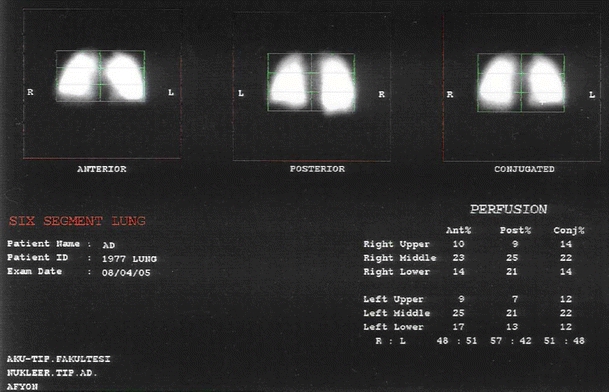
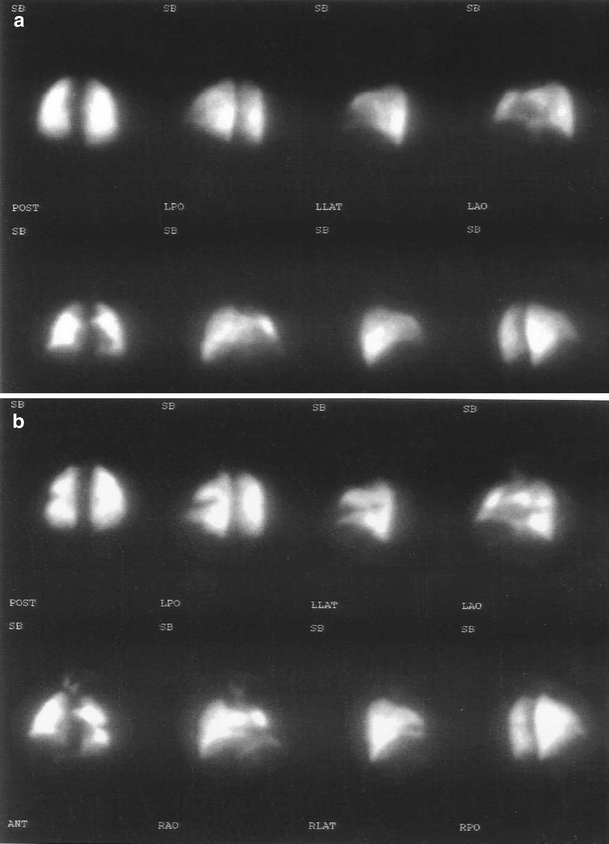
Postoperative shed blood retransfusion (autotransfusion) is a commonly used salvage method following major surgical operations, such as total knee arthroplasty (TKA). The systemic effects of shed blood are still unclear. We studied the effect of residual substances in the retransfused shed blood, on lung perfusion after TKA. Fifteen unilateral and one bilateral TKAs were performed with autotransfusion (the study group) and 15 unilateral and three bilateral TKAs were performed in a control group. Lung X-rays, arterial blood gases (ABG), D-dimer values, and lung perfusion scintigraphies were performed preoperatively and postoperatively. A mean of 300.0 +/- 335.6 ml of bank blood was needed in the autotransfusion group and a mean of 685.7 +/- 365.5 ml of bank blood was needed in the control group (p=0.001). There was a postoperative segmental perfusion defect at the lateral segment of the superior lobe of the left lung in one patient of the control group and he also had risk factors for thrombosis. Although both groups had a decrease in lung perfusion postoperatively, there were no significant differences among the groups regarding the lung perfusion scintigraphy, chest X-rays, ABG, and D-dimer values. In conclusion, although pulmonary perfusion diminishes following TKA, shed blood retransfusion does not add any risk to pulmonary perfusion.
La retransfusion post-opératoire est souvent utilisée dans les interventions majeures comme les prothèses de genou. L’effet systémique du sang récupéré n’est pas très connu. Nous avons étudié les effets de cette transfusion sur la perfusion pulmonaire. 15 prothèses de genou unilatérales et une bilatérale étaient réalisées en autotransfusion avec un groupe de contrôle de 15 unilatérales et 3 bilatérales. Des radiographies pulmonaires, les gaz du sang, la valeur des D-dimer et des scintigraphies de la perfusion pulmonaire étaient faites avant et après l’opération. Une moyenne de 300,0+−335,6 ml de sang de banque était nécessaire dans le groupe autotransfusion et une moyenne de 685,7+−365,5 ml était nécessaire dans le groupe de contrôle (p = 0,001). Il y avait un déficit segmentaire de perfusion chez un patient du groupe de contrôle et il avait aussi des facteurs de risque thrombotique. Bien que les 2 groupes avaient une diminution de la perfusion pulmonaire, il n’y avait pas de différences entre les 2 groupes pour la scintigraphie pulmonaire, les radiographies, les gaz du sang et les valeurs des D-dimer. En conclusion, bien que la perfusion pulmonaire diminue à la suite de l’arthroplastie totale de genou, la retransfusion du sang répandu n’entraine pas de risque particulier.
Figures
References
-
- Blevins FT, Shaw B, Valeri CR, Kasser J, Hall J (1993) Reinfusion of shed blood after orthopaedic procedures in children and adolescents. J Bone Joint Surg Am 75(3):363–371 - PubMed
-
- Brooke M, Van Aken H, Strom M, Fritzsche F, Wirtz S, Hinder F (2001) Fat elimination from autologous blood. Anesthesia Analg 92(2):341–343 - PubMed
Publication types
MeSH terms
Substances
LinkOut - more resources
Full Text Sources
Medical
