


Review
doi: 10.1186/ar2069.
Arthritis and pain. Neurogenic origin of joint pain
Affiliations
- PMID: 17118212
- PMCID: PMC1794504
- DOI: 10.1186/ar2069
Item in Clipboard
Review
Arthritis and pain. Neurogenic origin of joint pain
Arthritis Res Ther.
2006.
Abstract
Arthritis pain affects millions of people worldwide yet we still have only a limited understanding of what makes our joints ache. This review examines the sensory innervation of diarthroidal joints and discusses the neurophysiological processes that lead to the generation of painful sensation. During inflammation, joint nerves become sensitized to mechanical stimuli through the actions of neuropeptides, eicosanoids, proteinase-activated receptors and ion channel ligands. The contribution of immunocytes to arthritis pain is also reviewed. Finally, the existence of an endogenous analgesic system in joints is considered and the reasons for its inability to control pain are postulated.
Figures
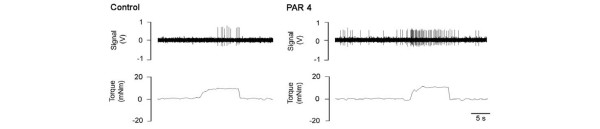
Specimen recording from a knee joint afferent fibre during rotation (torque) of the knee. Close intra-arterial injection of a PAR4 agonist caused spontaneous nerve activity as well as increased afferent firing rate during normal rotation compared with control. This PAR4 sensitization of the nerve would be decoded as joint pain by the central nervous system. PAR, proteinase-activated receptor.
References
-
- The burden of musculoskeletal conditions at the start of the new millennium. World Health Organ Tech Rep Ser. 2003;919:i-x1–218. - PubMed
-
- Skoglund S. Anatomical and physiological studies of knee joint innervation in the cat. Acta Physiol Scand. 1956. pp. 1–101. - PubMed
-
- Sherrington C. The Integrative Action of the Nervous System. New York: Scribner; 1906.
Publication types
MeSH terms
LinkOut - more resources
Full Text Sources
Other Literature Sources
Medical
