


The effects of cosolutes on protein dynamics: the reversal of denaturant-induced protein fluctuations by trimethylamine N-oxide
- PMID: 17123958
- PMCID: PMC2222840
- DOI: 10.1110/ps.062393707
The effects of cosolutes on protein dynamics: the reversal of denaturant-induced protein fluctuations by trimethylamine N-oxide
Abstract
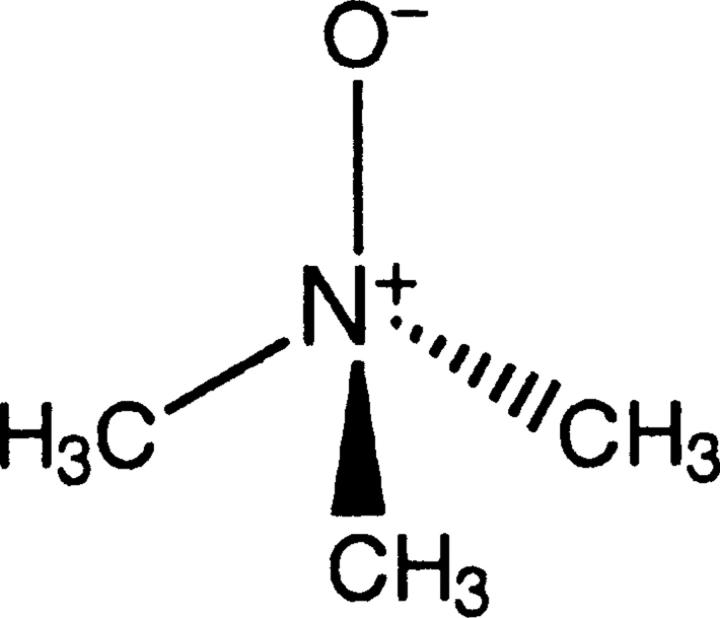
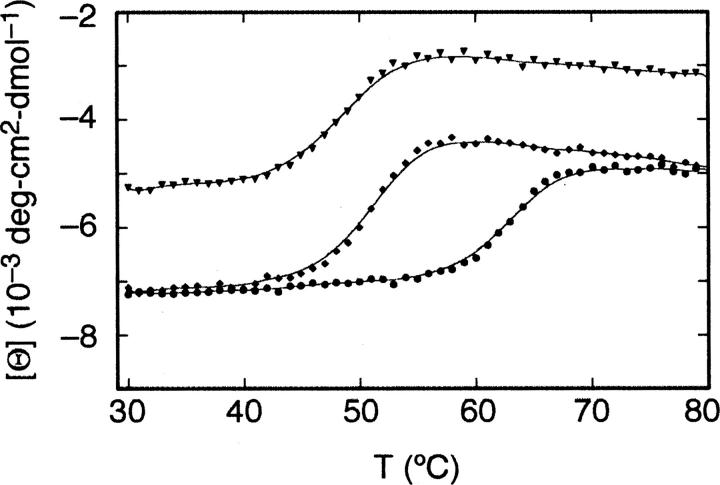
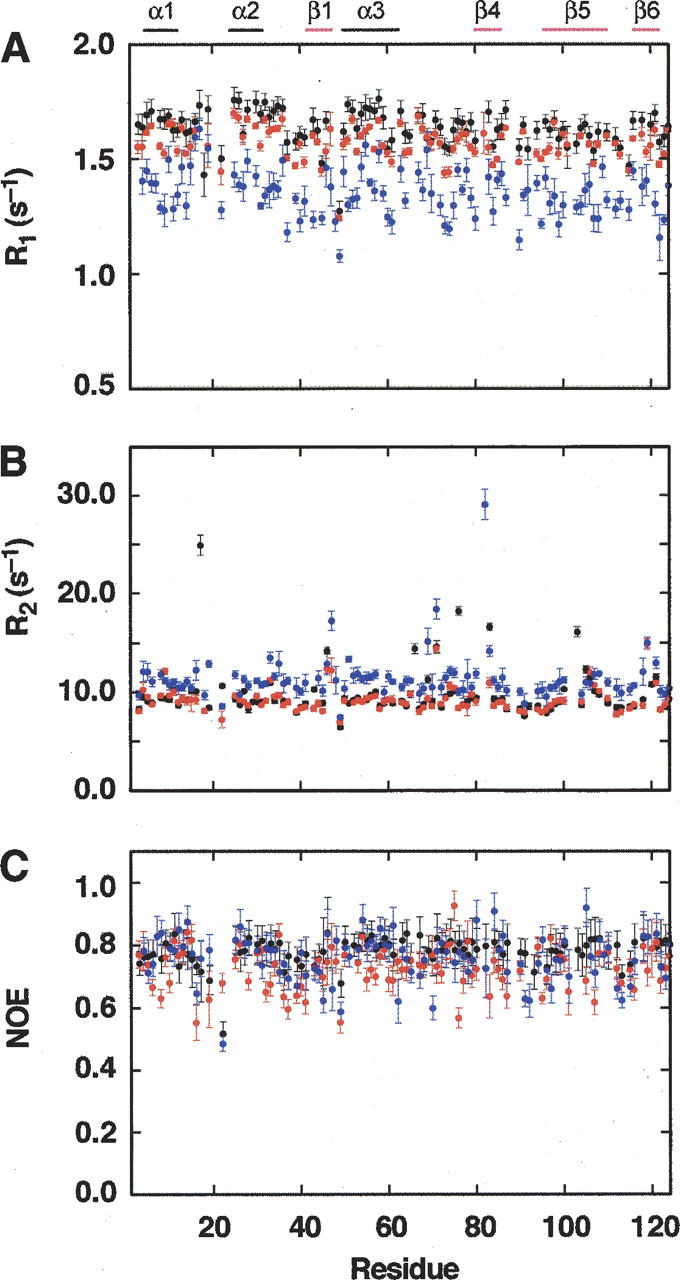
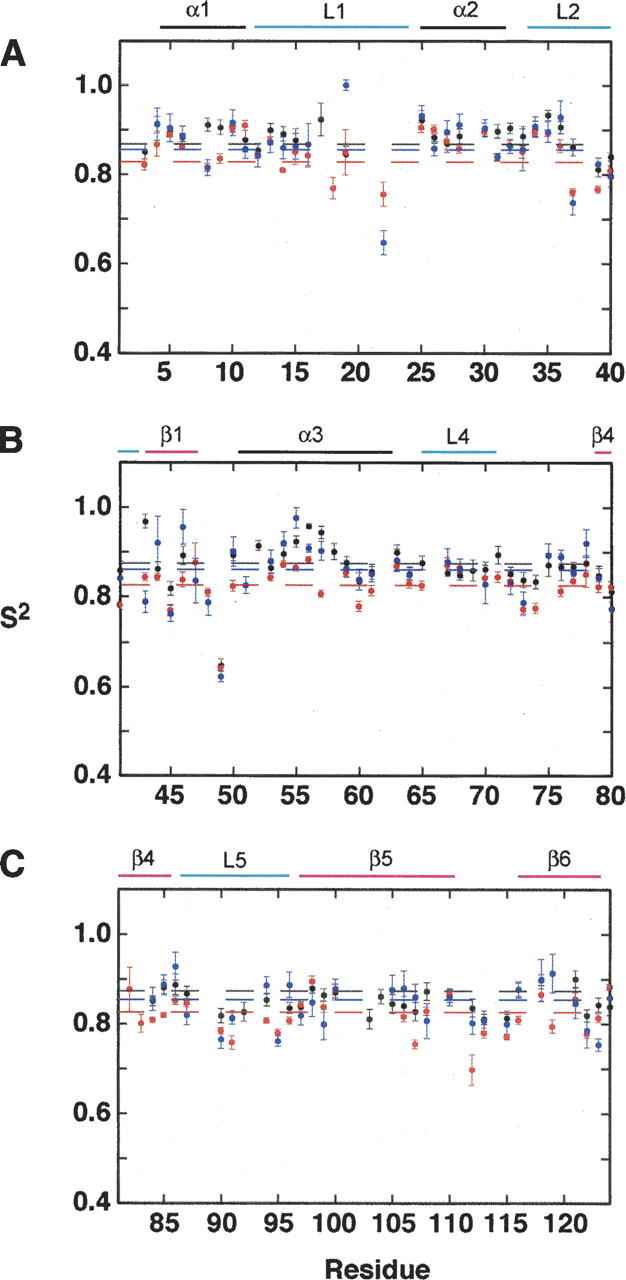
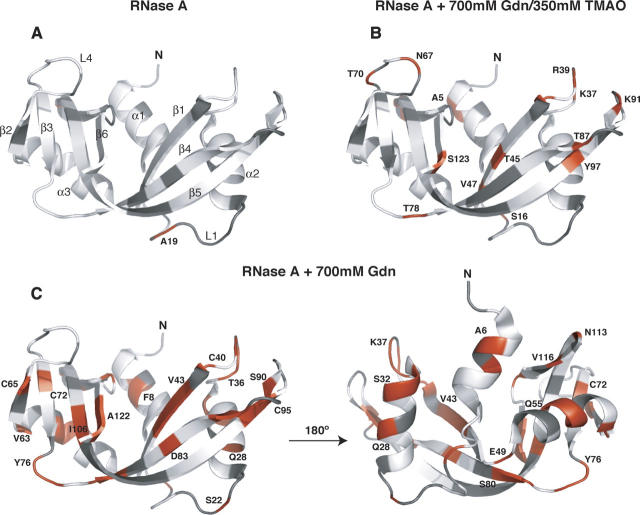
The protein stabilizing effects of the small molecule osmolyte, trimethylamine N-oxide, against chemical denaturant was investigated by NMR spin-relaxation measurements and model-free analysis. In the presence of 0.7 M guanidine hydrochloride increased picosecond-nanosecond dynamics are observed in the protein ribonuclease A. These increased fluctuations occur throughout the protein, but the most significant increases in flexibility occur at positions believed to be the first to unfold. Addition of 0.35 M trimethylamine N-oxide to this destabilized form of ribonuclease results in significant rigidification of the protein backbone as assessed by (1)H-(15)N order parameters. Statistically, these order parameters are the same as those measured in native ribonuclease indicating that TMAO reduces the amplitude of backbone fluctuations in a destabilized protein. These data suggest that TMAO restricts the bond vector motions on the protein energy landscape to resemble those motions that occur in the native protein and points to a relation between stability and dynamics in this enzyme.
Figures
References
-
- Abragam, A. 1961. Principles of nuclear magnetism. Clarendon Press, Oxford, UK.
-
- Akke, M., Brüschweiler, R., and Palmer, A.G. 1993. NMR order parameters and free energy: An analytic approach and application to cooperative Ca2+ binding by calbindin D9k . J. Am. Chem. Soc. 115: 9832–9833.
-
- Anderson, D.G., Hammes, G.G., and Walz Jr., F.G. 1968. Binding of phosphate ligands to ribonuclease A. Biochemistry 7: 1637–1645. - PubMed
Publication types
MeSH terms
Substances
LinkOut - more resources
Full Text Sources
Other Literature Sources
