


Carbonic anhydrase inhibition prevents and reverts cardiomyocyte hypertrophy
- PMID: 17124262
- PMCID: PMC2075384
- DOI: 10.1113/jphysiol.2006.123638
Carbonic anhydrase inhibition prevents and reverts cardiomyocyte hypertrophy
Abstract
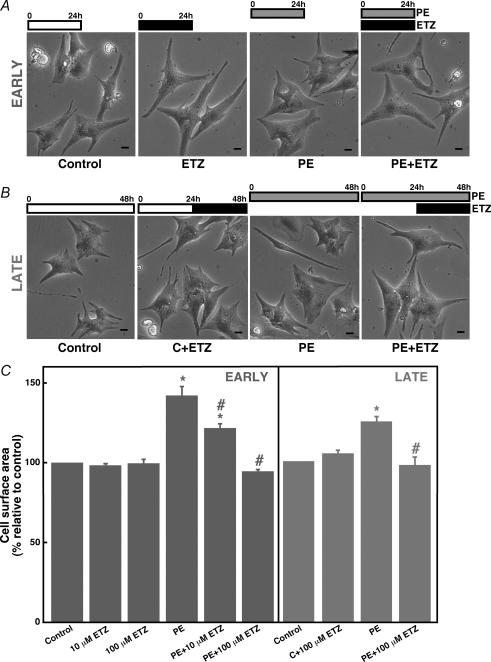
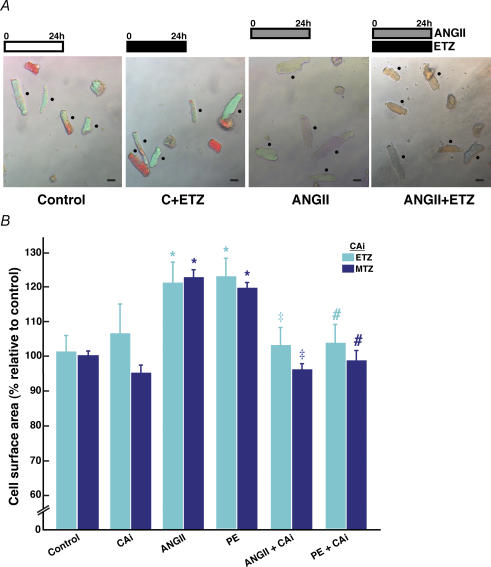
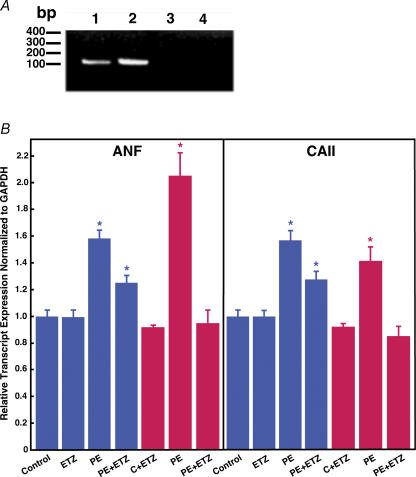
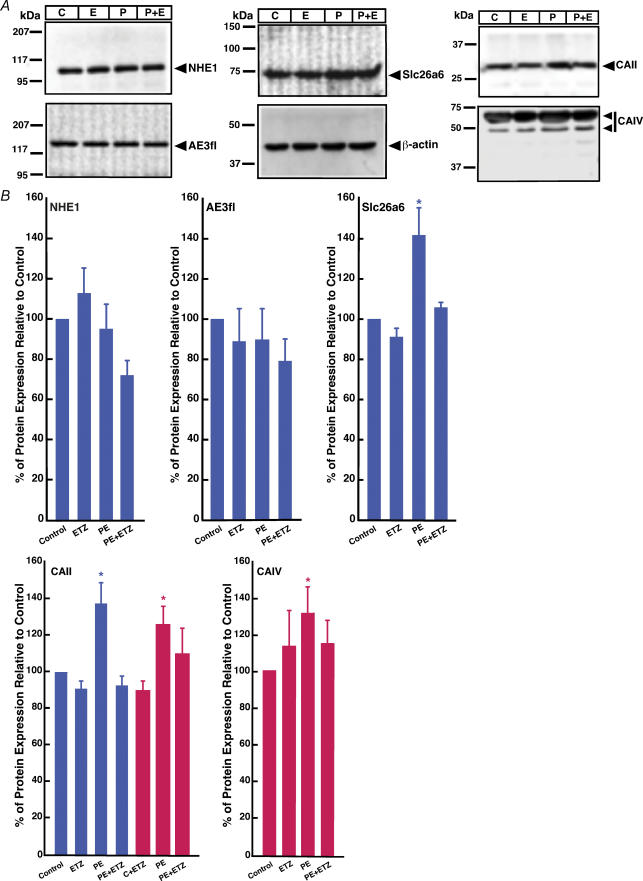
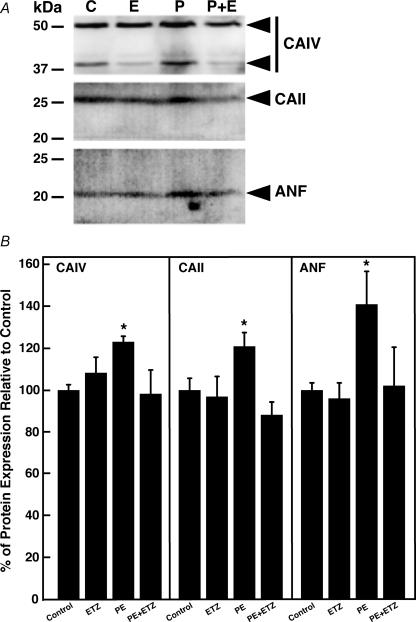
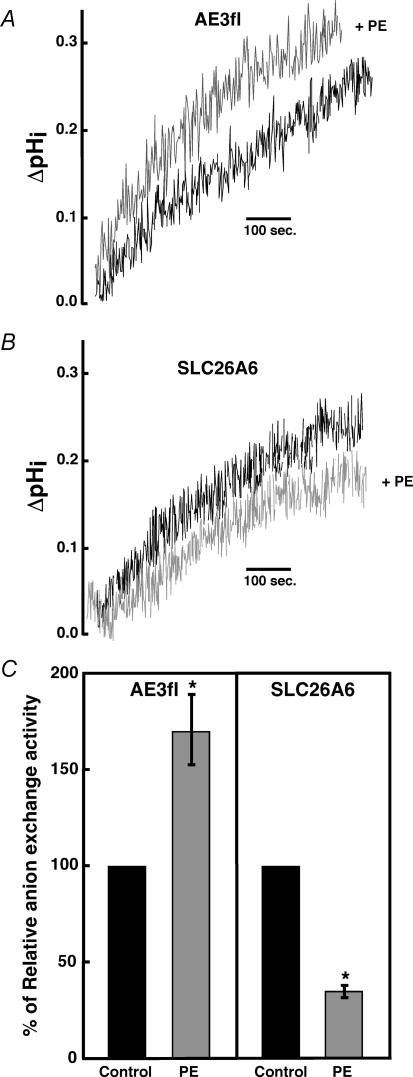
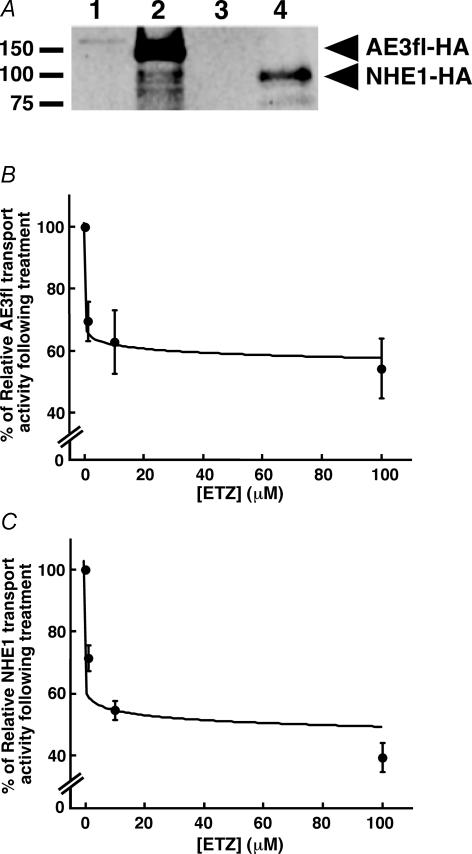
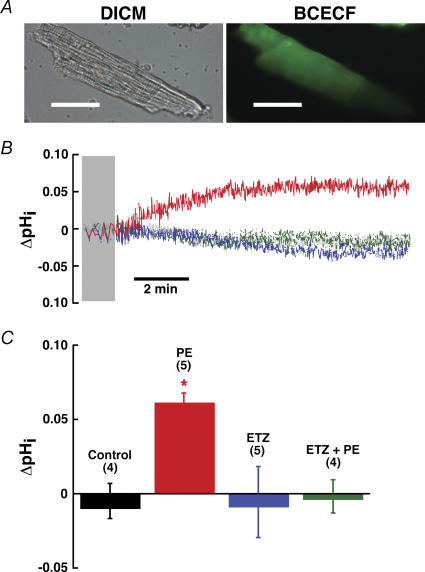
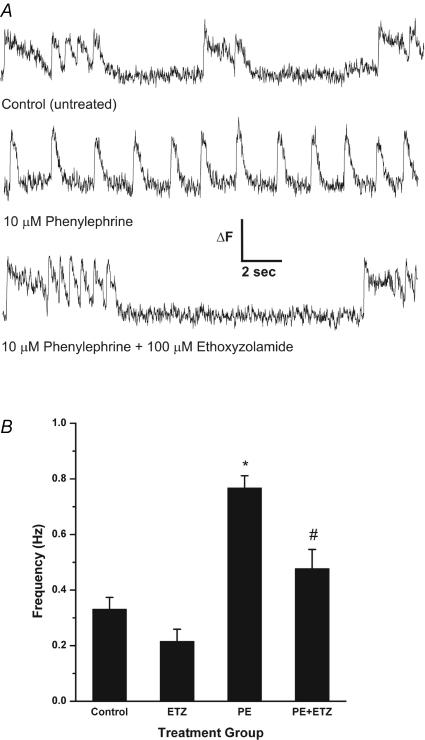
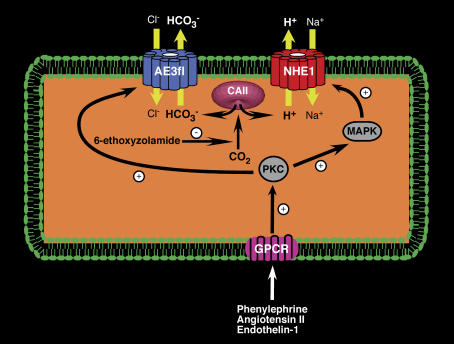
Hypertrophic cardiomyocyte growth contributes substantially to the progression of heart failure. Activation of the plasma membrane Na+-H+ exchanger (NHE1) and Cl- -HCO3- exchanger (AE3) has emerged as a central point in the hypertrophic cascade. Both NHE1 and AE3 bind carbonic anhydrase (CA), which activates their transport flux, by providing H+ and HCO3-, their respective transport substrates. We examined the contribution of CA activity to the hypertrophic response of cultured neonatal and adult rodent cardiomyocytes. Phenylephrine (PE) increased cell size by 37 +/- 2% and increased expression of the hypertrophic marker, atrial natriuretic factor mRNA, twofold in cultured neonatal rat cardiomyocytes. Cell size was also increased in adult cardiomyocytes subjected to angiotensin II or PE treatment. These effects were associated with increased expression of cytosolic CAII protein and the membrane-anchored isoform, CAIV. The membrane-permeant CA inhibitor, 6-ethoxyzolamide (ETZ), both prevented and reversed PE-induced hypertrophy in a concentration-dependent manner in neonate cardiomyocytes (IC50=18 microm). ETZ and the related CA inhibitor methazolamide prevented hypertrophy in adult cardiomyocytes. In addition, ETZ inhibited transport activity of NHE1 and the AE isoform, AE3, with respective EC50 values of 1.2 +/- 0.3 microm and 2.7 +/- 0.3 microm. PE significantly increased neonatal cardiomyocyte Ca2+ transient frequency from 0.33 +/- 0.4 Hz to 0.77 +/- 0.04 Hz following 24 h treatment; these Ca2+ -handling abnormalities were completely prevented by ETZ (0.28 +/- 0.07 Hz). Our study demonstrates a novel role for CA in mediating the hypertrophic response of cardiac myocytes to PE and suggests that CA inhibition represents an effective therapeutic approach towards mitigation of the hypertrophic phenotype.
Figures
References
-
- Alvarez BV, Fujinaga J, Casey JR. Molecular basis for angiotensin II-induced increase of chloride/bicarbonate exchange in the myocardium. Circ Res. 2001;89:1246–1253. - PubMed
-
- Baczko I, Jones L, McGuigan CF, Manning Fox JE, Gandhi M, Giles WR, Clanachan AS, Light PE. Plasma membrane KATP channel-mediated cardioprotection involves posthypoxic reductions in calcium overload and contractile dysfunction: mechanistic insights into cardioplegia. FASEB J. 2005;19:980–982. - PubMed
-
- Becker B. Use of methazolamide (neptazane) in the therapy of glaucoma; comparison with acetazolamide (diamox) Am J Ophthalmol. 1960;49:1307–1311. - PubMed
-
- Camilion de Hurtado MC, Alvarez BV, Ennis IL, Cingolani HE. Stimulation of myocardial Na+-independent Cl−-HCO3− exchanger by angiotensin II is mediated by endogenous endothelin. Circ Res. 2000;86:622–627. - PubMed
Publication types
MeSH terms
Substances
LinkOut - more resources
Full Text Sources
Miscellaneous
