


Immunohistochemical localization of histamine H3 receptors in rodent skin, dorsal root ganglia, superior cervical ganglia, and spinal cord: potential antinociceptive targets
- PMID: 17134835
- PMCID: PMC1939926
- DOI: 10.1016/j.pain.2006.09.039
Immunohistochemical localization of histamine H3 receptors in rodent skin, dorsal root ganglia, superior cervical ganglia, and spinal cord: potential antinociceptive targets
Abstract
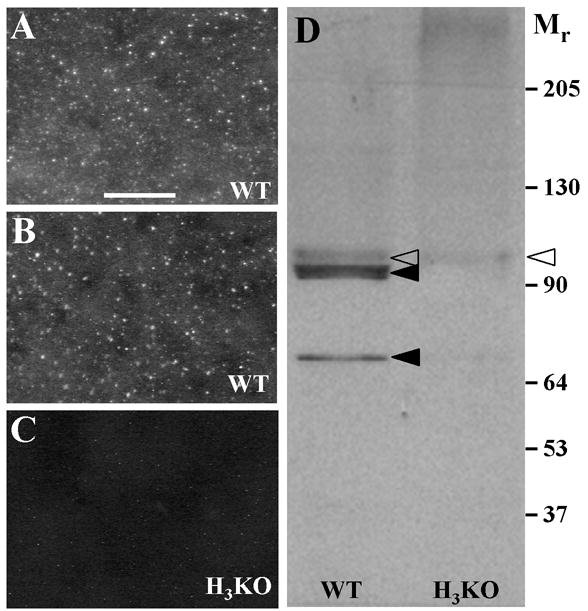
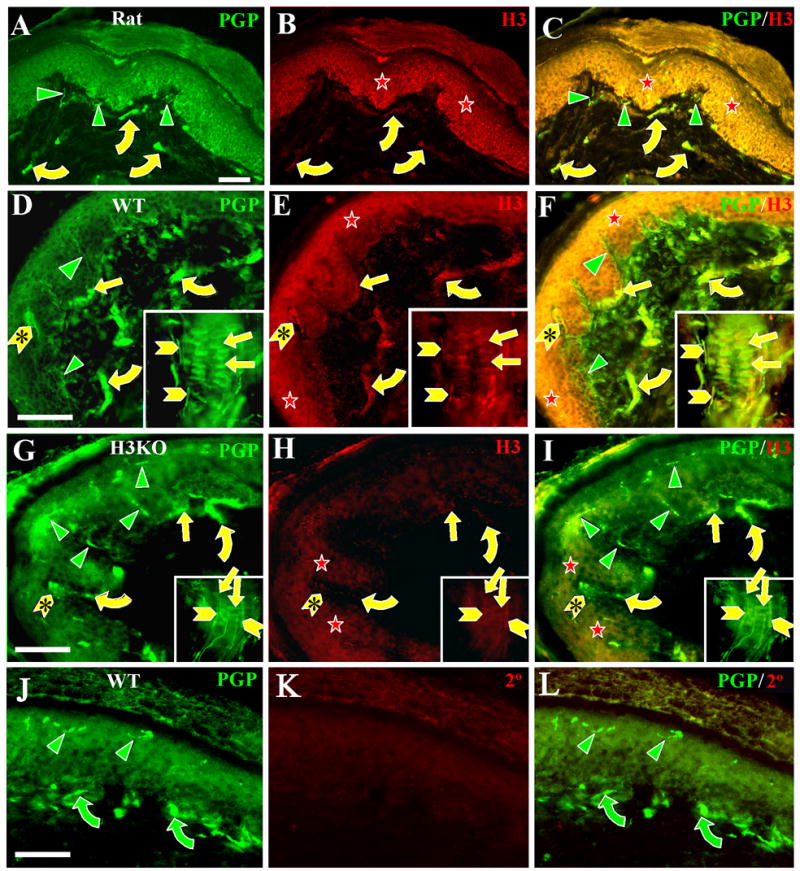
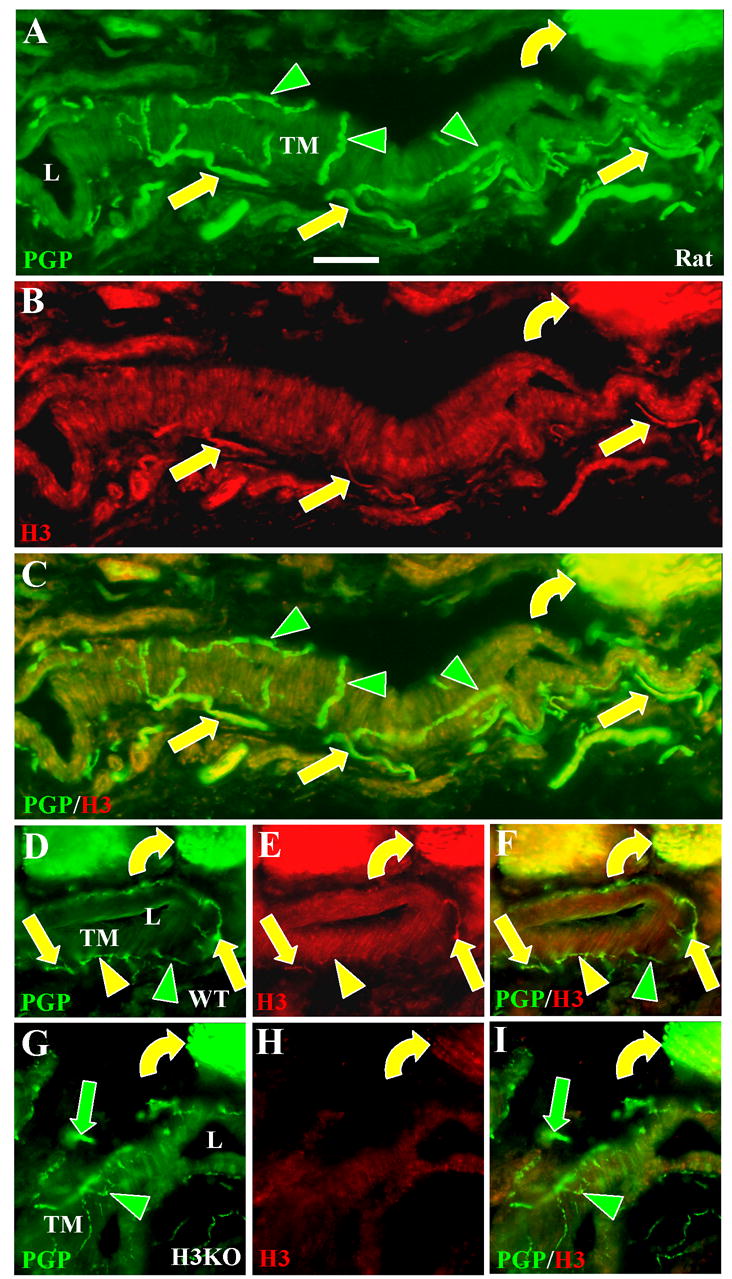
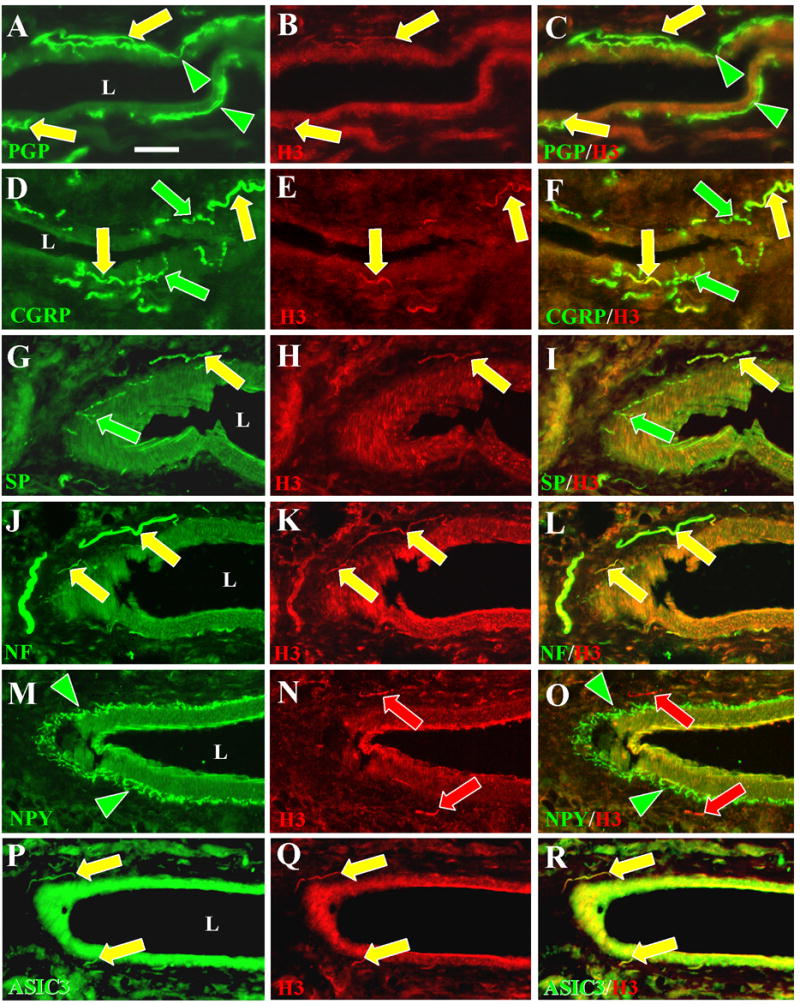
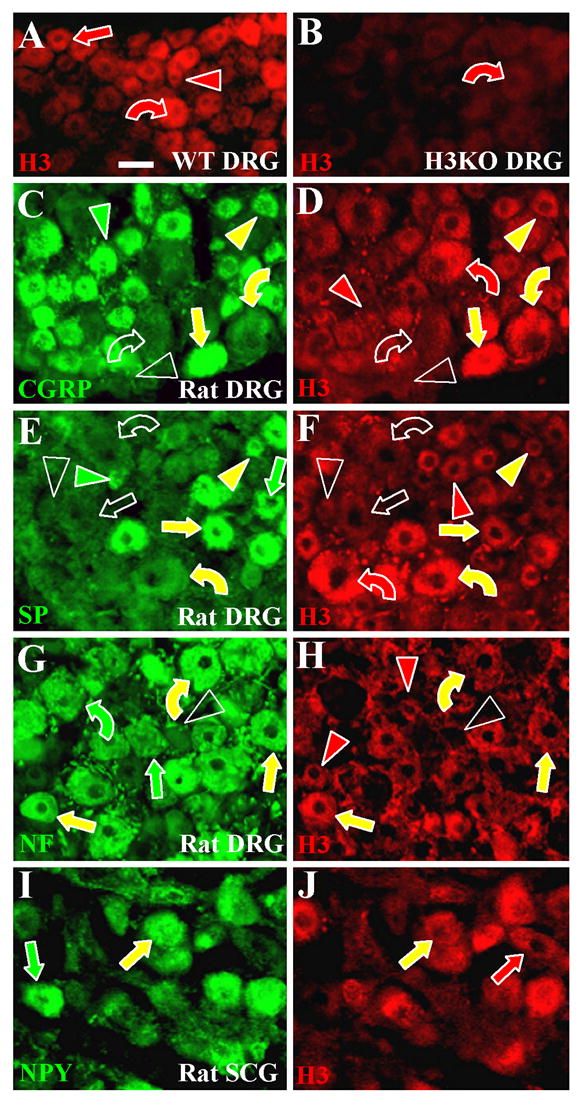
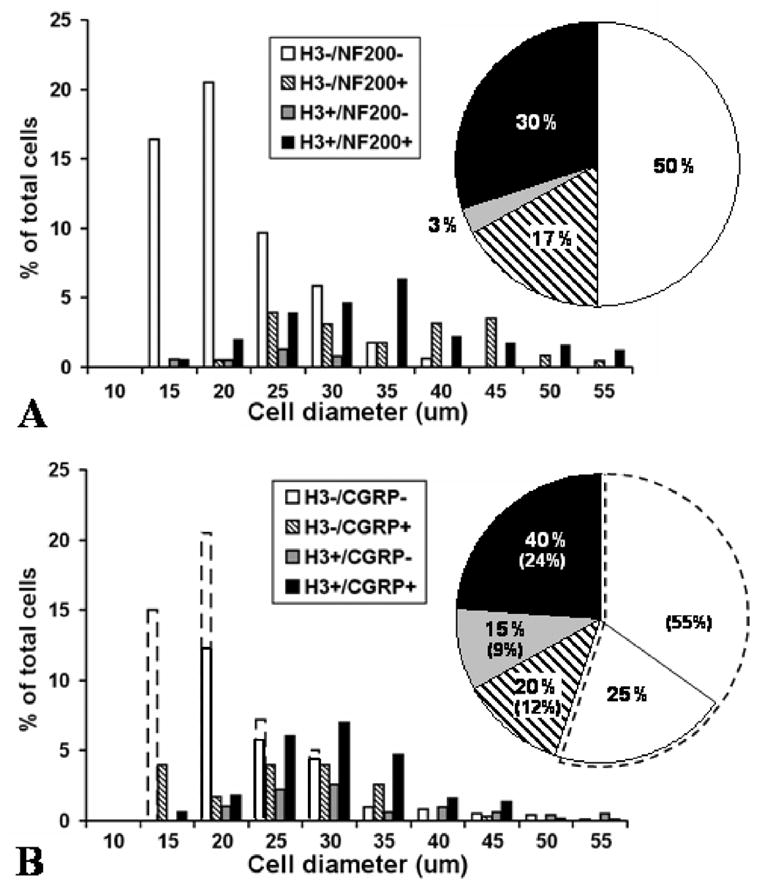
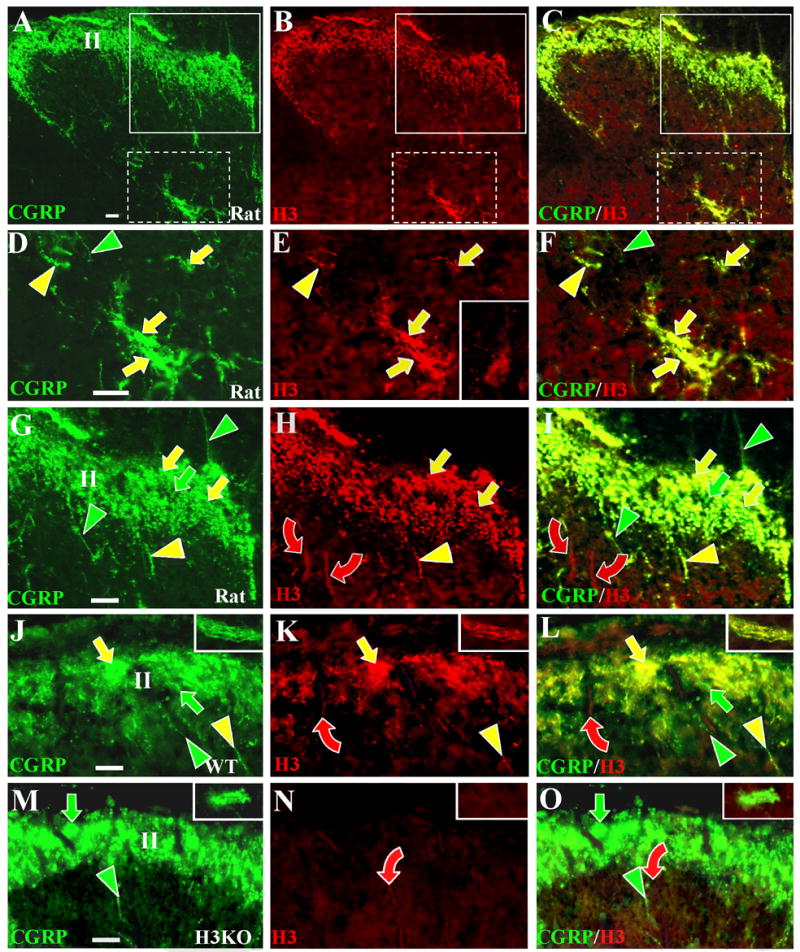
Activation of histamine H3 receptors (H3Rs) reduces inflammation and nociception, but the existence of H3Rs on peripheral innervation has never been demonstrated. Here we use antibodies to locate H3Rs in whisker pads, hairy and glabrous hind paw skin, dorsal root ganglia (DRGs), and spinal cords of rats, wild type mice, and H3R knockout (H3KO) mice. Although H3Rs have been hypothesized to be on C and sympathetic fibers, H3R-like immunoreactivity (H3R-LI) was only detected on presumptive periarterial A delta fibers and on A beta fibers that terminated in Meissner's corpuscles and as lanceolate endings around hair follicles. The H3R-positive periarterial fibers were thin-caliber and coexpressed immunoreactivity for calcitonin gene-related peptide (CGRP), substance P, acid sensing ion channel 3, and 200 kDa neurofilament protein (NF). H3R-LI was also detected on epidermal keratinocytes and Merkel cells, but not on Merkel endings, C fibers, any other A delta fibers, or sympathetic fibers. In DRGs, H3R-LI was preponderantly on medium to large neurons coexpressing NF-LI and mostly CGRP-LI. In dorsal horn, CGRP-positive fibers with and without H3R-LI ramified extensively in lamina II; many of the former formed a plexus in lamina V. Low levels of H3R-LI were also present on A beta fibers penetrating superficial and into deeper laminae. The distribution of H3R-LI was similar in rats and wild type mice, but was eliminated or strongly reduced in A delta fibers and A beta fibers, respectively, in H3KO mice. Taken with recently published behavioral results, the present findings suggest that periarterial, peptidergic, H3R-containing A delta fibers may be sources of high threshold mechanical nociception.
Figures
References
-
- Abercrombie M. Estimation of nuclear population from microtome sections. Anat Rec. 1946;94:239–247. - PubMed
-
- Amann R, Schuligoi R, Holzer P, Donnerer J. The nonpeptide NK1 receptor antagonist Sr140333 produces long lasting inhibition of neurogenic inflammation, but does not influence acute chemonociception or thermonociception in rats. Naunyn-Schmiedebergs Arch Pharmacol. 1995;352:201–205. - PubMed
-
- Arrang JM, Garbarg M, Lancelot J, Lecomte JM, Pollard H, Robba M, Schunack W, Schwart JC. Highly potent and selective ligands for histamine H3-receptors. Nature. 1987;327:117–123. - PubMed
-
- Arrang JM, Garbarg M, Schwart JC. Auto-inhibition of brain histamine release mediated by a novel class (H3) of histamine receptors. Nature. 1983;302:832–837. - PubMed
-
- Bar-Shavit Z, Goldman R, Stabinsky Y, Gottlieb P, Fridkin M, Teichberg VI, Blumberg S. Enhancement of phagocytosis—a newly found activity of Substance P residing in its N-terminal tetrapeptide. Biochem Biophys Res Comm. 1980;94:1445–1451. - PubMed
Publication types
MeSH terms
Substances
Grants and funding
LinkOut - more resources
Full Text Sources
Other Literature Sources
Molecular Biology Databases
Research Materials
