


Mammalian pharmacokinetics of carbon nanotubes using intrinsic near-infrared fluorescence
- PMID: 17135351
- PMCID: PMC1665645
- DOI: 10.1073/pnas.0609265103
Mammalian pharmacokinetics of carbon nanotubes using intrinsic near-infrared fluorescence
Abstract
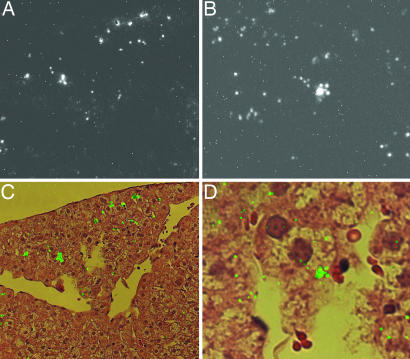
Individualized, chemically pristine single-walled carbon nanotubes have been intravenously administered to rabbits and monitored through their characteristic near-infrared fluorescence. Spectra indicated that blood proteins displaced the nanotube coating of synthetic surfactant molecules within seconds. The nanotube concentration in the blood serum decreased exponentially with a half-life of 1.0 +/- 0.1 h. No adverse effects from low-level nanotube exposure could be detected from behavior or pathological examination. At 24 h after i.v. administration, significant concentrations of nanotubes were found only in the liver. These results demonstrate that debundled single-walled carbon nanotubes are high-contrast near-infrared fluorophores that can be sensitively and selectively tracked in mammalian tissues using optical methods. In addition, the absence of acute toxicity and promising circulation persistence suggest the potential of carbon nanotubes in future pharmaceutical applications.
Conflict of interest statement
Conflict of interest statement: R.B.W. holds an interest in Applied NanoFluorescence, LLC.
Figures


References
-
- Kam NWS, Jessop TC, Wender PA, Dai H. J Am Chem Soc. 2004;126:6850–6851. - PubMed
-
- Lin Y, Taylor S, Li H, Shiral Fernando KA, Qu L, Wang W, Gu L, Zhou B, Sun Y-P. J Mater Chem. 2004;14:527–541.
-
- Pantarotto D, Briand JP, Prato M, Bianco A. Chem Commun. 2004;2004:16–17. - PubMed
-
- Pantarotto D, Singh R, McCarthy D, Erhardt M, Briand J-P, Prato M, Kostarelos K, Bianco A. Angew Chem Int Ed Engl. 2004;43:5242–5246. - PubMed
-
- Bianco A, Kostarelos K, Prato M. Curr Opin Chem Biol. 2005;9:674–679. - PubMed
Publication types
MeSH terms
Substances
Grants and funding
LinkOut - more resources
Full Text Sources
Other Literature Sources
