


The use of wireless laptop computers for computer-assisted learning in pharmacokinetics
- PMID: 17136147
- PMCID: PMC1636897
- DOI: 10.5688/aj700104
The use of wireless laptop computers for computer-assisted learning in pharmacokinetics
Abstract
Objective: To implement computer-assisted learning workshops into pharmacokinetics courses in a doctor of pharmacy (PharmD) program.
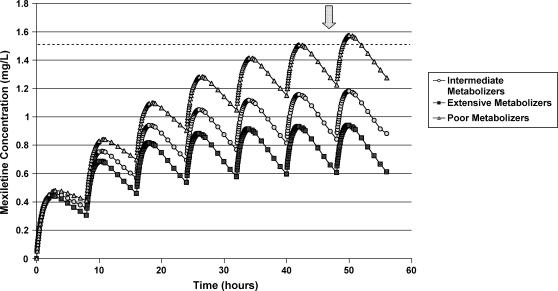
Design: Workshops were designed for students to utilize computer software programs on laptop computers to build pharmacokinetic models to predict drug concentrations resulting from various dosage regimens. In addition, students were able to visualize through graphing programs how altering different parameters changed drug concentration-time curves. Surveys were conducted to measure students' attitudes toward computer technology before and after implementation. Finally, traditional examinations were used to evaluate student learning.
Assessment: Doctor of pharmacy students responded favorably to the use of wireless laptop computers in problem-based pharmacokinetic workshops. Eighty-eight percent (n = 61/69) and 82% (n = 55/67) of PharmD students completed surveys before and after computer implementation, respectively. Prior to implementation, 95% of students agreed that computers would enhance learning in pharmacokinetics. After implementation, 98% of students strongly agreed (p < 0.05) that computers enhanced learning. Examination results were significantly higher after computer implementation (89% with computers vs. 84% without computers; p = 0.01).
Conclusion: Implementation of wireless laptop computers in a pharmacokinetic course enabled students to construct their own pharmacokinetic models that could respond to changing parameters. Students had greater comprehension and were better able to interpret results and provide appropriate recommendations. Computer-assisted pharmacokinetic techniques can be powerful tools when making decisions about drug therapy.
Figures
References
-
- Charles BG, Duffull SB. Pharmacokinetic software for the health sciences: choosing the right package for teaching purposes. Clin Pharmacokinet. 2001;40:395–403. - PubMed
-
- Adams AM. Pedagogical underpinnings of computer-based learning. J Adv Nurs. 2004;46:5–12. - PubMed
-
- Mehvar R. On-line, individualized, and interactive pharmacokinetic scenarios with immediate grading and feedback and potential for use by multiple instructors. Am J Pharm Educ. 1999;63:348–53.
-
- Labbe L, Turgeon J. Clinical pharmacokinetics of mexiletine. Clin Pharmacokinet. 1999;37:361–84. - PubMed
-
- Otani M, Fukuda T, Naohara M, et al. Impact of CYP2D6*10 on mexiletine pharmacokinetics in healthy adult volunteers. Eur J Clin Pharmacol. 2003;59:395–9. - PubMed
MeSH terms
LinkOut - more resources
Full Text Sources