Best-evidence interventions: findings from a systematic review of HIV behavioral interventions for US populations at high risk, 2000-2004
- PMID: 17138920
- PMCID: PMC1716236
- DOI: 10.2105/AJPH.2005.076182
Best-evidence interventions: findings from a systematic review of HIV behavioral interventions for US populations at high risk, 2000-2004
Abstract
Objectives: The Centers for Disease Control and Prevention's HIV/AIDS Prevention Research Synthesis Team conducted a systematic review of US-based HIV behavioral intervention research literature from 2000 through 2004 to identify interventions demonstrating best evidence of efficacy for reducing HIV risk.
Methods: Standard systematic review methods were used. Each eligible study was reviewed on the basis of Prevention Research Synthesis Team efficacy criteria that focused on 3 domains: study design, implementation and analysis, and strength of evidence.
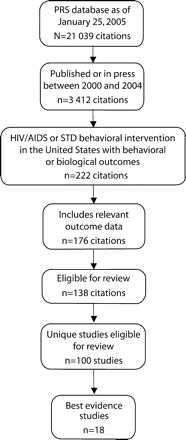
Results: Eighteen interventions met the criteria for best evidence. Four targeted HIV-positive individuals. Of those targeting populations at risk for HIV, 4 targeted drug users, 6 targeted adults at risk because of heterosexual behaviors only, 2 targeted men who have sex with men, and 2 targeted youths at high risk. Eight interventions focused on women, and 13 had study samples with more than 50% minority participants. Significant intervention effects included increased condom use and reductions in unprotected sexual intercourse, number of sexual partners, injection drug use or needle sharing, and newly acquired sexually transmitted infections.
Conclusions: Most of the best-evidence interventions are directly applicable for populations in greatest need of effective prevention programs; however, important gaps still exist.
Figures
References
-
- Centers for Disease Control and Prevention. Cases of HIV infection and AIDS in the United States, 2003. HIV AIDS Surveill Rep. 2004;15:1–46.
-
- Centers for Disease Control and Prevention. Trends in HIV/AIDS diagnoses—33 states, 2001–2004. MMWR Morb Mortal Wkly Rep. 2005;54:1149–1153. - PubMed
-
- Lemckert AA, Goudsmit J, Barouch DH. Challenges in the search for an HIV vaccine. Eur J Epidemiol. 2004;19:513–516. - PubMed
-
- Letvin NL. Progress toward an HIV vaccine. Annu Rev Med. 2005;56:213–223. - PubMed
-
- Institute of Medicine. The Future of the Public’s Health in the 21st Century. Washington, DC: National Academies Press; 2003.
Publication types
MeSH terms
LinkOut - more resources
Full Text Sources
Medical
Miscellaneous