Racial disparity in hypertensive disorders of pregnancy in New York State: a 10-year longitudinal population-based study
- PMID: 17138931
- PMCID: PMC1716255
- DOI: 10.2105/AJPH.2005.068577
Racial disparity in hypertensive disorders of pregnancy in New York State: a 10-year longitudinal population-based study
Abstract
Objectives: We studied trends of hypertensive disorders of pregnancy by residential socioeconomic status (SES) and racial/ethnic subgroups in New York State over a 10-year period.
Methods: We merged New York State discharge data for 2.5 million women hospitalized with delivery from 1993 through 2002 with 2000 US Census data.
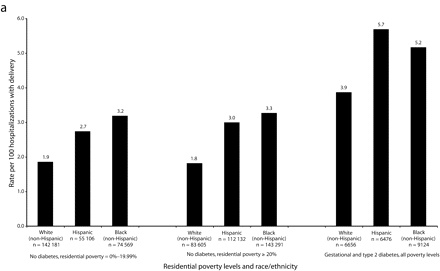
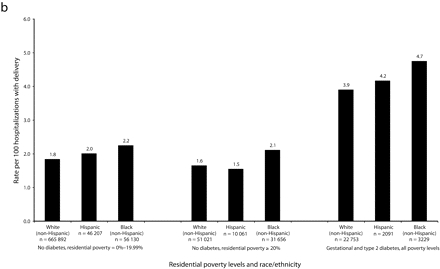
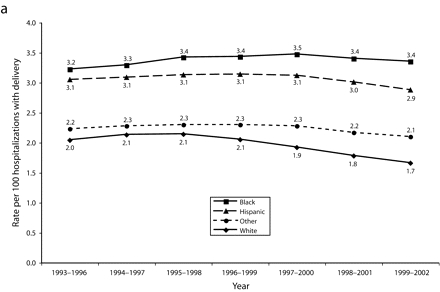
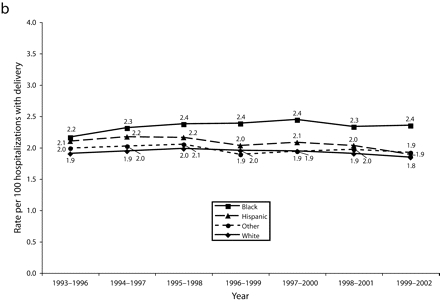
Results: Rates of diagnoses for all hypertensive disorders combined and for preeclampsia individually were highest among Black women across all regions and neighborhood poverty levels. Although hospitalization rates for preeclampsia decreased over time for most groups, differences in rates between White and Black women increased over the 10-year period. The proportion of women living in poor areas remained relatively constant over the same period. Black and Hispanic women were more likely than White women to have a form of diabetes and were at higher risk of preeclampsia; preeclampsia rates were higher in these groups both with and without diabetes than in corresponding groups of White women.
Conclusions: An increasing trend of racial/ethnic disparity in maternal hypertension rates occurred in New York State during the past decade. This trend was persistent after stratification according to SES and other risk factors. Additional research is needed to understand the factors contributing to this growing disparity.
Figures
References
-
- ACOG technical bulletin. Hypertension in pregnancy. Number 219–January 1996 (replaces no. 91, February 1986). Committee on Technical Bulletins of the American College of Obstetricians and Gynecologists. Int J Gynaecol Obstet. 1996;53(2):175–183. - PubMed
-
- Report of the National High Blood Pressure Education Program Working Group on High Blood Pressure in Pregnancy. Am J Obstet Gynecol. 2000;183: S1–S22. - PubMed
-
- Samadi AR, Mayberry RM, Zaidi AA, Pleasant JC, McGhee N Jr, Rice RJ. Maternal hypertension and associated pregnancy complications among African-American and other women in the United States. Obstet Gynecol. 1996;87:557–563. - PubMed
-
- Peters RM, Flack JM. Hypertensive disorders of pregnancy. J Obstet Gynecol Neonatal Nurs. 2004;33: 209–220. - PubMed
-
- Sibai BM. Treatment of hypertension in pregnant women. N Engl J Med. 1996;335:257–265. - PubMed
MeSH terms
LinkOut - more resources
Full Text Sources
Medical
Miscellaneous