Emergency care of older people who fall: a missed opportunity
- PMID: 17142584
- PMCID: PMC2464894
- DOI: 10.1136/qshc.2006.018697
Emergency care of older people who fall: a missed opportunity
Abstract
Introduction: A high number of emergency (999) calls are made for older people who fall, with many patients not subsequently conveyed to hospital. Ambulance crews do not generally have protocols or training to leave people at home, and systems for referral are rare. The quality and safety of current practice is explored in this study, in which for the first time, the short-term outcomes of older people left at home by emergency ambulance crews after a fall are described. Results will inform the development of care for this population.
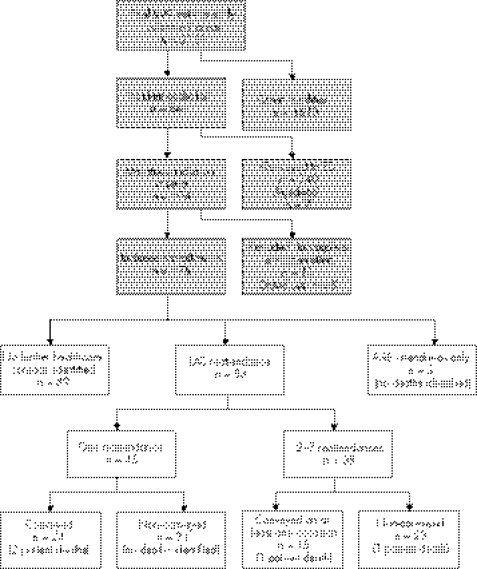
Methods: Emergency ambulance data in London were analysed for patterns of attendance and call outcomes in 2003-4. All older people who were attended by emergency ambulance staff after a fall in September and October 2003, within three London areas, were identified. Those who were not conveyed to hospital were followed up; healthcare contacts and deaths within the following 2 weeks were identified.
Results: During 2003-4, 8% of all 999 calls in London were for older people who had fallen (n = 60 064), with 40% not then conveyed to hospital. Of 2151 emergency calls attended in the study areas during September and October 2003, 534 were for people aged >or=65 who had fallen. Of these, 194 (36.3%) were left at home. 86 (49%) people made healthcare contacts within the 2-week follow-up period, with 83 (47%) people calling 999 again at least once. There was an increased risk of death (standard mortality ratio 5.4) and of hospital admission (4.7) compared with the general population of the same age in London.
Comment: The rate of subsequent emergency healthcare contacts and increased risk of death and hospitalisation for older people who fall and who are left at home after a 999 call are alarming. Further research is needed to explore appropriate models for delivery of care for this vulnerable group.
Conflict of interest statement
Competing interests: None declared.
Comment in
-
Emergency care practitioners: a new safe effective role?Qual Saf Health Care. 2006 Dec;15(6):387. doi: 10.1136/qshc.2006.020370. Qual Saf Health Care. 2006. PMID: 17142582 Free PMC article.
References
-
- Scuffam P, Chaplin S.The incidence and costs of accidental falls in the UK. York: Health Economics Consortium, The University of York, 2002
-
- Aminzadeh F, Dalziel W B. Older adults in the emergency department: a systematic review of patterns of use, adverse outcomes and effectiveness of interventions. Ann Emerg Med 200239238–247. - PubMed
MeSH terms
LinkOut - more resources
Full Text Sources
Medical
Miscellaneous