


Effect of micro-environment maintenance on embryo culture after in-vitro fertilization: comparison of top-load mini incubator and conventional front-load incubator
- PMID: 17160731
- PMCID: PMC3455086
- DOI: 10.1007/s10815-006-9088-3
Effect of micro-environment maintenance on embryo culture after in-vitro fertilization: comparison of top-load mini incubator and conventional front-load incubator
Abstract
Purpose: To investigate the effect of microenvironment maintenance on embryo culture and clinical results using two types of incubators.
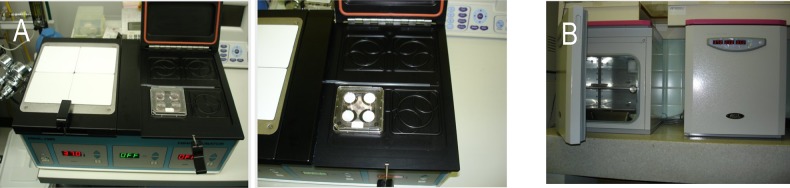
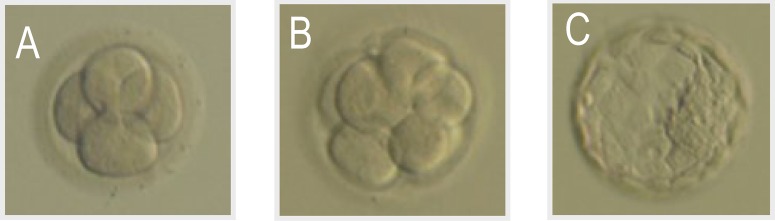
Methods: Temperature and oxygen concentration in a mini-incubator and a conventional incubator were compared following a 5-s door opening/closing procedure. Embryos of 30 in-vitro fertilization embryo transfer (IVF-ET) cases were randomly allocated to either one of the incubator, cultured, and the early-stage good embryo formation rate and the good blastocyst formation rate were compared, as indicators for micro-environment maintenance ability.
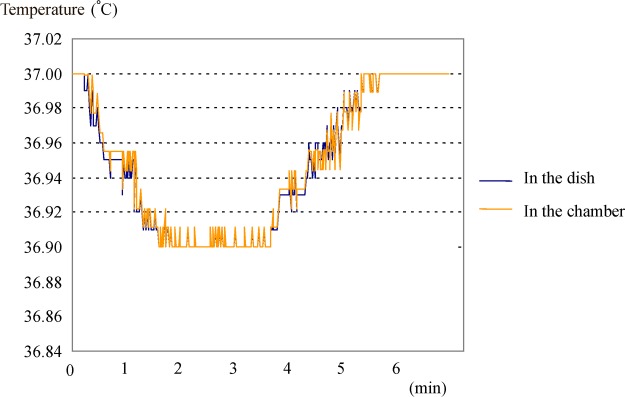
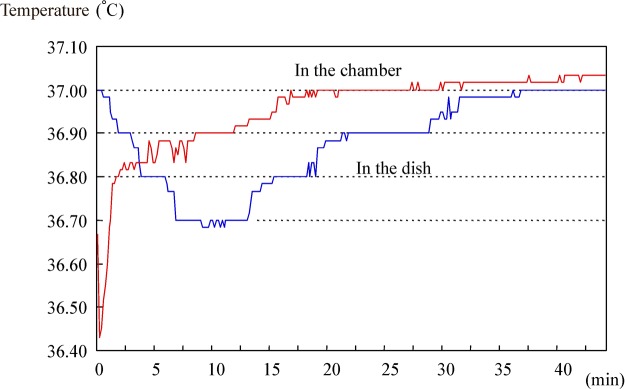
Results: Temperature recovery after a 5-s door opening/closing procedure was approximately 5 min for the mini-incubator and 30 min for the conventional incubator. The oxygen concentration return was significantly improved in the mini-incubator (3.0 +/- 0 min) compared with the conventional incubator (7.8 +/- 0.9 min). Both the early-stage good embryo formation rate and the good blastocyst formation rate were significantly higher in the mini-incubator (39.5% and 15.1%) than the conventional incubator (28.4% and 7.8%).
Conclusion: The microenvironment maintenance ability of incubators appears to significantly influence the formation of good embryos.
Figures
References
-
- Van Langendonckt A, Demylle D, Wyns C, Nisolle M, Donnez J. Comparison of G1.2/G2.2 and Sydney IVF cleavage/blastocyst sequential media for the culture of human embryos: a prospective, randomized, comparative study. Fertil Steril. 2001;76:1023–1031. doi: 10.1016/S0015-0282(01)02854-0. - DOI - PubMed
-
- Zollner KP, Zollner U, Schneider M, Dietl J, Steck T. Comparison of two media for sequential culture after IVF and ICSI shows no differences in pregnancy rate: a randomized trial. Med Sci Monit. 2004;10:1–7. - PubMed
-
- Gardner DK, Lane M. Culture systems for the human embryo. In: Gardner DK, Weissman A, Howles CM, Shoham Z, editors. Textbook of Assisted Reproductive Techniques. 2. London: Taylor & Francis; 2004. pp. 211–234.
-
- Hadachi Y, Kato Y, Genji Y, Ueno Y, Nishikori K, Mio Y. Effect of optimal temperature in culture medium on embryo quality and ART result in couples with elder maternal age. J Fertil Implant (Tokyo) 2003;20:114–117.
Publication types
MeSH terms
Substances
LinkOut - more resources
Full Text Sources
Other Literature Sources
Medical
