So how do you know you have a macromolecular complex?
- PMID: 17164522
- PMCID: PMC2483502
- DOI: 10.1107/S0907444906047044
So how do you know you have a macromolecular complex?
Abstract
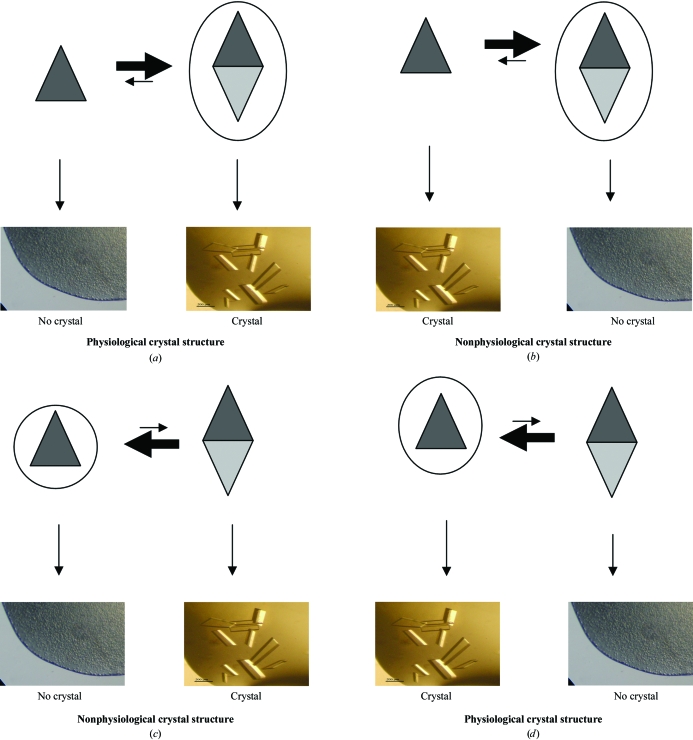
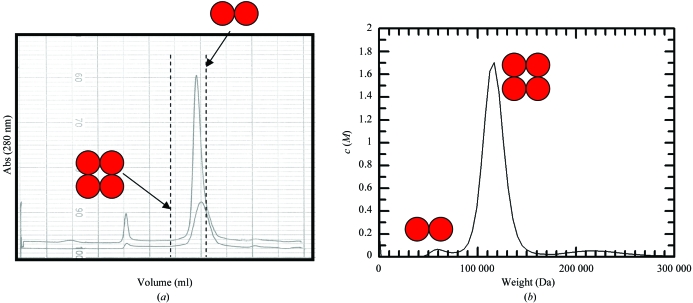
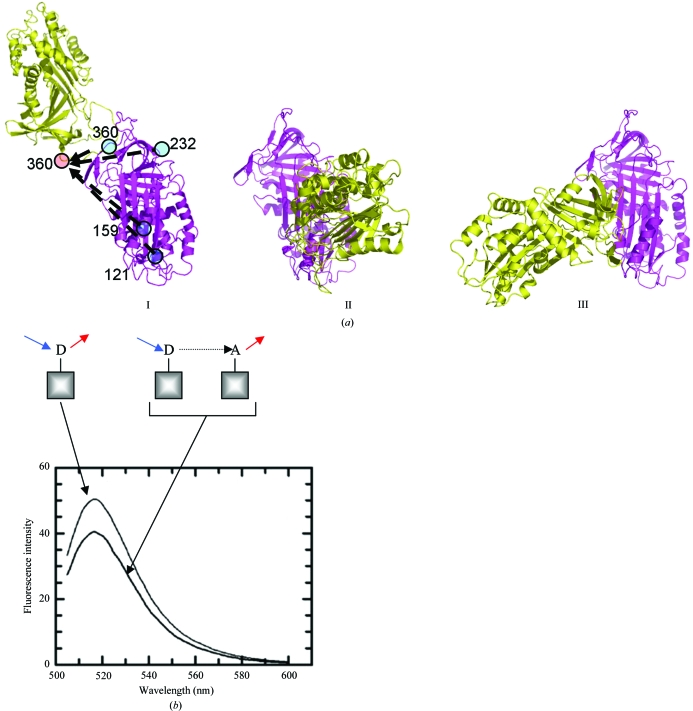
Protein in crystal form is at an extremely high concentration and yet retains the complex secondary structure that defines an active protein. The protein crystal itself is made up of a repeating lattice of protein-protein and protein-solvent interactions. The problem that confronts any crystallographer is to identify those interactions that represent physiological interactions and those that do not. This review explores the tools that are available to provide such information using the original crystal liquor as a sample. The review is aimed at postgraduate and postdoctoral researchers who may well be coming up against this problem for the first time. Techniques are discussed that will provide information on the stoichiometry of complexes as well as low-resolution information on complex structure. Together, these data will help to identify the physiological complex.
Figures
References
-
- Bahadur, R. P., Chakrabarti, P., Rodier, F. & Janin, J. (2004). J. Mol. Biol.336, 943–955. - PubMed
-
- Brown, W. (1993). Dynamic Light Scattering: The Method and Some Applications. Oxford: Clarendon Press.
-
- Cooper, E. A. & Knutson, K. (1995). Pharm. Biotechnol.7, 101–143. - PubMed
-
- Dafforn, T. R., Mahadeva, R., Elliott, P. R., Sivasothy, P. & Lomas, D. A. (1999). J. Biol. Chem.274, 9548–9555. - PubMed
-
- Gettins, P. G. & Olson, S. T. (2004). Methods, 32, 110–119. - PubMed
Publication types
MeSH terms
Substances
LinkOut - more resources
Full Text Sources
Other Literature Sources