


Tight junction protein expression and barrier properties of immortalized mouse brain microvessel endothelial cells
- PMID: 17169347
- PMCID: PMC1995120
- DOI: 10.1016/j.brainres.2006.10.083
Tight junction protein expression and barrier properties of immortalized mouse brain microvessel endothelial cells
Abstract
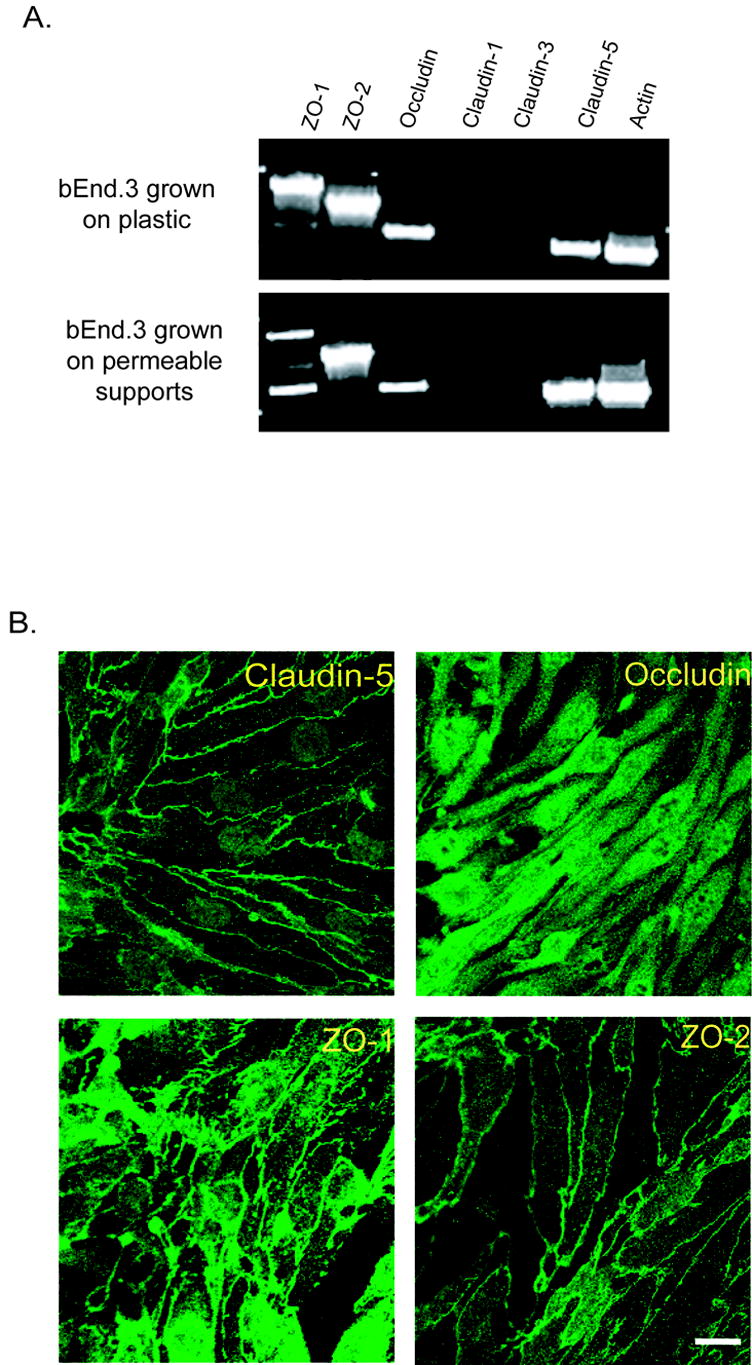
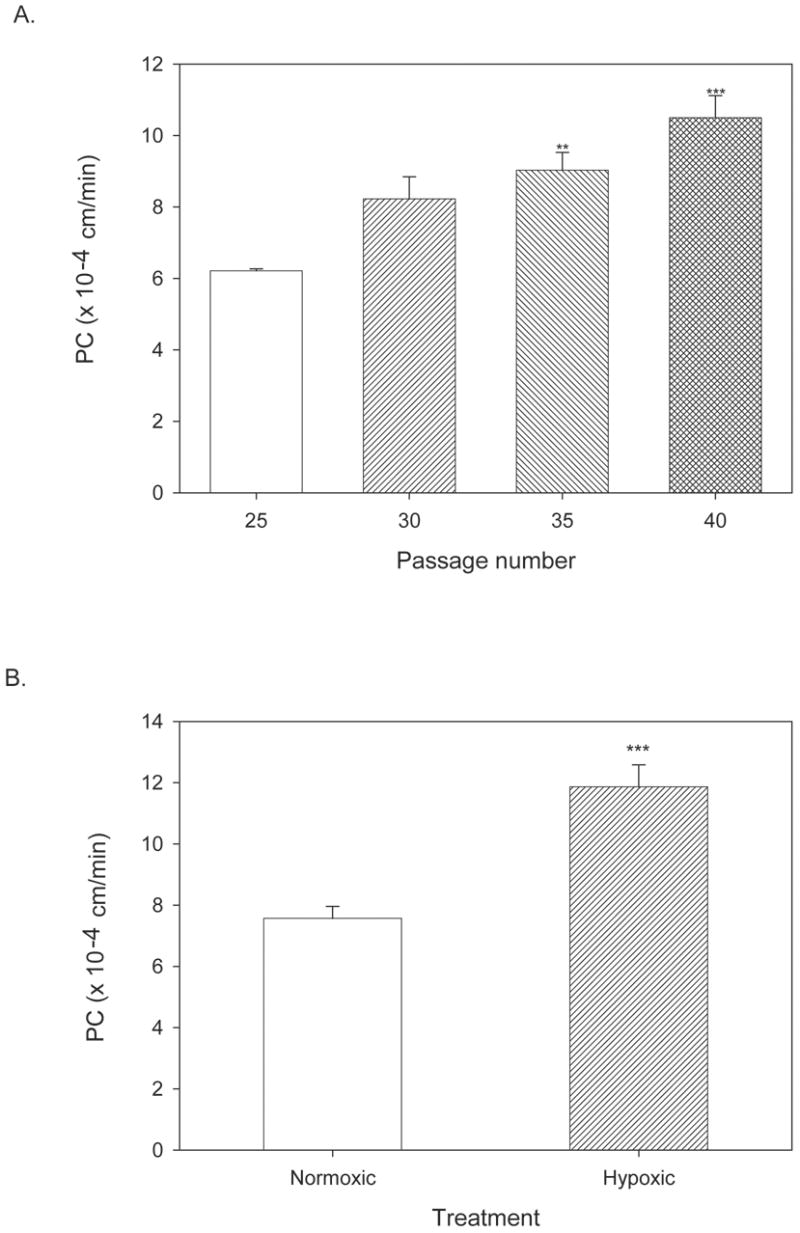
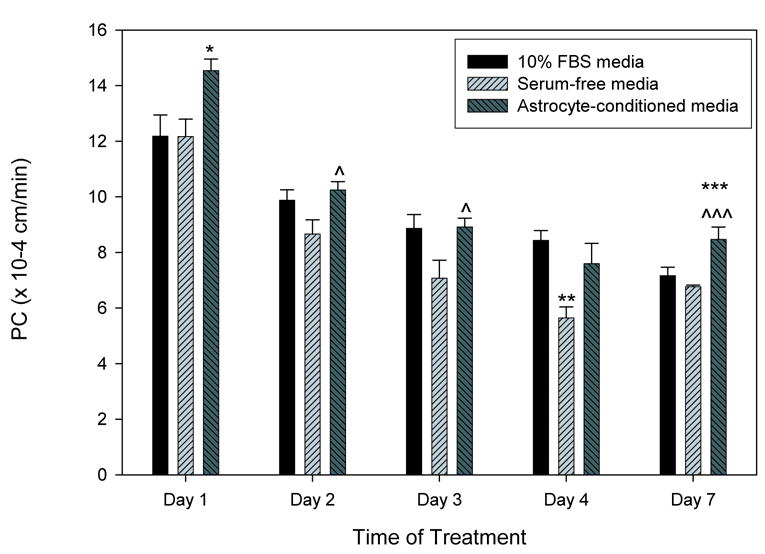
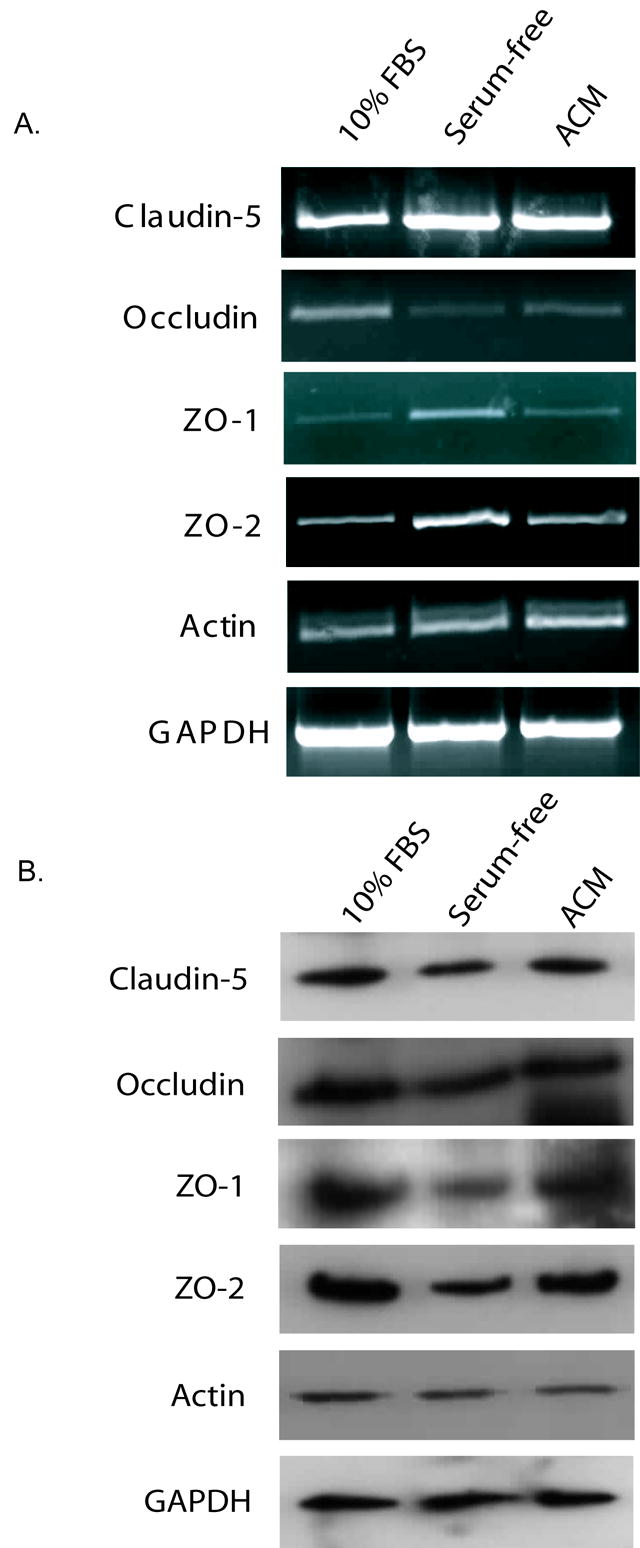
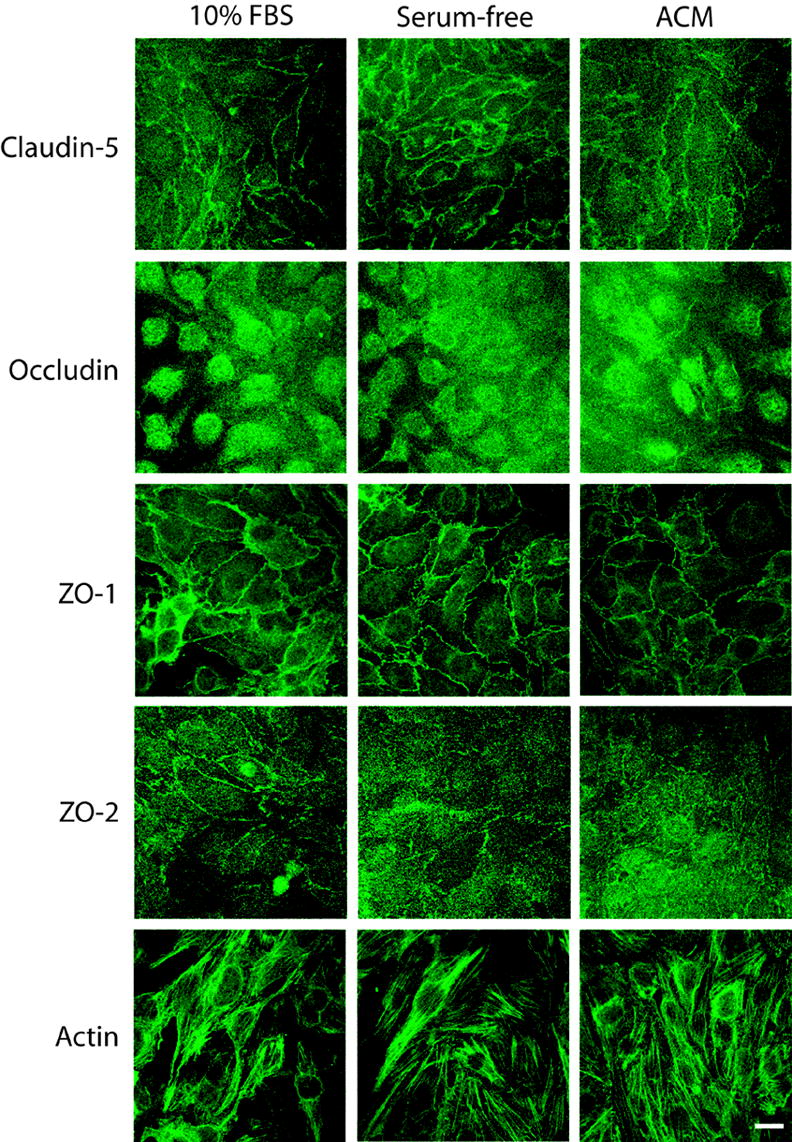
Understanding the molecular and biochemical mechanisms regulating the blood-brain barrier is aided by in vitro model systems. Many studies have used primary cultures of brain microvessel endothelial cells for this purpose. However, primary cultures limit the generation of material for molecular and biochemical assays since cells grow slowly, are prone to contamination by other neurovascular unit cells, and lose blood-brain barrier characteristics when passaged. To address these issues, immortalized cell lines have been generated. In these studies, we assessed the suitability of the immortalized mouse brain endothelial cell line, bEnd3, as a blood-brain barrier model. RT-PCR and immunofluorescence indicated expression of multiple tight junction proteins. bEnd3 cells formed barriers to radiolabeled sucrose, and responded like primary cultures to disrupting stimuli. Exposing cells to serum-free media on their basolateral side significantly decreased paracellular permeability; astrocyte-conditioned media did not enhance barrier properties. The serum-free media-induced decrease in permeability was correlated with an increase in claudin-5 and zonula occludens-1 immunofluorescence at cell-cell contracts. We conclude that bEnd3 cells are an attractive candidate as a model of the blood-brain barrier due to their rapid growth, maintenance of blood-brain barrier characteristics over repeated passages, formation of functional barriers and amenability to numerous molecular interventions.
Figures
References
-
- Abbott JN, Hughes C, Revest PA, Greenwood J. Development and characterisation of a rat brain capillary endothelial culture: towards an in vitro blood-brain barrier. J Cell Sci. 1992;103:23–37. - PubMed
-
- Abbott NJ, Romero IA. Transporting therapeutics across the blood-brain barrier. Mol Med Today. 1996;2:106–113. - PubMed
-
- Abbruscato TJ, Davis TP. Combination of hypoxia/aglycemia compromises in vitro blood-brain barrier integrity. J Pharmacol Exp Ther. 1999;289:668–675. - PubMed
-
- Abbruscato TJ, Thomas SA, Hruby VJ, Davis TP. Blood-brain barrier permeability and bioavailability of a highly potent and mu-selective opioid receptor antagonist, CTAP: comparison with morphine. J Pharmacol Exp Ther. 1997;280:402–409. - PubMed
Publication types
MeSH terms
Substances
Grants and funding
LinkOut - more resources
Full Text Sources
Other Literature Sources
