


Effects of alcohol and combined marijuana and alcohol use during adolescence on hippocampal volume and asymmetry
- PMID: 17169528
- PMCID: PMC1821342
- DOI: 10.1016/j.ntt.2006.10.010
Effects of alcohol and combined marijuana and alcohol use during adolescence on hippocampal volume and asymmetry
Abstract
Background: Converging lines of evidence suggest that the hippocampus may be particularly vulnerable to deleterious effects of alcohol and marijuana use, especially during adolescence. The goal of this study was to examine hippocampal volume and asymmetry in adolescent users of alcohol and marijuana.
Methods: Participants were adolescent (aged 15-18) alcohol (ALC) users (n=16), marijuana and alcohol (MJ+ALC) users (n=26), and demographically similar controls (n=21). Extensive exclusionary criteria included prenatal toxic exposure, left handedness, and psychiatric and neurologic disorders. Substance use, cognitive, and anatomical measures were collected after at least 2 days of abstinence from all substances.
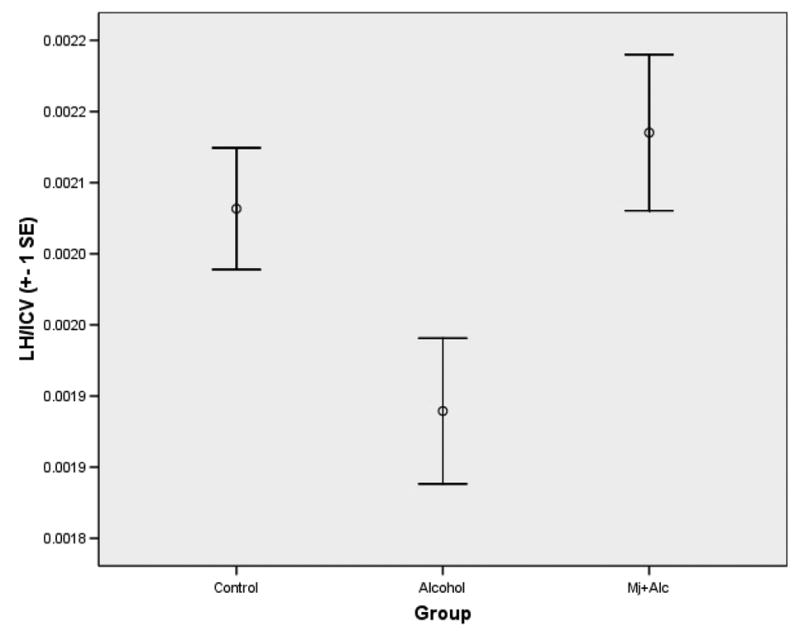
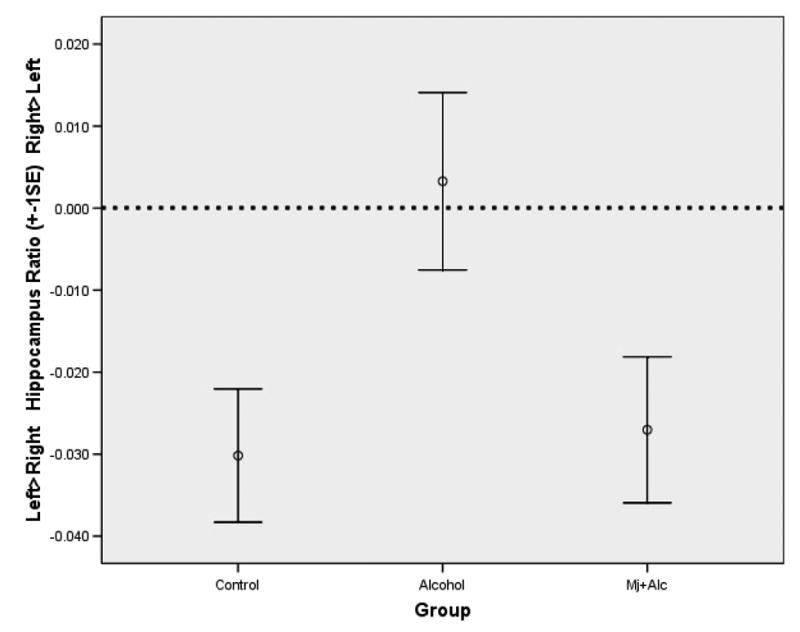
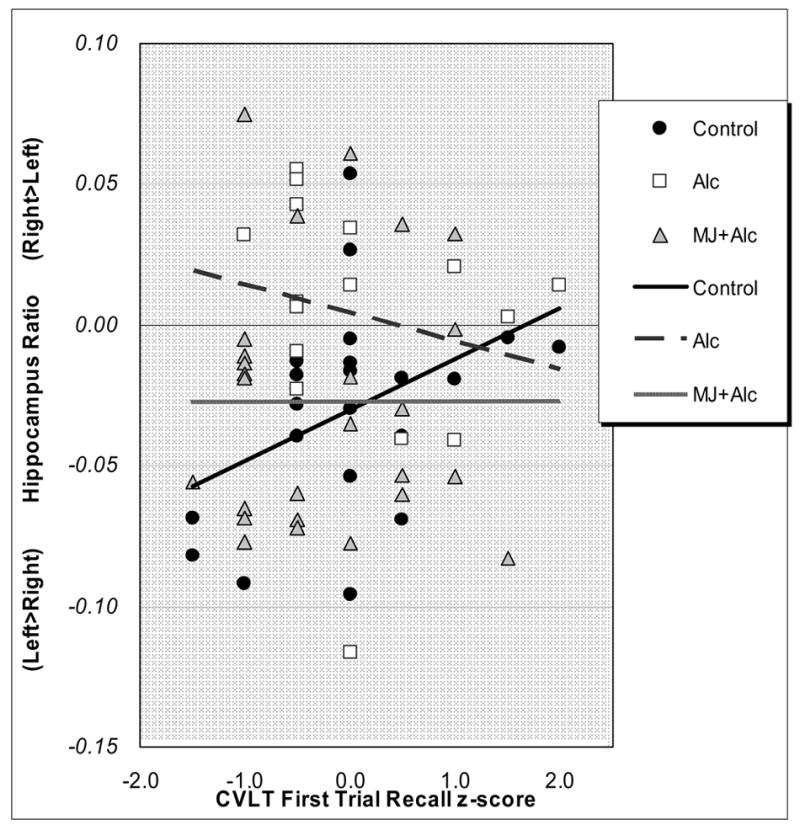
Results: Adolescent ALC users demonstrated a significantly different pattern of hippocampal asymmetry (p<.05) and reduced left hippocampal volume (p<.05) compared to MJ+ALC users and non-using controls. Increased alcohol abuse/dependence severity was associated with increased right>left (R>L) asymmetry and smaller left hippocampal volumes while marijuana abuse/dependence was associated with increased L>R asymmetry and larger left hippocampal volumes. Although MJ+ALC users did not differ from controls in asymmetry, functional relationships with verbal learning were found only among controls, among whom greater right than left hippocampal volume was associated with superior performance (p<.05).
Conclusions: Aberrations in hippocampal asymmetry and left hippocampal volumes were found for adolescent heavy drinkers. Further, the functional relationship between hippocampal asymmetry and verbal learning was abnormal among adolescent substance users compared to healthy controls. These findings suggest differential effects of alcohol and combined marijuana and alcohol use on hippocampal morphometry and the relationship between hippocampal asymmetry and verbal learning performance among adolescents.
Figures
References
-
- Aasly J, Storsaeter O, Nilsen G, Smevik O, Rinck P. Minor structural brain changes in young drug abusers. Acta Neurologica Scandinavica. 1993;87:210–214. - PubMed
-
- Agosti V, Edward N, Frances L. Rates of psychiatric comorbidity among U.S. residents with lifetime cannabis dependence. American Journal of Drug and Alcohol Abuse. 2002;28(4):643–652. - PubMed
-
- Barnes J, Scahill RI, Schott JM, Frost C, Rossor MN, Fox NC. Does Alzheimer's disease affect hippocampal asymmetry: Evidence from a cross-sectional and longitudinal volumetric MRI study. Dementia and Geriatric Cognitive Disorders. 2004;19:338–344. - PubMed
-
- Barron S, White A, Swartzwelder HS, Bell RL, Rodd ZA, Slawecki CJ, Ehler CL, Levin ED, Rezvani AH, Spear LP. Adolescent vulnerabilities to chronic alcohol or nicotine exposure: findings from rodent models. Alcohol Clin Exp Res. 2005;29(9):1720–1725. - PubMed
-
- Belue RC, Howlett AC, Westlake TM, Hutchings DE. The ontogeny of cannabinoid receptors in the brain of postnatal and aging rats. Neurotoxicol Teratol. 1995;17(1):25–30. - PubMed
Publication types
MeSH terms
Substances
Grants and funding
LinkOut - more resources
Full Text Sources
Medical
