


Trends in physical activity and sedentary behaviour in adolescence: ethnic and socioeconomic differences
- PMID: 17178773
- PMCID: PMC2465219
- DOI: 10.1136/bjsm.2006.031138
Trends in physical activity and sedentary behaviour in adolescence: ethnic and socioeconomic differences
Abstract
Objective: To assess developmental trends in physical activity and sedentary behaviour in British adolescents in relation to sex, ethnicity and socioeconomic status (SES).
Design: A 5-year longitudinal study of a diverse cohort of students aged 11-12 years at baseline in 1999.
Setting: 36 London schools sampled using a stratified random sampling procedure.
Participants: A total of 5863 students categorised as white, black or Asian, and stratified for SES using the Townsend Index.
Main outcome measures: Number of days per week of vigorous activity leading to sweating and breathing hard. Hours of sedentary behaviour, including watching television and playing video games. Data were analysed using multilevel, linear, mixed models.
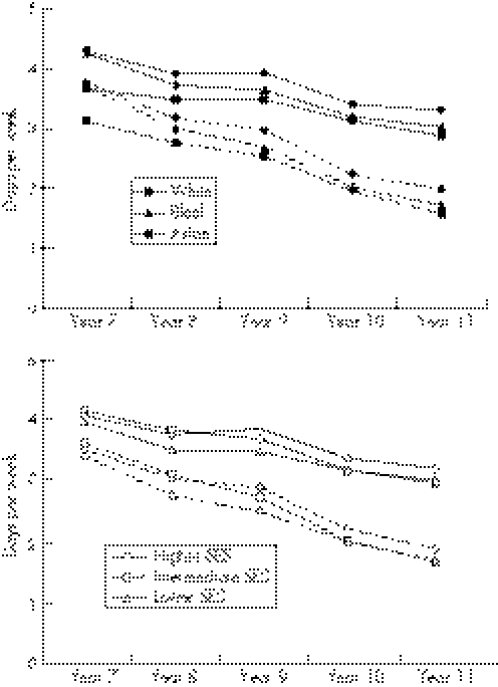
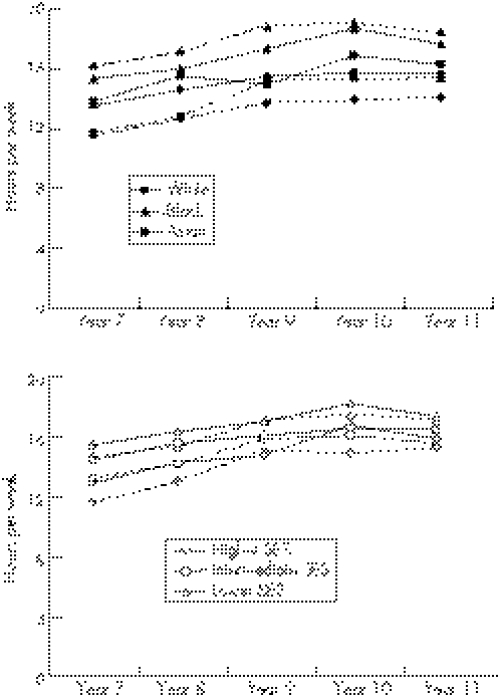
Results: Marked reductions in physical activity and increases in sedentary behaviour were noticed between ages 11-12 and 15-16 years. Boys were more active than girls, and the decline in physical activity was greater in girls (46% reduction) than in boys (23%). Asian students were less active than whites, and this was also true of black girls but not boys. Black students were more sedentary than white students. Levels of sedentary behaviour were greater in respondents from lower SES. Most differences between ethnic and SES groups were present at age 11 years, and did not evolve over the teenage years.
Conclusions: Physical activity declines and sedentary behaviour becomes more common during adolescence. Ethnic and SES differences are observed in physical activity and sedentary behaviour in British youth that anticipate adult variations in adiposity and cardiovascular disease risk. These are largely established by age 11-12 years, so reversing these patterns requires earlier intervention.
Conflict of interest statement
Competing interests: None.
References
-
- Chief Medical Officer At least five a week: evidence on the impact of physical activity and its relationship to health. London, UK: The Stationery Office, 2004
-
- Department of Health and Human Services Promoting better health for young people through physical activity and sports: a report to the President from the Secretary of Health and Human Services and the Secretary of Education. Washington, DC: Department of Health and Human Services, 2000
-
- Kristjansdottir G, Vilhjalmsson R. Sociodemographic differences in patterns of sedentary and physically active behavior in older children and adolescents. Acta Paediatr 200190429–435. - PubMed
-
- Caspersen C J, Pereira M A, Curran K M. Changes in physical activity patterns in the United States, by sex and cross‐sectional age. Med Sci Sports Exerc 2000321601–1609. - PubMed
-
- Sproston K, Primatesta P. eds. Health Survey for England 2002: the health of children and young poeple. London, UK: The Stationery Office, 2003
