


Efficacy of a behavioral intervention for increasing safer sex behaviors in HIV-positive MSM methamphetamine users: results from the EDGE study
- PMID: 17182196
- PMCID: PMC1904343
- DOI: 10.1016/j.drugalcdep.2006.08.026
Efficacy of a behavioral intervention for increasing safer sex behaviors in HIV-positive MSM methamphetamine users: results from the EDGE study
Abstract
Background: Methamphetamine use has been associated with rising STI/HIV transmission rates, particularly among men who have sex with men (MSM). Interventions which successfully reduce risk for HIV transmission among this population are a public health priority. This study examined the efficacy of a behavioral intervention for increasing safer sex behaviors in the context of ongoing methamphetamine use in a sample of HIV-positive, methamphetamine-using MSM.
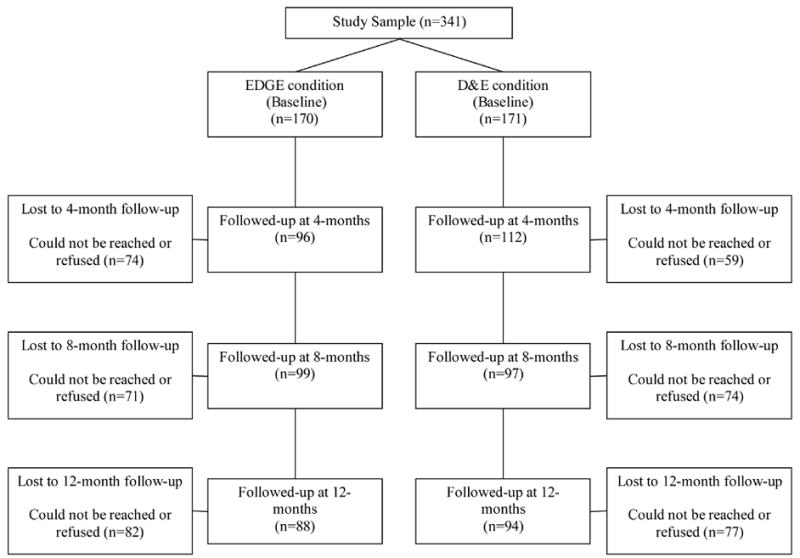
Methods: Three-hundred and forty-one participants from San Diego, CA were randomly assigned to receive either a safer sex behavioral intervention (EDGE) or a time-equivalent diet-and-exercise attention-control condition. Random effects regression analyses were used to evaluate change in safer sex behaviors over a 12-month period.
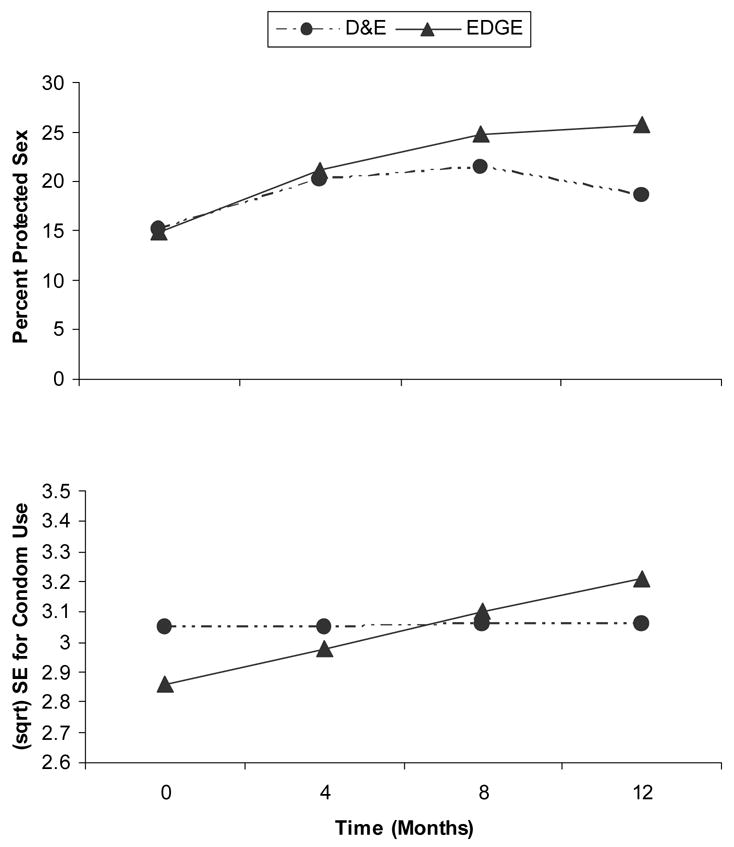
Results: Participants in the EDGE intervention engaged in significantly more protected sex acts at the 8-month (p=0.034) and 12-month assessment (p=0.007). By 12-months post-baseline, a greater percentage of protected sex acts was observed for EDGE (25.8%) vs. control participants (18.7%) (p=0.038). There was a significant time-by-intervention interaction (p=0.018) for self-efficacy for condom use, suggesting that EDGE participants' self-efficacy demonstrated a greater increase over time compared to control participants.
Conclusions: These results suggest that it is possible to reduce high risk sexual behaviors in the context of ongoing methamphetamine use among HIV-infected MSM.
Figures
References
-
- Ajzen I. The Theory of Planned Behavior. Organ Behav Hum Decis Process. 1991;50:179–211.
-
- Bandura A. Social Learning Theory. Prentice Hall; Englewood Cliffs, NJ: 1977.
-
- Bandura A. Social Foundations of Thought and Action: A Social Cognitive Theory. Prentice Hall; Englewood Cliffs, NJ: 1986.
-
- Bandura A. Social cognitive theory and exercise of control over HIV infection. In: DiClemente R, Peterson J, editors. Preventing AIDS: Theories and Methods of Behavioral Interventions. Plenum Publishing Corp; New York: 1994. pp. 25–59.
-
- Bandura A. Self-efficacy: The exercise of control. W. H. Freeman; New York: 1997.
