


Successful pulmonary administration of activated recombinant factor VII in diffuse alveolar hemorrhage
- PMID: 17184515
- PMCID: PMC1794493
- DOI: 10.1186/cc5132
Successful pulmonary administration of activated recombinant factor VII in diffuse alveolar hemorrhage
Abstract
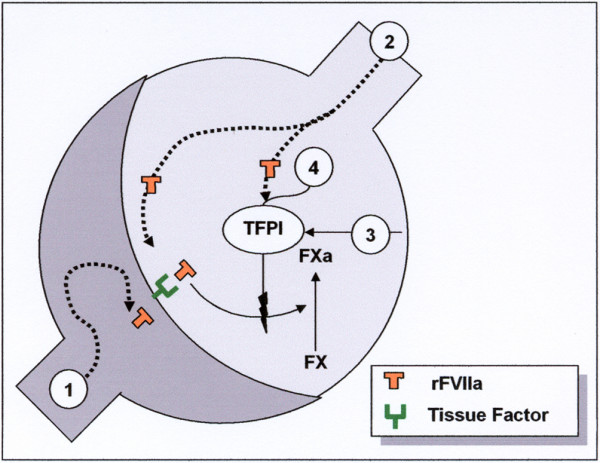
Introduction: Diffuse alveolar hemorrhage (DAH) is a serious pulmonary complication seen in patients with autoimmune disorders and patients treated with chemotherapy or after hematopoietic stem cell transplantation. The clinical management of DAH is complex and the condition has a high mortality rate. Tissue factor is expressed in the lung alveoli during inflammation and therefore pulmonary administration of human recombinant activated factor VIIa (rFVIIa) could be a rational treatment option.
Methods: Six patients with acute, bronchoscopically confirmed DAH from a single intensive care unit university hospital center were included in the study of acute DAH in critically ill patients. The patients were treated with intrapulmonary administration of 50 microg/kg rFVIIa in 50 ml of sodium chloride by bronchoalveolar lavage (BAL) with 25 ml in each of the main bronchi, which was repeated after 24 hours in case of treatment failure.
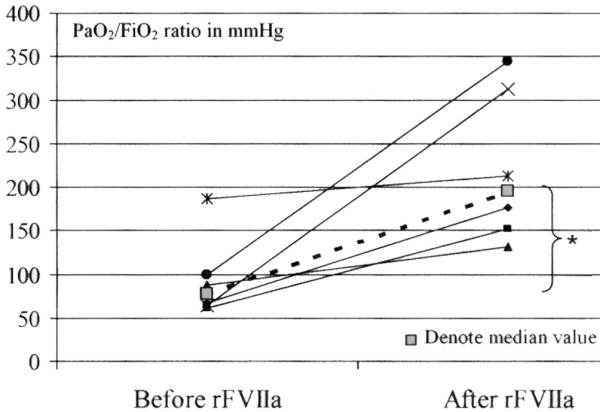
Results: An excellent response, defined as complete and sustained hemostasis after a single dose of rFVIIa, was seen in three patients. A good response, meaning that sustained hemostasis was achieved by a repeated rFVIIa administration, was seen in the remaining three patients. In one of these patients, the BAL treatment was repeated twice; in another patient, the second dose of rFVIIa was administered by nebulizer after extubation after the initial BAL. The hemostatic effect was statistically significant (p = 0.031). The oxygenation capacity, as reflected by the PaO2/FiO2 (arterial oxygen pressure/inspiratory fractional oxygen content) ratio, increased significantly (p = 0.024) in all six patients following the local rFVIIa therapy.
Conclusion: Symptomatic therapy of DAH after intrapulmonary administration of one or more doses of rFVIIa was found to have a good to excellent hemostatic effect in six consecutive patients with DAH. The intrapulmonary administration of rFVIIa seemed to have a high benefit-to-risk ratio. Larger series should confirm the safety of this approach.
Figures
References
-
- Agusti C, Ramirez J, Picado C, Xaubet A, Carreras E, Ballester E, Torres A, Battochia C, Rodriguez-Roisin R. Diffuse alveolar hemorrhage in allogeneic bone marrow transplantation. A postmortem study. Am J Respir Crit Care Med. 1995;151:1006–1110. - PubMed
-
- Levi M, van Der Poll T, ten Cate H, Kuipers B, Biemond BJ, Jansen HM, ten Cate JW. Differential effects of anti-cytokine treatment on bronchoalveolar hemostasis in endotoxemic chimpanzees. Am J Respir Crit Care Med. 1998;158:92–98. - PubMed
Publication types
MeSH terms
Substances
LinkOut - more resources
Full Text Sources
Other Literature Sources
Medical
